Mon 29 Oct 2018, 00:04 GMT

ICS praises IMO work on sulphur cap, GHG reduction


Welcomes developments on environmental issues and 'constructive role of China'.


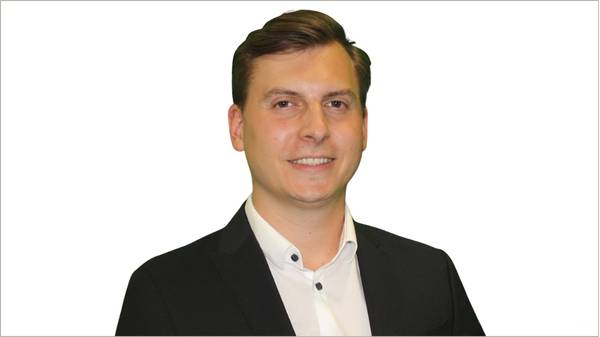
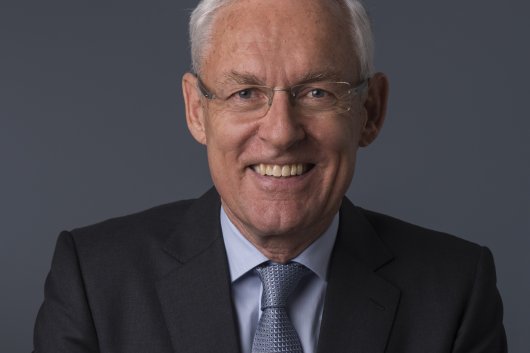
Esben Poulsson, chairman of the International Chamber of Shipping (ICS).
Image credit: International Chamber of Shipping (ICS)
The International Chamber of Shipping (ICS) has welcomed developments at last week's 73rd Marine Environment Protection Committee meeting (MEPC 73) relating to the International Maritime Organization's (IMO) action plan for greenhouse gas (GHG) reduction and the 2020 global sulphur cap.

Action Plan for GHG reduction

Discussing the GHG action programme, ICS chairman Esben Poulsson commented: "IMO ... made very good progress towards implementing the ambitious GHG reduction strategy agreed in April, adopting an Action Plan for the development of short-term measures that will deliver additional CO2 reductions before 2023, plus longer-term measures that will eventually achieve full decarbonisation of international shipping."

ICS said it was "particularly pleased" that IMO member states did not seek to revisit April's historic agreement or the CO2 reduction targets previously agreed, whilst Poulsson noted that he was "very pleased by the constructive role taken by China, whose proposals for organising future work formed a key part of the agreed IMO Action Plan".

"While no concrete decisions were taken on specific new CO2 reduction measures, ICS notes broad support for the industry's proposals for mandatory auditing of Ship Energy Efficiency Management Plans - the 'Super SEEMP' - and further improvements to the Energy Efficiency Design Index for future ships," the ICS stated.

ICS explained that discussions on ideas such as publishing mandatory operational efficiency indicators or adopting mandatory speed limits (as opposed to speed optimisation measures) would continue at IMO next year, but stressed that they could potentially lead to "seriously distorting shipping markets and disrupting the efficiency of global trade".

Poulsson added: "With the Action Plan agreed by IMO this week, the way is now clear to make detailed proposals for specific CO2 reduction measures at the next MEPC in May. In co-operation with other industry associations ICS intends to come forward with detailed ideas, potentially including new and innovative measures for long term CO2 reduction and the development of zero CO2 fuels."

2020 global sulphur cap and carriage ban

ICS said it welcomes the adoption of guidelines on the implementation of the global 0.5 percent sulphur in fuel cap - including a template for implementation planning - and also welcomes the confirmation of the carriage ban of non-compliant fuel, which will take effect on March 1, 2020.

"The commitment of ICS to full implementation in 2020 is demonstrated by the guidance on preparing for compliance which ICS recently distributed to shipowners, which we tabled at the MEPC this week and was well received," Poulsson said.

"In view of the enormity of this major change it's likely there'll be some teething problems immediately before and after 1 January 2020. Many industry associations, including ICS, have raised legitimate concerns about fuel availability, safety and compatibility of new fuels - a particular problem for those in the tramp trades. But if shipowners can demonstrate in good faith that they've done everything possible to follow an implementation plan - in line with the template IMO has now adopted - we hope that common sense will prevail in the event that safe and compliant fuels are not immediately available everywhere," Poulsson added.

ICS also noted that there are still various issues that will need to be addressed "urgently" by the IMO - both at the next MEPC in May and by the Maritime Safety Committee in December - and referred to an already-submitted paper which calls on governments to better enforce fuel quality.


Bermuda Container Line (BCL) logo. Bermuda Container Line imposes emergency bunker surcharge citing Iran War fuel price spike  

Shipping operator to add $150 per TEU charge from 1 May amid geopolitical fuel cost pressures.

China flag. Zhejiang’s first methanol-powered container ship launches in Jiaxing  

Vessel uses methanol propulsion technology to reduce carbon dioxide emissions by 90%.

TES flag with a model vessel in the background. TES joins SEA-LNG coalition to advance e-methane as marine fuel  

Green energy company targets 1m tonnes annual e-methane production by 2030 for shipping decarbonisation.

Ethanol and methanol workshop graphic. IBIA to host workshop on ethanol and methanol marine fuels during Singapore Maritime Week  

Half-day event will examine alcohol-based fuel pathways and integration into shipping’s multi-fuel landscape.

Steel-cutting ceremony for 13,000-dwt vessel. ROC begins construction of second chemical tanker for Essberger  

Chinese shipbuilder holds steel-cutting ceremony for 13,000-dwt methanol-ready vessel with ice class capability.

Norsepower and CHIC sign agreement. Norsepower and Cosco Shipping Heavy Industry Equipment sign wind propulsion cooperation agreement  

Wind propulsion technology provider partners with Chinese shipyard to scale rotor sail production.

Wärtsilä logo. Shipping firms struggle to prioritise decarbonisation investments amid regulatory uncertainty, Wärtsilä survey finds  

Survey of 225 maritime executives reveals 70% say uncertainty hinders investment decisions despite regulatory pressure.

IMT Isca G-Flex vessel render. Longitude Engineering unveils IMT Isca G-Flex PSV design with alternative fuel capability  

Naval architecture firm launches adaptable platform support vessel design based on the IMT-984 G-Class hull.

Philippos Ioulianou, EmissionLink. Shore power infrastructure is key to cutting ferry emissions in European cities, says EmissionLink  

Port electrification is needed to enable vessels to switch off engines at berth, reducing urban pollution.

Maritime and Port Authority of Singapore logo. Singapore prioritises maritime resilience amid geopolitical uncertainty, eyes digitalisation and green fuels  

MPA chief outlines the sector’s adaptation to supply chain disruptions while advancing automation and alternative fuels.