Thu 11 Oct 2018, 13:01 GMT

AET names LNG dual-fuel Aframax tankers


Shell-chartered ships inaugurated in South Korea.


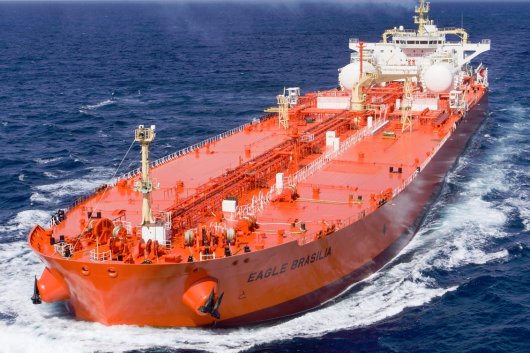
The Eagle Brasilia is one of two vessels chartered by Shell for operations in the Atlantic Basin featuring two 850-cbm LNG tanks and built to run on LNG fuel for around 6,000 nautical miles.
Image credit: AET
Singapore-headquartered AET confirmed on Thursday that it has named its first LNG dual-fuel Aframax tankers, Eagle Brasilia and Eagle Bintulu.

The vessels were inaugurated at a ceremony held at the Samsung Heavy Industry (SHI) shipyard in Geoje, South Korea.

Both tankers have been taken on long-term charter by Shell, primarily for operations in the Atlantic Basin. They are due to begin operating from the fourth quarter of 2018.

Dual-fuel engines, two LNG tanks and flow meters

The ships feature a two-stroke main engine, three auxiliary engines and two auxiliary boilers - all equipped for LNG dual-fuel capability.

LNG fuel is supplied through two Type-C 850-cubic-metre-capacity tanks arranged on the main deck aft port and starboard. Each LNG tank is equipped with two LNG feed pumps providing full redundancy for operation.

The vessels are designed to receive LNG fuel from LNG bunkering vessels via ship-to-ship transfer and are built to run on LNG fuel for around 6,000 nautical miles.

Mass flow meters have been installed to measure fuel consumption.

Eco-efficiency technology

The tankers also feature a number of eco-efficiency technologies, including an optimised hull form and various energy-saving devices such as Asymmetric Rudder Bulb, SAVER Fin and SAVER Stator.

Overall, the EEDI for these vessels is said to be around 28.8 percent above IMO Phase 0, bordering to phase 3 when operated in LNG mode.

Both vessels have been awarded the 'Green Passport' and 'GFS' notations.

AET Chairman, and President/Group CEO of parent company MISC Berhad, Yee Yang Chien, commented: "AET has worked for many years in close cooperation with industry partners to develop these LNG dual-fuelled Aframaxes, which are amongst the very first in the industry. The MISC Group's expertise in the handling of LNG and its use as marine fuel was leveraged upon too. The vessels have excellent environmental credentials, which will be achieved without detriment to the operational and commercial flexibility that these vessels can provide. To my mind, Eagle Brasilia and Eagle Bintulu are proof that as an industry, we needn't see increasing environmental requirements as a threat to how we operate, but rather as an incentive to develop new, more innovative and sustainable shipping solutions."

Lars Wogen, Global Crude Freight Trading Manager, Shell, remarked: "Shell has been an advocate of LNG as a marine fuel for many years, and as an organisation, we have invested considerably in supporting the development of a comprehensive and reliable LNG bunkering infrastructure. We share AET's commitment to exceeding the IMO's 0.5% sulphur emissions requirements wherever possible, and we are very pleased to take these vessels on charter to serve our global energy shipping requirements."

Captain Rajalingam Subramaniam, President & CEO, AET, said: "We welcome these vessels as the first in what will be an expanding fleet of LNG dual-fuelled vessels in the years to come, as part of our Group's Green Sustainability Agenda. This seeks to deliver environmental efficiency alongside operational excellence. This is a point of critical importance, as ensuring that these LNG dual-fuelled aframaxes are designed to operate with optimum efficiency, the highest standards of safety and compliance has been and remains top priority for us. Under the careful management of our shipmanagement division, Eaglestar, we look forward to ensuring our effort benefits the industry. I would also like to thank the Shell Group, for working with us in this pioneering effort."


Christos Doulaveris, Flex Commodities. Flex Commodities appoints Christos Doulaveris as general manager for Greece  

Bunker trader strengthens its Greek operations with a new leadership appointment.

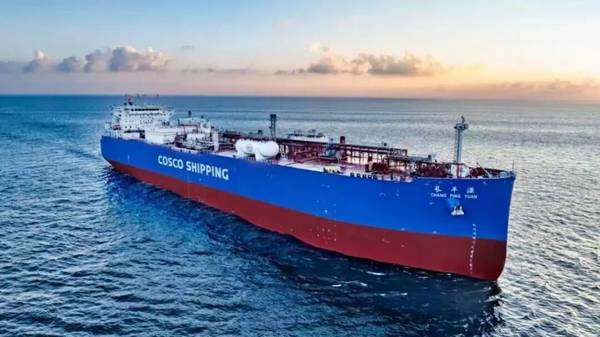
Chang Ping Yuan vessel. China delivers first domestically built VLGC under Chinese flag  

Cosco Shipping’s new 88,000-cbm gas carrier features an LPG dual-fuel main engine.

IMO, GreenVoyage2050 and Republic of Türkiye MoTI logos. Electric and hybrid ferries could cut Sea of Marmara emissions by 63%, IMO study finds  

A GreenVoyage2050 study finds that electrification could slash emissions, avoid €492 million in damage costs and support jobs.

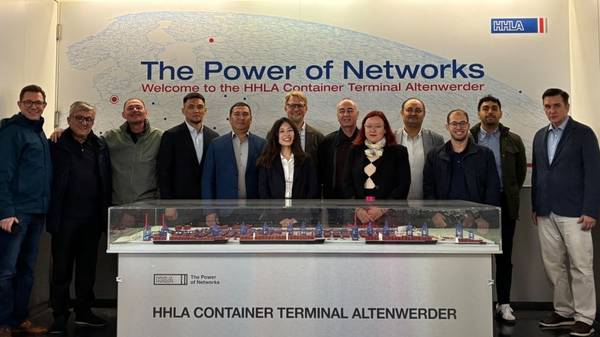
Study visit to Hamburg, Germany, on sustainable port development. Batumi Sea Port officials study decarbonisation practices in Hamburg  

Georgian port representatives visited Hamburg to study emissions accounting, hydrogen technology and automation ahead of their 2026 recertification audit.

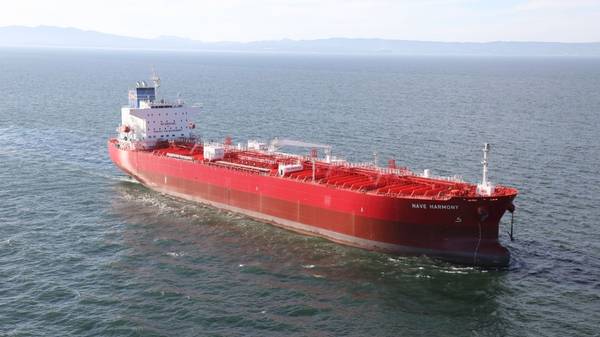
Nave Harmony vessel. Navios Partners takes delivery of methanol-ready MR2 tanker Nave Harmony  

Shipowner adds 49,998-DWT newbuild product tanker equipped with methanol-ready technology.

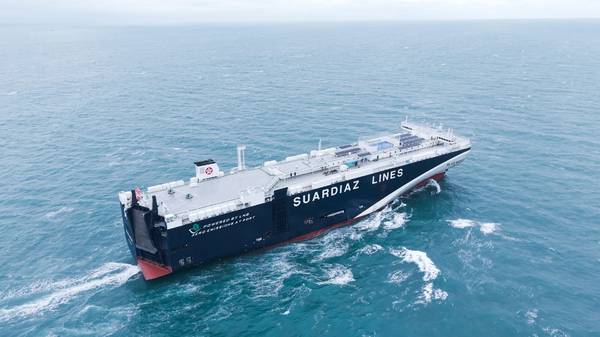
RS Atlantico vessel. Eastern Pacific Shipping delivers LNG dual-fuel PCTC to Suardiaz  

RS Atlantico is the first mid-sized 5,500-CEU car carrier built through the EPS–Suardiaz partnership.

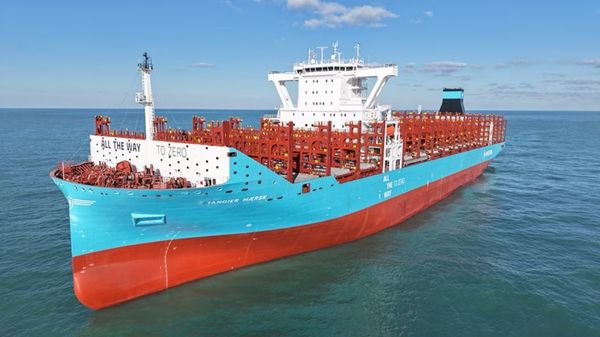
Tangier Maersk vessel. Maersk completes first US ethanol bunkering of a deep-sea container ship  

Shipper tests US-produced corn ethanol as a marine fuel aboard the Tangier Maersk.

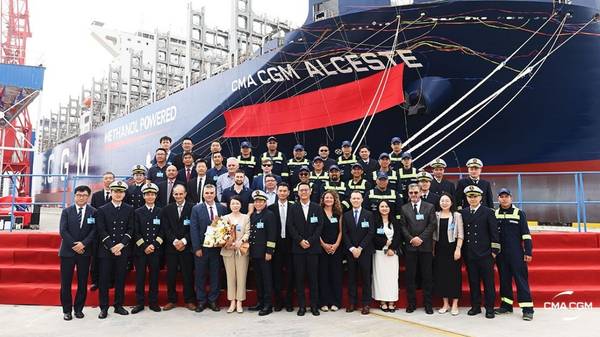
CMA CGM Alceste naming ceremony. CMA CGM names methanol-powered vessel after Molière’s Alceste  

Ship features a MAN B&W 8G85ME two-stroke engine configured to run on conventional marine fuel and methanol.

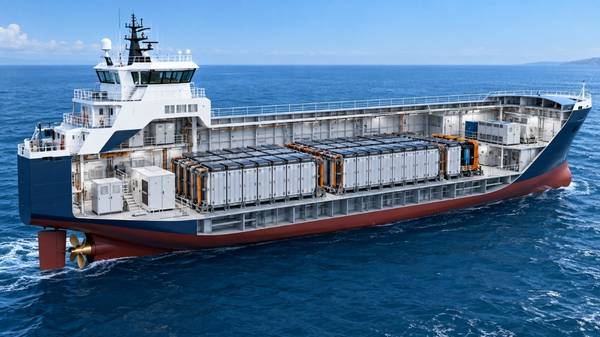
Cutaway illustration of a battery-electric ship. Why batteries still cannot power ships across oceans  

Battery-electric ships dominate short-sea routes, but energy-density and infrastructure constraints keep deep-sea propulsion out of reach.

VPS logo. VPS to run marine fuel management course in Singapore  

Two-day programme in November covers fuel handling, testing and decarbonisation rules, including a laboratory tour.