Tue 5 Jun 2018, 13:22 GMT

Skuld issues bunker sample best practice guide


Guide includes advice on storage location and period, labels, log book and disposal of samples.


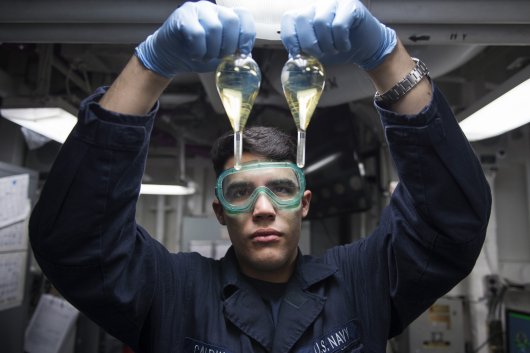
Fuel oil samples inspected for sediment and water in the oil lab aboard the amphibious assault ship USS Bonhomme Richard, on March 13, 2017.
Image credit: Flickr
P&I club Skuld has provided a best practice guide to its members for the storage, disposal and transfer of bunker samples.

Storage location

Skuld advises that samples should be kept in a safe storage location in a sheltered spot where they can be stored at a cool/ambient temperature and not exposed to direct sunlight, and where staff will not be exposed to vapours and the labels can be preserved.

The P&I club notes that the steering flat is a suitable storage location, but that the best place to store bunker samples is in the paint locker as the paint stores are protected by a fixed sprinkler system.

They should also be kept in a steel cupboard or a MARPOL sample storage cabinet, Skuld suggests.

On the issue of safety, Skuld notes that smoking and the carriage of smoking materials in the storage room are not permitted and that care should be exercised when entering a sample storage location.

Period to be kept on board

Commercial samples should be retained for evidential purpose for a period of six months after completing the consumption of the supply, Skuld says, as "by then you should know if you have any claims or not".

Regulation 18(6) of Annex VI of MARPOL 73/78 specifies that MARPOL samples must be retained on onboard until the fuel is substantially consumed, but in any event for a period of not less than 12 months from the time of delivery.

Testing companies usually specify in their agreements that they will retain the remains of samples tested for approximately three months.

Sample label

IMO Resolution MEPC 182 (59) requires sample bottles to have a tamper-proof security seal, a unique means of identification, and a label that includes:

- location at which, and the method by which, the sample was drawn;
- date of commencement of delivery;
- name of bunker tanker/bunker installation;
- name and IMO number of the receiving ship;
- signatures and names of the supplier's representative and the ship's representative;
- details of seal identification; and
- bunker grade.

Log book

Skuld notes that the ship's master should develop and maintain a system to keep track of the samples held on board via a Bunker Fuel Sample Log Book.

The log book should include information such as date of bunkering, source of sample (taken by crew or supplier), seal number and date/place of disposal.

Disposal of bunker samples

The disposal of samples and samples containers should be conducted in compliance with MARPOL and local environmental regulations.

The samples are normally disposed of at shore facilities by a sludge collection party or poured back into the fuel tank by crew.

Empty plastic bottles of fuel samples should be cleaned before disposal, Skuld says.

In addition to including the disposal date in the log book, Skuld also notes that local regulations may require recording the method of disposal.

Delivery of bunker samples to a laboratory

When a sample is delivered to a laboratory or Port State Control for analysis, Skuld says it is important to keep a record of the sample custody transfer in the sample log along with the bunker delivery note (BDN).

Details that should be recorded are:

- the sample label details and seal number;
- the port, date and time of handover of the sample;
- the identity of the person to whom the sample was handed, together with the name, signature and authority stamp as appropriate;
- contact details of those who will hold the sample.


Oriental Aquamarine vessel. HMM deploys Korea's first MR tanker with wing sail technology  

Oriental Aquamarine equipped with wind-assisted propulsion system expected to cut fuel consumption by up to 20%.

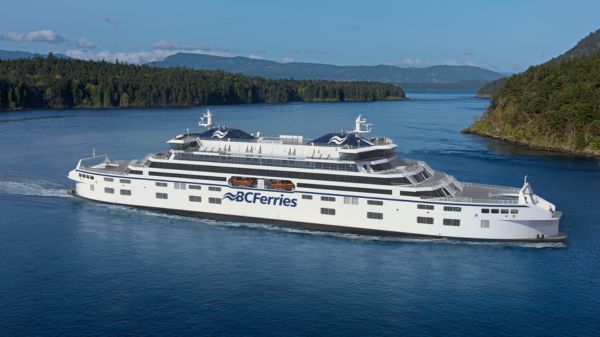
BC Ferries vessel render. ABB to supply hybrid-electric propulsion for BC Ferries' four new vessels  

Technology will enable ferries to run on biofuel or renewable diesel with battery storage.

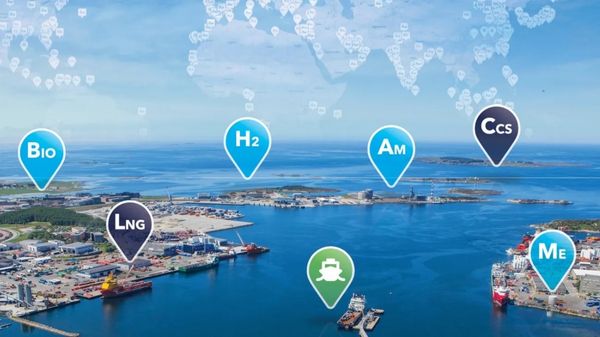
Alternative marine fuels port graphic. LNG-fuelled boxships sustain alternative fuel orderbook share despite market slowdown  

Alternative fuels maintained 38% of gross tonnage orders in 2025, driven by container segment.

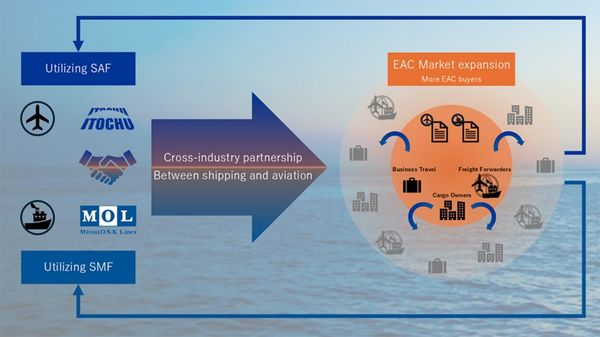
Conceptual diagram of the MOL–ITOCHU strategic alliance. MOL and ITOCHU sign MoU for cross-industry environmental attribute certificate partnership  

Japanese shipping and trading firms to promote EACs for reducing Scope 3 emissions in transport.

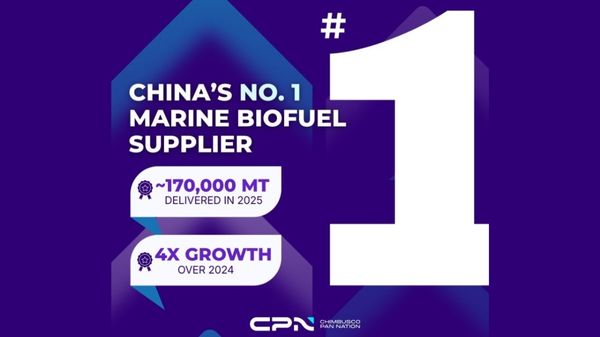
CPN as China's No. 1 marine biofuel supplier in 2025 graphic. Chimbusco Pan Nation delivers 170,000 tonnes of marine biofuel in China in 2025  

Supplier says volumes quadrupled year on year, with a 6,300-tonne B24 operation completed during the period.

V.Group and Njord logo side by side. V.Group acquires Njord to expand decarbonisation services for shipowners  

Maritime services provider buys Maersk Tankers-founded green technology business to offer integrated fuel-efficiency solutions.

Container vessel manoeuvring in port. Has Zhoushan just become the world's third-largest bunker port?  

With 2025 sales of 8.03m tonnes for the Chinese port, Q4 data for Antwerp-Bruges will decide which location takes third place.

Monjasa Oil & Shipping Trainee (MOST) trainees. Monjasa opens applications for global trainee programme  

Marine fuel supplier seeks candidates for MOST scheme spanning offices from Singapore to New York.

Singapore's first fully electric harbour tug. Singapore's first fully electric tug completes commissioning ahead of April deployment  

PaxOcean and ABB’s 50-tonne bollard-pull vessel represents an early step in harbour craft electrification.

Fuel for thought: Hydrogen report cover. Lloyd's Register report examines hydrogen's potential and challenges for decarbonisation  

Classification society highlights fuel's promise alongside safety, infrastructure, and cost barriers limiting maritime adoption.