Bunker firm
Monjasa has explained how its global compliance team has become a key part of the company's setup since it was first established in January 2015.
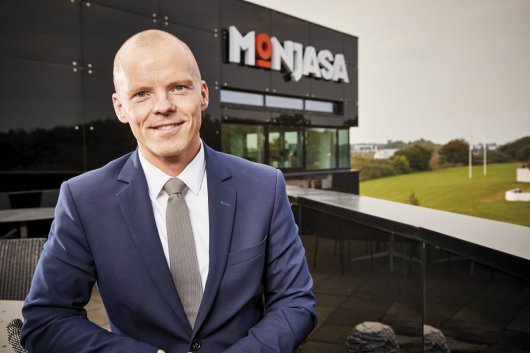
Speaking to Bunker Index, Group COO
Svend Stenberg Molholt noted that its compliance department has grown to five people since the first staff member was appointed just over three years ago. The team now spans offices in
Singapore,
UAE,
Denmark and
Panama - with at least one compliance department member in each of these regional offices.
"We have a member of the department placed in each of our locations because the way our operating model works today, it works in a way whereby you need to have 24-7 backing on compliance," Molholt remarked.
Monjasa says it is involved in deliveries to around
1,000 vessels per month. When an enquiry is received, the company has procedures in place to evaluate whether it is able to supply fuel to a ship or not; this includes the firm's automated vetting system powered by Lloyd's List Intelligence and Dow Jones data. But Monjasa still needs to have compliance staff in place "if there's an issue", COO Molholt explained.
"We have to have someone around the clock who can look at what the issue is for specific vessels. So we need to have a 24-7 backing on our compliance setup. And that's why we have a team member sitting in each time zone," Molholt said.
The compliance department was initially established just after the company obtained its first ISO certification in 2014 as it looked at ways of updating its whole compliance setup to deal with key issues such as global regulations and, for example, ensuring that bunker fuel is never supplied to a ship that has come from a sanctioned country.
In terms of managing regional challenges, standards and regulations, Molholt explained that the company applies a global approach.
"We actually think that we can apply a global standard to how we deliver this. We have introduced our approach to HSEQ [Health & Safety, Environment and Quality] and compliance in markets that have not seen this before, such as Panama. Reactions have been very positive and we believe this will help raise the bar, thereby providing more quality and compliance-oriented operations across the industry worldwide," Molholt said.
"I would say under the HSEQ umbrella, we manage it in the same way globally. Under the compliance umbrella, we also take the different rules and regulations locally into consideration. We comply with what's there and we do our best in working actively with different networks, such as the Maritime Anti-Corruption Network (MACN), to level the playing field across the world in all the regions that we work in," Molholt added.
As an ISO-certified company, Monjasa also conducts annual reviews that enable the company to regularly look at ways of improving the way it works.
"Performing annual reviews with a global quality assurance company like DNV GL gives us an opportunity to always look for new ways of improving our processes and procedures. Only by constantly challenging ourselves and the status quo, we are able to lead the race for improved quality in the industry," Molholt said.