SEA\LNG, the multi-sector industry coalition aiming to accelerate the widespread adoption of liquefied natural gas (LNG) as a marine fuel, today announced that it has launched a new free-to-access online tool to improve understanding of the current, and rapidly evolving, LNG bunkering infrastructure landscape.
The new Bunker Navigator Tool is designed to provide easy access to the latest developments in the global LNG bunkering infrastructure.
SEA\LNG's map-based tool, provides an overview of key LNG bunkering developments and how this growing infrastructure relates to major global shipping routes, traditional oil bunkering ports, and the bulk LNG infrastructure which will provide the foundation for future bunkering services.
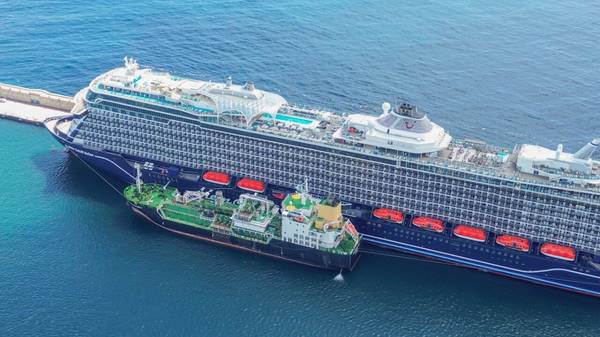
LNG is currently available in bulk at around 150 locations worldwide, and there is also a bulk LNG infrastructure of regasification terminals and liquefaction plants globally. Of the world's top oil-bunkering ports, nine of the top ten offer LNG bunkering, or will do so by 2020. However, it is the movement of LNG from bulk facilities to the ships, more commonly known as the 'last mile', where efforts are being concentrated to enable easy access to LNG as a marine fuel.
As well as an overview of key LNG bunkering developments, the map-based tool enables access to case studies which describe the bunkering projects being developed by SEA\LNG members at specific locations, with more added as they become available.
"As the 2020 0.5% global sulphur cap edges ever closer, shipowners must make decisions that remain viable into the future - and choose between a limited number of options; LNG, scrubbers, or low sulphur fuels. SEA\LNG believes that demonstrating - through the newly launched Bunker Navigator Tool - that LNG bunkering infrastructure is available globally and is continually developing will support ship owners' investments in LNG-fuelled ships," the coalition said.
Peter Keller, SEA\LNG chairman and executive vice president of Tote, said: "The coalition's mission since inception has been to further the shipping industry's knowledge of the viability and sustainability of LNG as a marine fuel. A key barrier has been a general lack of understanding of current and forthcoming LNG bunkering infrastructure. What we sought to achieve with the Bunker Navigator Tool is a quick, easy-to-access platform that includes relevant, up-to-date, and free-to-access information on LNG infrastructure and bunker development."
Keller added: "A collaborative approach to understanding the opportunities - and then tackling the associated commercial barriers - to LNG is crucial to fulfil its potential as an alternative to traditional bunker fuels. The reality is that LNG bunkering infrastructure is expanding at pace, and with the launch of the Bunker Navigator Tool, SEA\LNG hopes to raise awareness of, and build industry confidence in, the rapidly growing global availability of LNG bunkering."
The new Bunker Navigator Tool can be accessed by
clicking here.