UK firm
Drewry Shipping Consultants has gathered opinions from members of the shipping industry to provide a preliminary assessment of the impact of the UK's recent decision to leave the European Union.
In its analysis, Drewry looks at what it considers to be three key questions:
- Will UK maritime traffic rise or fall because of Brexit?
- Will container lines skip UK ports because of Brexit?
- Will UK trade benefit from moving away from EU rules and regulations?
Will UK maritime traffic rise or fall because of Brexit?
Drewry points out that the International Monetary Fund (IMF) - which believes the Brexit implies increased economic, political, and institutional uncertainty - has recently downgraded 2016 and 2017 GDP growth forecasts for the UK. Thus, a slowdown in UK GDP would mean a slowdown in UK maritime trade.
Peel Ports' Group Commercial Director,
Patrick Walters, is cited as saying that there is the the risk of a short-term negative impact on container volumes at UK ports caused by economic and political uncertainty and a GDP slowdown.
Walters also thinks that there will be both positives and negatives in the medium and long term. Positives include opportunities to agree new or improved bilateral agreements with countries such as India, the US, Canada and South America without the need to get consensus approval from the other 27 EU countries.
On the issue of tariffs, 31 percent of the UK's lo-lo container port sector income comes from the rest of the EU. Hence, any new trade tariffs would raise the risk of lower trade volume from within Europe.
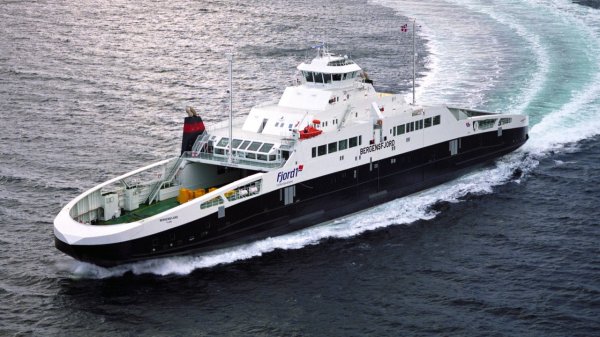
Ro-ro trade (primarily vehicles on cross-Channel and Irish Sea ferries) is more exposed to the risk of new European tariffs and problematic customs export and import procedures, Drewry points out, because 78 percent of roll-on/roll-off traffic derives from the EU.
In relation to the issue of how much difference tariffs will make and whether or not tariffs on UK/EU trade and more complex customs procedures will be implemented, the British Shippers' Council concluded earlier this month that it is too early to tell what the outcome will be, as it will depend on what new trade agreements are negotiated with both EU and non-EU trading partners. Drewry agrees with this view, whilst the British International Freight Association (BIFA) has also said that it is too soon to be able to predict the impact on trade volumes.
On the issue of the depreciation of the UK currency since the Brexit vote, the UK has a trade deficit and is a large importer of goods, thus it would be fair to expect that higher-priced containerised imports will become less appealing to UK consumers. However, Drewry points out that there is only a weak link between exchange rates and total trade over a 10-year period between 2004 and 2014, which implies that a minor change in the price of imports and exports has a minimal effect on total UK port volumes.
Drewry reasons that the UK will continue to buy large quantities of products from nations in Asia with low labour costs rather than sourcing from within the UK. What could change - depending on the trade deals the UK agrees with countries such as India, Bangladesh and South American countries - is the breakdown of imported volumes by country.
Will container lines skip UK ports because of Brexit?
UK importers and exporters tend to prefer direct mainline container services calling at their national ports rather than feeder services. Drewry believes that container lines will continue to call at UK ports as volumes are more than large enough to justify direct calls with mainline vessels. According to January-May statistics, the UK imports more containers from Asia than any other North European country.
Will UK trade benefit from moving away from EU rules and regulations?
Drewry affirms that there is a risk of new inefficiencies and costs, which trade negotiations with the EU will have to address. A return to tariffs for UK imports and exports "will be detrimental to UK trade with the EU" and could lead to a dip in UK-EU maritime volume, Drewry says.
On the issue of the movement of labour, the UK Chamber of Shipping has highlighted the fact that the UK relies heavily on skilled people from around the world and believes that it is vital that future immigration processes do not deter European citizens from wanting to work within the UK maritime sector. Drewry also warns that restrictions on the right of EU workers to work in the UK maritime sector could harm the UK shipping cluster.
Summary
In a summary of its findings, Drewry said: "In the short term, a slowdown in UK GDP is expected to result in a slowdown in UK maritime trade growth. It is too early to say what the impact of Brexit on maritime trade will be in the long term, but it is unlikely that Brexit will have a material impact on total UK maritime volume.
"There will probably be a change in the mix: depending on the new trade agreements negotiated between the UK and the EU and between the UK and non-EU countries, the UK could switch some of the countries from which to imports and to which it exports.
"There is also a risk of harmful UK-EU red tape, tariffs and reduced access to skilled EU shipping workers in post-Brexit and much uncertainty as to what will happen."