Mon 4 Jul 2016, 21:17 GMT

Bunker Holding posts 2015-16 results


Danish firm records a pre-tax profit of $61 million as equity rises to $271 million.


Bunker Holding - part of United Shipping & Trading Company (USTC) Group - has posted a profit after tax of DKK 323 million ($48 million) for the financial year 2015-2016, which runs up until 30th April.

Pre-tax profit declined by $17 million, or 21.8 percent, to $61 million, down from $78 million recorded the previous year.

Turnover during 2015-16 was $5,652 million (DKK 38,071 million), which represents a decline of $2,718 million, or 32.5 percent, on the $8,370 million figure recorded in 2014-15.

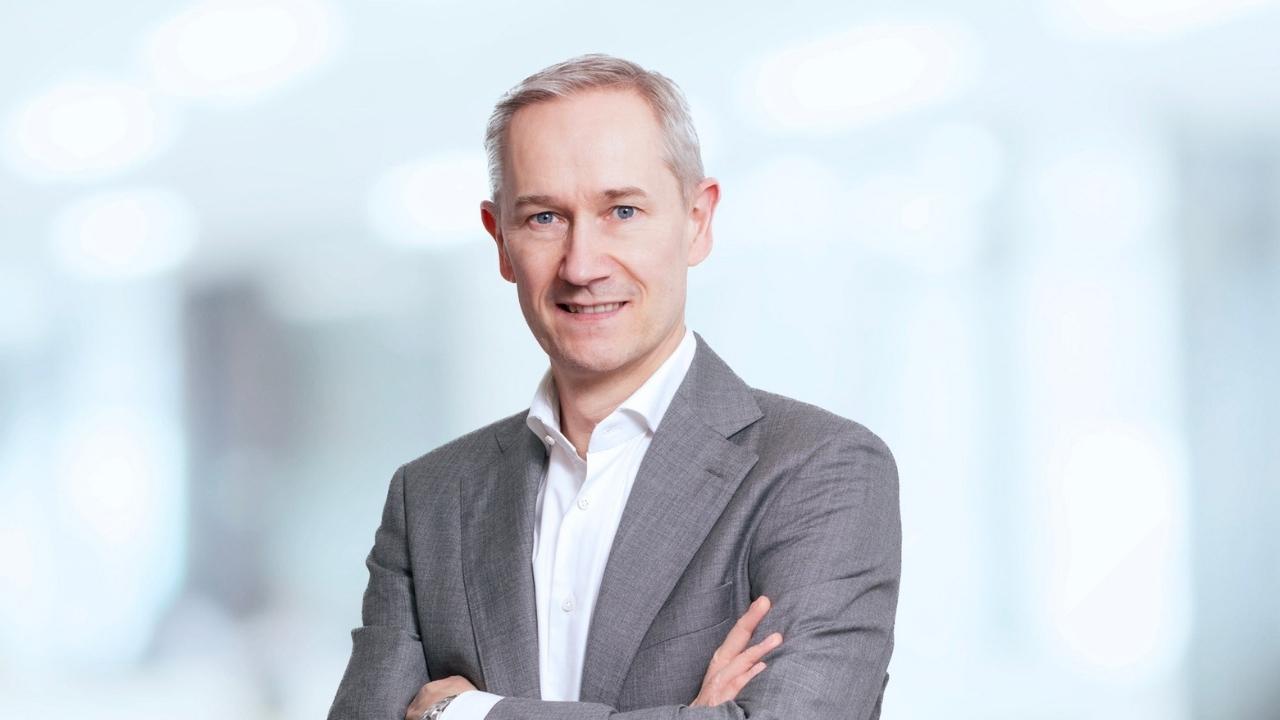
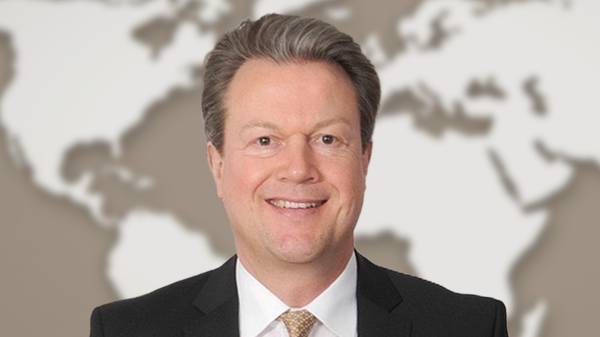
Commenting on the group's performance, Keld R. Demant, CEO of Bunker Holding, remarked: "The new initiatives have widened our reach in the market, thus equipping us to retain and consolidate our market position in the years ahead. Accordingly, we have taken important steps during this financial year, and we are pleased to note that the outcome is positive results in all new units and handsome volume growth."

Demant explained that the decline in turnover was a result of lower oil prices, but was positive about the company's overall financial position.

"The price of oil is what it is, and we have clearly demonstrated that we can act in a market characterised by both low prices and an imbalance of supply and demand. We run a tight ship in terms of risk management, which means we hedge all our oil positions to avoid exposure in the event of price fluctuations," he said.

"The fact that we concluded the year with an equity ratio of 35% and equity just under DKK 1.8 billion [$271 million] bears witness to our soundness and robustness."

The Bunker Holding A/S umbrella includes Dan-Bunkering, KPI Bridge Oil, Scandinavian Bunkering and Unimarine. Other members of United Shipping & Trading Company (USTC) group include A/S Global Risk Management Ltd., Shipping.dk, A/S Uni-Tankers, Uni-Chartering and Outforce A/S.

As reported by Bunker Index on 1st July, Global Risk Management achieved a $15.7 million rise in gross profit in 2015-16, and earnings before tax increased to $6.9 million.

USTC Group is a wholly owned subsidiary of Selfinvest ApS, whose sole owner is its founder Torben Ostergaard-Nielsen.

In 2015-16, Selfinvest's profit before tax fell to DKK 480 million ($72 million), down from DKK 548 million ($82 million) the previous year. Profit after tax during the period was virtually unchanged at DKK 405 million ($60.5 million), down from DKK 406 million ($60.6 million) in 2014-15.

Selfinvest's equity grew to DKK 3,267 million ($488 million) at the end of the 2015-16 financial year.

Please find a summary of the financial results for Bunker Holding, USTC Group and Selfinvest ApS in 2015-16 below.

Bunker Holding

Profit before tax
2015-16 $61 milion
2014-15 $78 million
2013-14 $63 million
2012-13 $60 million
2011-12 $77 million

Turnover
2015-16 $5,652 million
2014-15 $8,370 million
2013-14 $10,912 million
2012-13 $10,500 million
2011-12 $12,412 million

Equity
2015-16 $271 million
2014-15 $295 million
2013-14 $258 million
2012-13 $222 million
2011-12 $206 million

USTC Group

Profit before tax
2015-16 $85 milion
2014-15 $78 million
2013-14 $61 million
2012-13 $22 million
2011-12 $65 million

Profit after tax
2015-16 $61 milion
2014-15 $57 million
2013-14 $51 million
2012-13 $14 million
2011-12 $53 million

Turnover
2015-16 $5,953 million
2014-15 $8,611 million
2013-14 $11,180 million
2012-13 $10,670 million
2011-12 $12,548 million

Equity
2015-16 $348 million
2014-15 $330 million
2013-14 $286 million
2012-13 $234 million
2011-12 $236 million

Selfinvest ApS

Profit before tax
2015-16 $72 million (DKK 480 million)
2014-15 $82 million (DKK 548 million)
2013-14 $52 million (DKK 349 million)

Profit after tax
2015-16 $60.5 million (DKK 405 million)
2014-15 $60.6 million (DKK 406 million)
2013-14 $43.3 million (DKK 290 million)

Revenue
2015-16 $5,990 million (DKK 40,103)
2014-15 $7,765 million (DKK 51,985)
2013-14 $9,251 million (DKK 61,935)

Equity
2015-16 $488 million (DKK 3,267 million)
2014-15 $440 million (DKK 2,943 million)
2013-14 $323 million (DKK 2,162 million)


Bermuda Container Line (BCL) logo. Bermuda Container Line imposes emergency bunker surcharge citing Iran War fuel price spike  

Shipping operator to add $150 per TEU charge from 1 May amid geopolitical fuel cost pressures.

China flag. Zhejiang’s first methanol-powered container ship launches in Jiaxing  

Vessel uses methanol propulsion technology to reduce carbon dioxide emissions by 90%.

TES flag with a model vessel in the background. TES joins SEA-LNG coalition to advance e-methane as marine fuel  

Green energy company targets 1m tonnes annual e-methane production by 2030 for shipping decarbonisation.

Ethanol and methanol workshop graphic. IBIA to host workshop on ethanol and methanol marine fuels during Singapore Maritime Week  

Half-day event will examine alcohol-based fuel pathways and integration into shipping’s multi-fuel landscape.

Steel-cutting ceremony for 13,000-dwt vessel. ROC begins construction of second chemical tanker for Essberger  

Chinese shipbuilder holds steel-cutting ceremony for 13,000-dwt methanol-ready vessel with ice class capability.

Norsepower and CHIC sign agreement. Norsepower and Cosco Shipping Heavy Industry Equipment sign wind propulsion cooperation agreement  

Wind propulsion technology provider partners with Chinese shipyard to scale rotor sail production.

Wärtsilä logo. Shipping firms struggle to prioritise decarbonisation investments amid regulatory uncertainty, Wärtsilä survey finds  

Survey of 225 maritime executives reveals 70% say uncertainty hinders investment decisions despite regulatory pressure.

IMT Isca G-Flex vessel render. Longitude Engineering unveils IMT Isca G-Flex PSV design with alternative fuel capability  

Naval architecture firm launches adaptable platform support vessel design based on the IMT-984 G-Class hull.

Philippos Ioulianou, EmissionLink. Shore power infrastructure is key to cutting ferry emissions in European cities, says EmissionLink  

Port electrification is needed to enable vessels to switch off engines at berth, reducing urban pollution.

Maritime and Port Authority of Singapore logo. Singapore prioritises maritime resilience amid geopolitical uncertainty, eyes digitalisation and green fuels  

MPA chief outlines the sector’s adaptation to supply chain disruptions while advancing automation and alternative fuels.