Dr Nikolaos Kakalis, Head of
DNV GL Strategic Research & Innovation in Greece, has this week presented the specific battery hybrid propulsion system of the
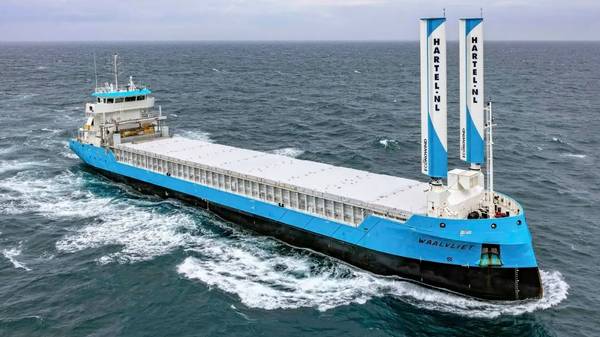
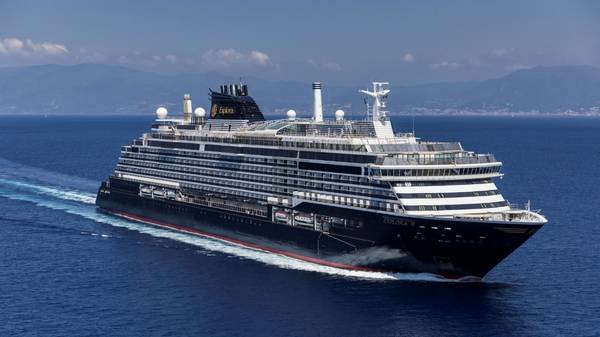
Viking Lady [pictured] - an offshore supply vessel in daily operation in the North Sea - to members of the Greek shipping community at the Greener Shipping Summit, held in Athens.
In a statement, DNV GL said Dr Kakalis "showed how the vessel could lead the way to a significant improvement in the safety and efficiency of high-risk operations."
The Viking Lady uses a conventional diesel-electric propulsion system, comprising four dual-fuel engines driving five thrusters for propulsion and manoeuvring/dynamic positioning (DP). In this project, a lithium-ion battery with a capacity of 450 kilowatt hours (kWh) was added – enabling the vessel to use hybrid-electric propulsion. The battery is designed to act as an energy buffer to cover the intense load variations that can occur, especially in DP and standby operations.
According to DNV GL, this effectively increases the propulsion system’s available power and redundancy – thereby increasing the level of safety in high-risk operations.
"This means that the gen-sets can operate with a relatively constant load and in an optimal way – making operations safer and more energy-efficient," DNV GL said.
The battery hybrid installation has been tested in sea trials that are said to have shown that a 15 percent reduction in fuel consumption, 25 percent reduction in nitrogen oxide (NOx) emissions and 30 percent reduction in greenhouse gas emissions can be realised in practice, especially for DP operations.
“Considering that the global fleet of offshore supply vessels of relevant sizes is over 4,000, such technologies have the potential to make an impact when it comes to improving sustainability,” Dr Kakalis noted.
The results presented by Dr Kakalis stem from the
FellowSHIP III research and development project between DNV GL,
Eidesvik Offshore and
Wärtsilä, co-funded by the
Research Council of Norway.
COSSMOS, DNV GL's in-house computer platform for modelling and simulating complex integrated ship machinery systems, played an "important role" in FellowSHIP III, according to DNV GL. COSSMOS provides an early-phase feasibility analysis, estimating the expected benefits in terms of energy efficiency, emissions and economics.
Dr Kakalis explained that advanced simulations and optimisation can direct the implementation of optimal power management strategies to arrive at maximum gains while ensuring the safety and operational capabilities of the vessel.
DNV GL Research & Innovation in Norway and in Greece are working together with shipping companies and manufacturers to develop projects like FellowSHIP that are designed to advance the industry's state of the art.
"We went from idea generation through a fusion of innovative scientific approaches to technology development and full-scale testing in a structured and effective way," commented Dr Kakalis about the FellowSHIP project.
"DNV GL invests 5 percent of its revenue in research and innovation every year, which is a reciprocal investment to our customers and the industry as a whole, through technology development and better services. In the FellowSHIP series of projects we have invested more than 2.5 million USD and we are glad to share such developments that improve safety and sustainability of our industry in practice," Dr Kakalis added.