The contract for the control system for a shore-based liquefied natural gas (LNG) fuelling facility in
Port Fourchon, Louisiana, USA, has been awarded to
Wärtsilä.
The facility is owned by
Harvey Gulf International Marine, an owner-operator of offshore supply and specialty vessels headquartered in New Orleans.
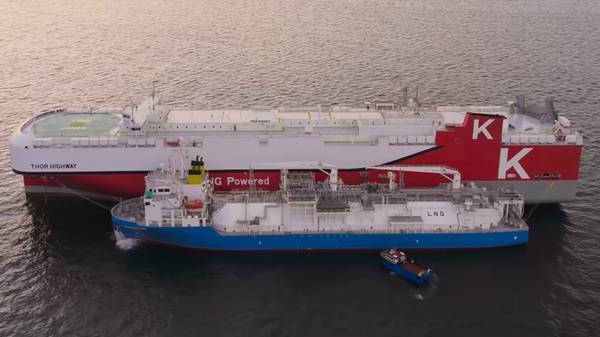
According to Wärtsilä, the new facility is to be used to supply fuel to Harvey Gulf's fleet of LNG-powered platform supply vessels (PSVs), and is set to be the first source of LNG fuel in the Gulf of Mexico. The order was placed in July, 2014.
The Wärtsilä scope of supply comprises the control cabinets, the PLCs, computers, software programming and service commissioning. It is designed to enable the entire fuelling process to be fully controlled from the control room onboard the Harvey Energy class platform supply vessels, thus making the fuelling far more efficient and safer than would be otherwise possible. Delivery is scheduled for November, 2014.
"The Harvey Gulf PSVs are to be fitted with the Wärtsilä LNGPac gas control system, so it was natural that the same basic technology should also be used for the shore fuelling facility. There is a growing need for an LNG fuelling infrastructure in the Gulf of Mexico, so this represents an important step forward. Both Harvey Gulf and Wärtsilä are fully committed to promoting environmentally sustainable operations, and by facilitating the use of LNG as a marine fuel, this philosophy is clearly enhanced," said
Joe Amyot, Sales Director, Wärtsilä Ship Power.
The new fuelling facility will enable the refuelling of offshore supply vessels powered by LNG. It will also have the capability to provide a fuel source for LNG-fuelled cargo ships operating in the Houston - New Orleans region, Wärtsilä said.
Harvey Gulf currently has six LNG-fuelled PSVs under construction, all of which are to be powered by Wärtsilä 34DF dual-fuel engines. The vessels will also have various other Wärtsilä equipment onboard, including the Wärtsilä LNGPac gas storage and supply system.
The company, additionally, has two diesel-electric construction vessels in production equipped with Wärtsilä 32 engines and other Wärtsilä solutions.