Finnish firm
Wärtsilä has been awarded the contract by Florida-based
Eastern Shipbuilding Group, Inc. to supply an integrated solution for a new multipurpose support vessel (MPSV) for
Harvey Gulf International Marine, LLC.
The offshore vessel is the first in a series of three MPSVs being built for Harvey Gulf. The Wärtsilä contract includes an option for the supply of equipment to the remaining two vessels of the series.
Wärtsilä's scope of supply includes the engines, a turnkey installation of the Wärtsilä Control & Communication Centre (3C) integrated bridge, navigation, and communication control system, and the complete electrical and automation system. Wärtsilä has also been contracted to fully integrate the supplied systems and to further interface them with other onboard systems. Wärtsilä will also be responsible for submission of the documentation required for classification society approvals.
Included in the comprehensive solution is a long-term service agreement. The five year service agreement covers six LNG-fuelled offshore supply vessels and up to three multipurpose support vessels, and includes all the Harvey Gulf vessels that have recently been fitted with Wärtsilä equipment.
The multi-purpose support vessel will operate in the offshore oil fields of the Gulf of Mexico, and will be owned and operated by Harvey Gulf. The ship is expected to be operational before the end of 2015. It will have the ABS Guide's
Enviro + notation representing the vessel's compliance with the more stringent criteria for environmental protection.
"Harvey Gulf is very pleased to continue the relationship with Wärtsilä for the supply of their integrated solution for our first of its kind U.S. Flag Multi Purpose Support Vessel. Wärtsilä has shown total commitment to the needs of Harvey Gulf by means of support during the initial design, construction, delivery and service agreements. Harvey Gulf looks forward to continuing this relationship on future endeavours," commented
Shane Guidry, CEO of Harvey Gulf International Marine.
"Wärtsilä is unparalleled in being a total solutions provider to the marine industry, and this important contract re-emphasises this fact. Our unique combination of product solutions, leading technologies, and global experience as a systems integrator enables us to optimize the operational, environmental and economic performance of the vessel," said
Magnus Miemois, Vice President Wärtsilä Ship Power Solutions.
Pete Jacobs, General Manager, Sales, Wärtsilä Ship Power remarked: "Wärtsilä is making a notable impact on the offshore market in the Gulf of Mexico through its commitment to the region, its leading technologies, the ability to supply fully integrated comprehensive solutions, and its readiness to support shipyards with engineering, installation and commissioning services."
Wärtsilä said that it is committed to providing the infrastructure and service support for vessels operating in the offshore oil and gas fields of the Gulf of Mexico. Additionally, Wärtsilä has stepped up its presence in the US marine market by providing expanded scope and responsibilities to US yards, including total system integrator role capability, site management, and site engineering support.
Wärtsilä Electrical & Automation Systems
Wärtsilä offers a wide range of power distribution, -drives, and control & monitoring equipment for vessels, including both individual products and integrated solutions. The aim is the total optimization of the vessel with reduced emissions, improved efficiency and significant fuel savings. Wärtsilä's frequency converter technology has been specifically developed for the marine and oil & gas markets.
Wärtsilä Control & Communication Centre (3C)
The Wärtsilä 3C is a fully integrated vessel control system with a single interface. It allows the integration of all the essential vessel control systems.
The system provides a link between the bridge and the ship's automation, engines, and propulsion control systems.
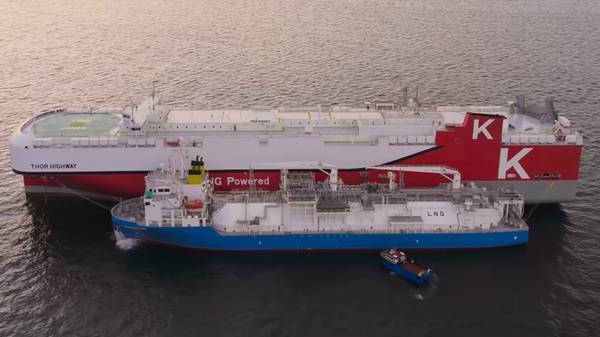
Image: Harvey Provider, a Harvey Gulf International offshore support vessel (OSV).