Wed 24 Apr 2013, 19:02 GMT

Dutch bunker sector aims to improve dependability


Issues to be addressed include traceability, undesirable substances, measurement of fuel supplied and the speed of delivery.


A joint venture agreement has been signed in The Netherlands that is aimed towards improving the dependability of the marine fuels sector, ensuring that the quality and quantity of bunkering supplied in the port of Rotterdam can be better guaranteed and making bunkering even more attractive commercially.

The agreement was signed on April 23 by Hendrik Muilerman on behalf of the Netherlands Petroleum Industry Association (VNPI), Johan van der Steen from the Dutch Organisation for the Energy Industry (NOVE), Boudewijn Siemons on behalf of the Association of Independent Tank Storage Companies (Votob) and Hans Smits, CEO of the Port of Rotterdam Authority.

According to Port of Rotterdam Authority, the bunker sector wants to make clear which substances should not be permitted in marine fuels and wishes to "make every effort to prevent such substances from getting into bunker oil".

The sector also aims to achieve greater transparency within the bunker fuel supply chain by entering into further agreements about traceability, the port authority said, adding that sampling systems will be investigated.

As regards the issue of measuring the amount of fuel supplied, Port of Rotterdam Authority said the sector would strive to develop a "reliable, innovative method of determining the quantities that are supplied", citing the use of flow meters as an example.

"Even now, it still happens that quantities supplied - even with large deliveries valued at more than €7 million - are determined in a 'traditional', less precise manner," Port of Rotterdam Authority commented.

Another issue to be highlighted was the need to ensure that bunkering takes place more quickly.

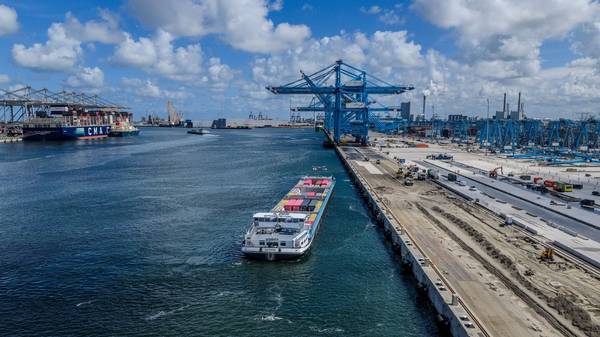
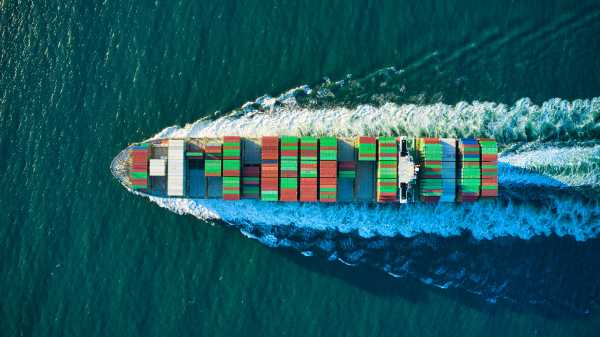
"The largest amounts of bunker oil are supplied to container ships. These ships sail on scheduled services and remain in the ports for increasingly shorter periods. This means that bunkering also has to take place increasingly faster. It is therefore in everyone’s interest for the bunker supply process to run as smoothly as possible," Port of Rotterdam remarked.

Rotterdam is currently the third largest bunker port in the world in terms of supply volumes. Sales of bunker fuel last year decreased by 10.6 percent, or 1.3 million tonnes, to 10.9 million tonnes, down from 12.2 million tonnes in 2011 and below the 11.9 million tonnes sold in 2010.

Wärtsilä logo. Shipping firms struggle to prioritise decarbonisation investments amid regulatory uncertainty, Wärtsilä survey finds  

Survey of 225 maritime executives reveals 70% say uncertainty hinders investment decisions despite regulatory pressure.

IMT Isca G-Flex vessel render. Longitude Engineering unveils IMT Isca G-Flex PSV design with alternative fuel capability  

Naval architecture firm launches adaptable platform support vessel design based on the IMT-984 G-Class hull.

Philippos Ioulianou, EmissionLink. Shore power infrastructure is key to cutting ferry emissions in European cities, says EmissionLink  

Port electrification is needed to enable vessels to switch off engines at berth, reducing urban pollution.

Maritime and Port Authority of Singapore logo. Singapore prioritises maritime resilience amid geopolitical uncertainty, eyes digitalisation and green fuels  

MPA chief outlines the sector’s adaptation to supply chain disruptions while advancing automation and alternative fuels.

Aerial photograph of Zhoushan Island. China exports first domestically blended biofuel for marine use from Zhoushan  

A vessel carries 2,600 tonnes of biofuel blend to Qingdao Port for international ship refuelling.

Green ammonia energy workshop graphic. H2SITE to present ammonia-cracking technology at Green Ammonia Energy Workshop  

Spanish company to showcase APOLO project's role in producing hydrogen for maritime decarbonisation.

Brave Quest vessel. Tsuneishi-Cebu delivers methanol dual-fuel Kamsarmax bulker  

Philippine shipyard hands over 81,100-tonne deadweight vessel capable of running on methanol fuel.

EIB and Port of Rotterdam signing. Port of Rotterdam secures EUR90m EIB loan for shore power installations  

Financing will support shore power infrastructure at three container terminals, with an EU grant also approved.

IBIA logo. IBIA updates biofuels training module for 2026  

Updated online course covers latest regulatory developments and market trends in liquid and gaseous biofuels.

Brim Explorer’s fully electric passenger vessel concept render Bureau Veritas to class all-electric trimarans for Brim Explorer  

Two zero-emission passenger vessels will operate in Norwegian fjords after extensive Arctic testing.