LNG bunker firm
Gasum has announced an agreement that enables the supplier to use
Swedegas's LNG bunkering facility at
Gothenburg's Energy Port.
The development means that Gasum's customers will now be able to load cargo from the Energy Port and also refuel with either LNG or liquefied biogas (LBG) at the same time.
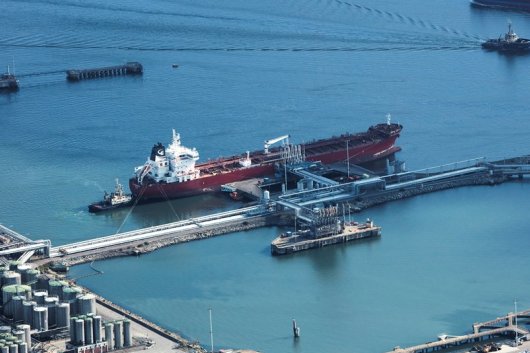
Swedegas's dual service - vessel loading and refuelling - is available at jetties
519 and
521 at Gothenburg harbour.
On October 24, Gasum performed its first LNG fuel delivery from an Energy Port jetty to the
Preem-chartered oil and chemical tanker
Tern Ocean, which simultaneously loaded its cargo from Preem's refinery.
"For years we have bunkered LNG at the quayside from diversified delivery points in the Nordics," explained
Jacob Granqvist, sales director at Gasum. "The benefit of the Swedegas set-up is that our customers can solve two issues at the same time, both getting fuel and handle cargo. Increased operational efficiency is important in the maritime sector and we are happy to make it possible."
LNG and LBG
Following last year's launch of Swedegas's LNG bunkering facility, customers calling at the port can now either bunker LNG ship-to-ship, directly from a road truck or pipe-to-jetty.
The Swedegas installation is supplied with LNG via trailers or tank containers. The gas is then distributed via pipeline to the vessels at the quayside.
The facility is scalable and can be expanded to meet the needs of the market. It also has the capability to receive and store LBG - thus making it possible for ships to also bunker this renewable fuel.
Milestones for Gasum in Gothenburg
Gasum (formerly Skangas) has now achieved a number of milestones at Sweden's largest seaport. In addition to the latest Energy Port agreement with Swedegas, the company also completed Gothenburg's
first LNG bunkering whilst loading was taking place.
Furthermore, Gasum's
maiden LBG bunker delivery was in Gothenburg, and the firm's
first supply of LNG in open sea to a vessel that cooled down its tanks in order to switch from diesel oil to LNG was just outside Gothenburg.
Swedegas
Swedegas is the owner and operator of the sole gas transmission network in Sweden. Through a 600-kilometre pipeline network, it supplies 33 municipalities, several combined heat and power plants and industrial customers with gas.
Additionally, Swedegas is a member of the Green Gas Initiative. It aims to ensure that 30 percent of the gas in its network is renewable by 2030, and 100 percent by 2050.
Last year, Belgian and Spanish utilities Fluxys and Enagas
sold their respective stakes in Swedegas to
FS Gas Transport AB - a wholly-owned subsidiary of The European Diversified Infrastructure Fund II (
EDIF II), which is managed by First State Investments.
The transaction was EDIF II's second acquisition in the Swedish gas network sector, having acquired the country's largest gas distribution system operator in April 2018.