This is a legacy page. Please click here to view the latest version.
Mon 24 Oct 2016, 09:50 GMT

Shipping firms fined $1.3m for dumping oily waste and cover-up


Oily waste discharged on voyage to Seattle; false log books given to Coast Guard inspectors.


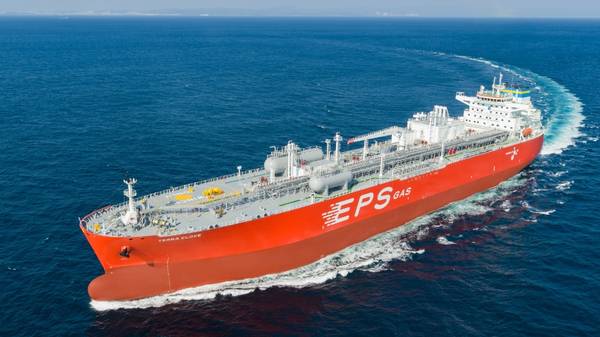
The ship owner and operator of the cargo ship M/V Gallia Graeca [pictured] were fined $1.3 million by a U.S court on Friday for the dumping of oily waste at sea and a subsequent cover-up.

The sentencing of ship operator Angelakos (Hellas) S.A. and ship owner Gallia Graeca Shipping Ltd. comes four months after the companies were found guilty in June for violating the Act to Prevent Pollution from Ships, falsification of records in a federal investigation and engaging in a scheme to defraud the United States.

The trial

According to records filed in the case and testimony at trial, the M/V Gallia Graeca travelled from China to Seattle in October 2015. During the voyage, a pollution-control device known as an oil water separator was inoperable.

On 16th, 26th and 27th October 2015, the defendants were deemed to have discharged overboard approximately 5,000 gallons of oily bilge water and concealing these incidents from the Coast Guard by making false statements to inspectors and making false entries and omissions in the ship's oil record book.

When Coast Guard inspectors asked the engineers to operate the oil water separator during the inspection, the engineers did so in such a way that the equipment appeared to be working properly, even though it was not.

The inspectors examined the oil water separator and found its filters were clogged with oil and found oil residue in the overboard discharge piping. Records indicated the oil water separator had not been serviced for months prior to the voyage from China.

The defendants presented the Coast Guard with an official oil record book stating that bilge water had not been discharged during the voyage to Seattle. However, the Coast Guard investigation discovered evidence that oily water had been discharged into the sea three times on its voyage from China.

Calling it 'a voyage of deception and pollution", prosecutors argued that the engineers tried to hide the pollution from the Coast Guard to avoid having the ship detained in Seattle. Keeping the ship on schedule was a benefit to the owners and operators who had a contract to move $25 million in goods out of Seattle. Shipping company executives were said to have been in contact with the engineers about how they should present the log book for the Coast Guard inspection.

"Through strong partnerships with the Department of Justice, the U.S. Attorney's Office and our Coast Guard Investigative Service, this case demonstrates our commitment to hold accountable shipping companies engaged in illegal activities," said Captain Joe Raymond, Coast Guard Captain of the Port Puget Sound. "The Coast Guard will protect our marine environment through coordination with international, national, regional and local partners and will promote sustainable development of our nation's ocean resources by enforcing pollution prevention laws and regulations and maintaining a robust vessel inspection program."

Sentencing

The companies were placed on five years of probation and required to have environmental compliance plans in place to ensure they abide by anti-pollution policies and regulations.

In addition to the $1.3 million fine, U.S. District Judge Coughenour ordered a $200,000 community service payment to be shared between the National Fish and Wildlife Foundation and the National Parks Foundation. The payment will go to fund marine restoration and preservation projects in the Pacific Ocean, the site of the pollution incident.

The two engineers who operated the ship's equipment and falsified the log books were sentenced to short prison terms before returning to Greece.

In imposing the monetary penalty, U.S. District Judge John C. Coughenour for the Western District of Washington said he hoped the sanctions "would resonate and cause other companies to pause when they think about creating a corporate culture that encourages deception."

"These companies promoted a culture of lies and lawlessness that left a trail of pollution in the Pacific Ocean," said U.S. Attorney Annette Hayes. "Knowing that the Coast Guard was going to do an inspection of their shipping vessel, corporate managers allowed the Chief Engineer to present falsified documents. The significant fines imposed in this case send a clear message that those who spoil our environment by putting their business interests ahead of our laws will be held responsible."


Suezmax crude oil tanker render. Guangzhou Shipyard secures Suezmax order, delivers vessels ahead of schedule  

China State Shipbuilding subsidiary reports nine vessel deliveries in the first quarter of 2026.

Clean ammonia project pipeline chart as of March 2026. Renewable ammonia pipeline grows despite Norway project freeze  

GENA Solutions tracks 325 projects totalling 146 MMT of capacity by 2034 despite execution challenges.

Antwerpen and Arlon naming ceremony. Exmar names world’s first ocean-going ammonia dual-fuel gas carriers in South Korea  

Two 46,000-cbm vessels can reduce CO₂ emissions by up to 90% during navigation.

Fujian province map with highlighted locations. Gulf Marine expands bonded lubricant supply network in China’s Fujian province  

Company adds supply points in Putian, Ningde and Fuqing, covering 20 terminals across the region.

Excelerate Acadia naming ceremony. Bureau Veritas classifies Excelerate Energy’s new 170,000-cbm FSRU Excelerate Acadia  

Vessel built by HD Hyundai Heavy Industries features dual-fuel engines and proprietary regasification system.

Osprey Energy logo. Osprey Energy seeks junior bunker trader to support Cebu trading activities from Netherlands  

Dutch marine fuel supplier targets Cebu region expansion through new training programme for Filipino candidates.

EUA prices dropping graphic. KPI OceanConnect highlights falling EUA prices as opportunity for shipowners to lock in compliance costs  

Marine fuel firm says timing carbon allowance purchases can reduce costs as EU emissions scope expands.

RINA employee in control room. RINA partners with Hanwha Group on battery-hybrid propulsion for ro-ro ferries  

Classification society to provide regulatory compliance verification for hybrid battery systems on newbuilds and retrofits.

Amadeus Titanium vessel. HGK Shipping’s Amadeus Titanium fitted with wind assistance system  

Coastal vessel equipped with VentoFoils at Dutch port to reduce fuel consumption on Covestro routes.

Sebastian Weder, Bunker One. Bunker One expands physical supply operations to Tallinn and Finland  

Marine fuel supplier extends Baltic Sea coverage with new operational presence in Estonia and Finland.


↑  Back to Top