Wed 19 Dec 2012, 13:47 GMT

US Senator calls for 'hybrid' approach to fuel use


Proposal suggests cruise ships burn cleaner fuels near communities and more cost-effective fuels when in remote areas.


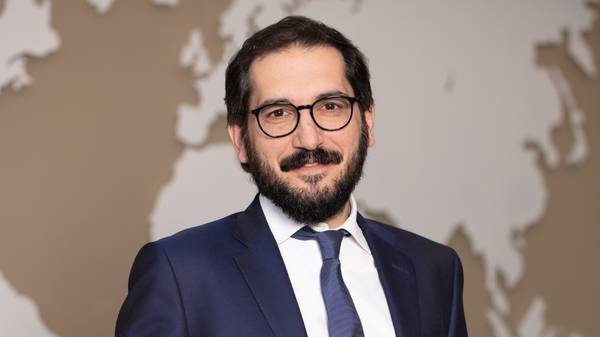
U.S. Senator for the State of Alaska, Mark Begich [pictured], is leading an effort with Hawaii’s senators urging the Environmental Protection Agency (EPA) to adopt a phased-in approach for cruise ships forced to meet stricter standards for air emissions under the North American Emission Control Area, or ECA.

Under new ECA rules, cruise ships are required to burn more expensive, cleaner-burning fuel in specific geographic areas in the U.S., including all of Alaska’s Inside Passage through the Gulf of Alaska and up to the major cruise ports of Whittier and Seward.

In a letter sent Thursday to Environmental Protection Agency Administrator Lisa Jackson, Begich requests a hybrid approach for cruise operators in Alaska and Hawaii wherein they will be required to burn cleaner fuel close to communities, but will be allowed to use existing fuel types when in remote areas. Hawaii Sens. Daniel Inouye and Daniel Akaka joined Begich in signing the letter.

“Any federal rule increasing transportation costs to our geographically disadvantaged states has to be examined closely,” the letter to Jackson said. “We expect agency policy-makers to balance the costs incurred by operators of large vessels with the need to reduce harmful emissions through the use of lower sulfur fuel when inside the ECA. In addition, our economies rely in large part on tourism, including a large number of cruise ship passengers.”

Alaska’s major tourism organizations and cruise-dependent coastal communities have joined with cruise operators to object to the ECA, citing concerns that it will drive the price of cruising up and the number of visitors down. Tourism is the third-largest private-sector industry in Alaska and more than half of Alaska’s annual visitors come on cruise ships.

"Full implementation of the ECA would require the cruise industry to switch to cleaner fuels everywhere it operates in Alaska versus only in specific areas under Begich’s proposed hybrid approach. The hybrid approach will help protect air quality near communities while keeping costs competitive for the cruise industry," a statement released by the U.S Senator said.

“The cruise industry has proposed an innovative pilot-program in which it would achieve the same public health benefits that continuously burning ECA-compliant fuel would achieve, but would have the flexibility to use population-weighted averaging to achieve those standards,” the letter said.

Initial implementation of the ECA went into effect on August 1, 2012. Stricter and more costly emission requirements begin in January 2015. “It’s my hope that working with the EPA now will get us to an alternative approach more favorable to Alaska communities and our valuable tourism industry before the ECA’s strictest requirements take effect in 2015,” Begich said.

A link to the letter has been provided below.

http://www.begich.senate.gov/public/_cache/files/4c162e1b-451e-4673-84ea-dd5539c43eaf/2012_12_13%20Letter%20to%20EPA%20Jackson.pdf


Ardmore Shipping logo. Ardmore Shipping posts 14% fleet emissions reduction in 2025 sustainability report  

Ardmore Shipping’s annual sustainability report highlights emissions cuts, safety gains and governance rankings across its tanker fleet.

Peter Keller, SEA-LNG. SEA-LNG mid-year review points to continued growth across methane pathway as coalition marks tenth anniversary  

LNG orders, bunkering volumes and biomethane production all rise as SEA-LNG gains IMO consultative status.

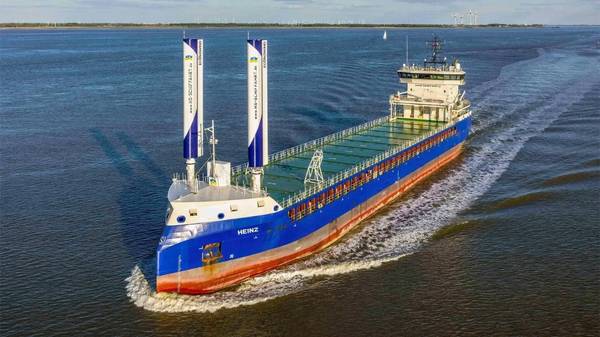
Heinz vessel. Econowind receives DNV type approval for VentoFoil 3-Series wind propulsion wing  

DNV certification set to streamline integration of VentoFoils on classed vessels worldwide.

Wärtsilä ammonia engine Wärtsilä to supply ammonia engines and propulsion systems for two Navigator Amon gas carriers  

Mid-size LPG/liquid ammonia carriers will be equipped with Wärtsilä’s ammonia-fuelled auxiliary engines.

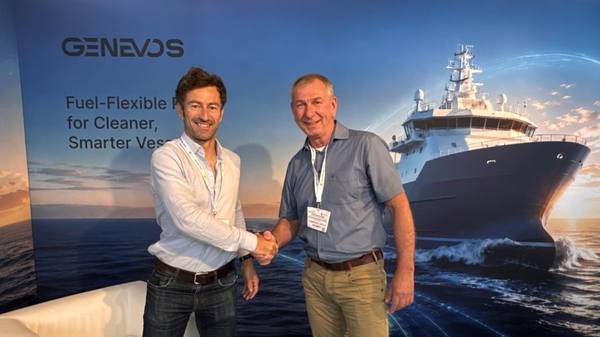
Phil Sharp and Toon Muhlheim. Genevos and Koedood Marine Group sign LOI to explore hydrogen fuel cell deployment  

Two companies to collaborate on the use of hydrogen fuel cell systems for inland and coastal maritime transport.

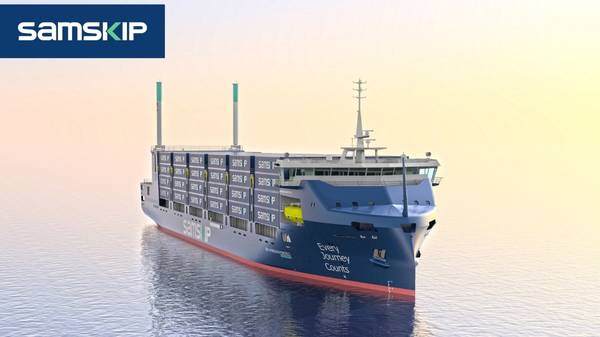
Samskip SeaShuttle vessel render. Samskip brings SeaShuttle project into European HyShip initiative to develop liquid hydrogen infrastructure  

Two hydrogen-powered container vessels will operate between Rotterdam and Oslo from 2027.

Antwerpen vessel. Korea Register and HD Hyundai team up to advance ammonia-fuel shipping in South Korea  

Two organisations are cooperating on eco-friendliness verification for ammonia dual-fuel vessels.

Fabio Cococcetta, WinGD. Green ammonia could become the first commercially viable zero-emission marine fuel, WinGD study suggests  

Joint report by WinGD and Envision Energy sets out the economic case for green ammonia.

Rasul Shirinov, Oilmar. Oilmar appoints junior marine fuels trader at Dubai trading desk  

UAE-headquartered bunker firm hires Rasul Shirinov, with a background in the agricultural sector.

Antonia Maersk vessel. Maersk bunkers large dual-fuel vessel with 100% ethanol in Barcelona  

Ocean carrier scales up ethanol bunkering in bid to broaden its low-emission fuel strategy.