Fri 12 Oct 2012, 14:31 GMT

New York terminal to provide crude oil services


Agreement reached with Irving Oil to offer crude oil services at Buckeye's Albany terminal.


Buckeye Partners, L.P. has announced today that it has reached a multi-year agreement with a subsidiary of Irving Oil Limited to provide crude oil services at its terminal located in Albany, New York, including off-loading unit-trains, storage, and throughput.

The approximately 1.8 million barrel storage facility located within the Port of Albany, along the Hudson River, is expected to begin handling crude oil on November 1, 2012. Buckeye plans to make modifications to the Albany terminal that, once completed, will allow the facility to handle both crude oil and ethanol unit-trains with a total capacity in excess of 135,000 barrels per day.

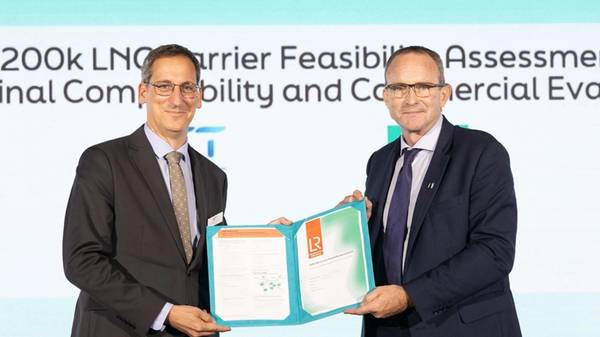
“Rail transport has become a critical component of the logistics chain as domestic crude oil production has increased significantly,” said Clark C. Smith [pictured], Buckeye’s president and chief executive officer. "The addition of crude oil services at our Albany terminal is part of our strategy to increase and improve the utilization of our existing assets. We are excited to continue to develop these kinds of opportunities with a strategic partner such as Irving Oil."

Buckeye owns and operates one of the largest independent liquid petroleum products pipeline systems in the United States in terms of volumes delivered, with over 6,000 miles of pipeline.

Buckeye also owns approximately 100 liquid petroleum products terminals with aggregate storage capacity of approximately 69 million barrels, operates and/or maintains approximately 2,800 miles of pipeline under agreements with major oil and chemical companies, owns a high-performance natural gas storage facility in Northern California, and markets liquid petroleum products in certain regions served by its pipeline and terminal operations.

Buckeye’s flagship BORCO marine terminal in The Bahamas, is one of the largest crude oil and petroleum products storage facilities in the world, serving the international markets as a premier global logistics hub.

Image: Clark C. Smith, Buckeye’s president and chief executive officer.


Bermuda Container Line (BCL) logo. Bermuda Container Line imposes emergency bunker surcharge citing Iran War fuel price spike  

Shipping operator to add $150 per TEU charge from 1 May amid geopolitical fuel cost pressures.

China flag. Zhejiang’s first methanol-powered container ship launches in Jiaxing  

Vessel uses methanol propulsion technology to reduce carbon dioxide emissions by 90%.

TES flag with a model vessel in the background. TES joins SEA-LNG coalition to advance e-methane as marine fuel  

Green energy company targets 1m tonnes annual e-methane production by 2030 for shipping decarbonisation.

Ethanol and methanol workshop graphic. IBIA to host workshop on ethanol and methanol marine fuels during Singapore Maritime Week  

Half-day event will examine alcohol-based fuel pathways and integration into shipping’s multi-fuel landscape.

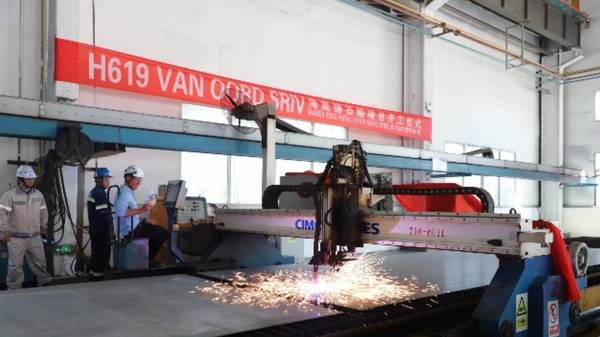
Steel-cutting ceremony for 13,000-dwt vessel. ROC begins construction of second chemical tanker for Essberger  

Chinese shipbuilder holds steel-cutting ceremony for 13,000-dwt methanol-ready vessel with ice class capability.

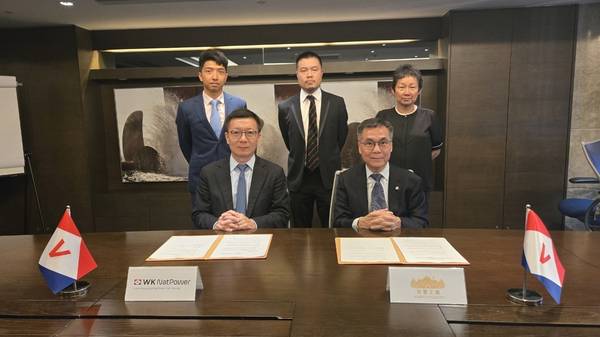
Norsepower and CHIC sign agreement. Norsepower and Cosco Shipping Heavy Industry Equipment sign wind propulsion cooperation agreement  

Wind propulsion technology provider partners with Chinese shipyard to scale rotor sail production.

Wärtsilä logo. Shipping firms struggle to prioritise decarbonisation investments amid regulatory uncertainty, Wärtsilä survey finds  

Survey of 225 maritime executives reveals 70% say uncertainty hinders investment decisions despite regulatory pressure.

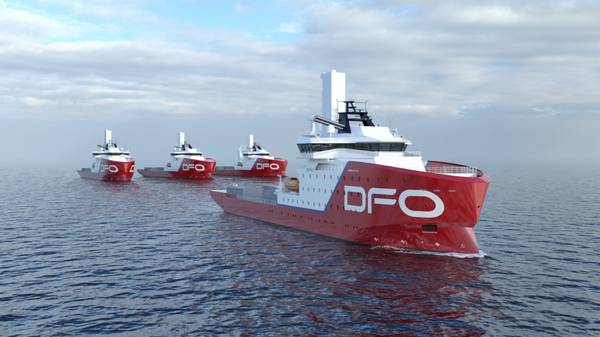
IMT Isca G-Flex vessel render. Longitude Engineering unveils IMT Isca G-Flex PSV design with alternative fuel capability  

Naval architecture firm launches adaptable platform support vessel design based on the IMT-984 G-Class hull.

Philippos Ioulianou, EmissionLink. Shore power infrastructure is key to cutting ferry emissions in European cities, says EmissionLink  

Port electrification is needed to enable vessels to switch off engines at berth, reducing urban pollution.

Maritime and Port Authority of Singapore logo. Singapore prioritises maritime resilience amid geopolitical uncertainty, eyes digitalisation and green fuels  

MPA chief outlines the sector’s adaptation to supply chain disruptions while advancing automation and alternative fuels.