
 |
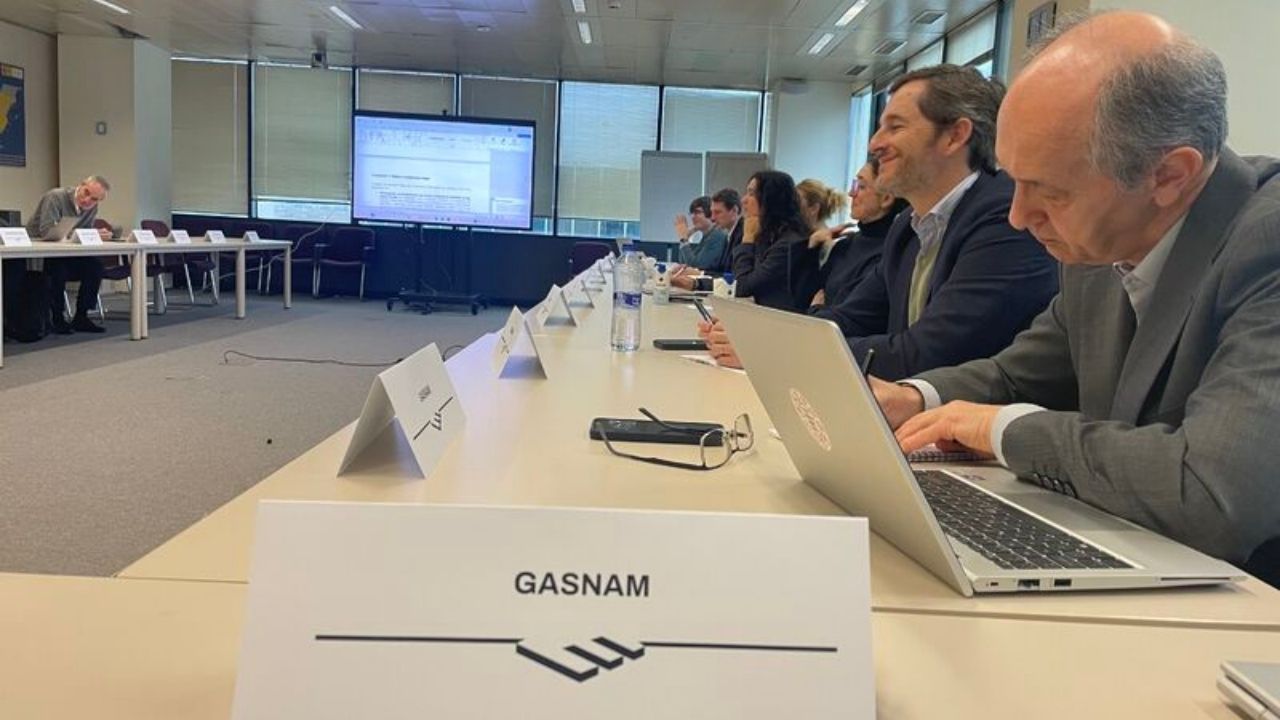
Spain is close to finalising a national specifications framework designed to harmonise LNG, bio-LNG and e-LNG bunkering operations across its port network, according to industry association Gasnam.
The organisation held a working session this week at Puertos del Estado's headquarters to complete the strategic document, which will serve as a common reference for port authorities when regulating liquefied gas fuel supply services.
The framework standardises requirements for access, safety and environmental quality across three bunkering models: ship-to-ship (STS), truck-to-ship (TTS) and pipeline-to-ship (PTS) operations. Its aim is to create consistent operating conditions nationwide while supporting the expansion of lower-carbon marine fuels.
Gasnam said LNG bunkering volumes in Spain have increased fourfold over the past two years, with bio-LNG accounting for 12% of total supplies in 2025 and showing a rising trend.
Development of the document has been coordinated with Spain’s General Secretariat for Air and Maritime Transport under the Ministry of Transport and Sustainable Mobility, alongside Puertos del Estado.
Industry participants involved in the process include fuel suppliers and infrastructure operators such as Peninsula, Axpo Iberia, Shell, Enagás, Molgas Energy Group, ESK Gas Logistics, Baleària and Repsol, alongside several Spanish port authorities.
The move comes as shipping faces increasing pressure to cut emissions under European and international decarbonisation targets, with LNG and bio-LNG positioned as transitional fuels in the pathway towards lower-carbon maritime operations.

|
Flex Commodities appoints Christos Doulaveris as general manager for Greece
Bunker trader strengthens its Greek operations with a new leadership appointment. |
|
|
|
||
|
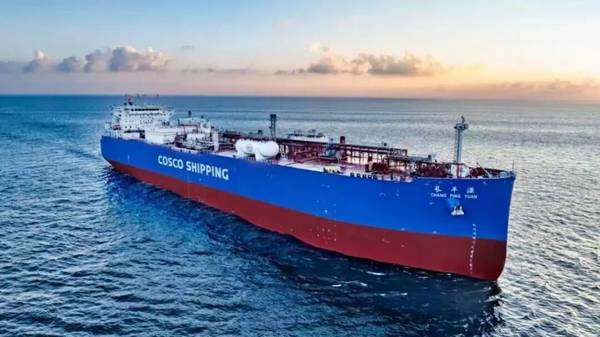
China delivers first domestically built VLGC under Chinese flag
Cosco Shipping’s new 88,000-cbm gas carrier features an LPG dual-fuel main engine. |
|
|
|
||
|
Electric and hybrid ferries could cut Sea of Marmara emissions by 63%, IMO study finds
A GreenVoyage2050 study finds that electrification could slash emissions, avoid €492 million in damage costs and support jobs. |
|
|
|
||
|
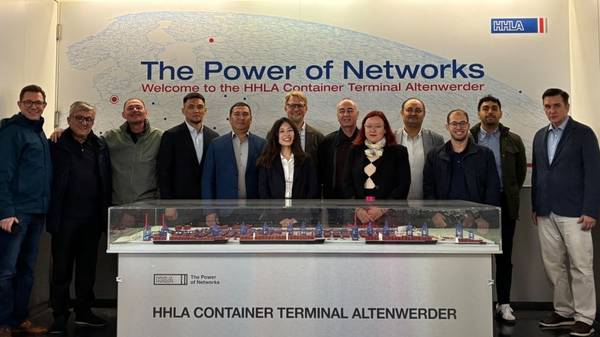
Batumi Sea Port officials study decarbonisation practices in Hamburg
Georgian port representatives visited Hamburg to study emissions accounting, hydrogen technology and automation ahead of their 2026 recertification audit. |
|
|
|
||
|
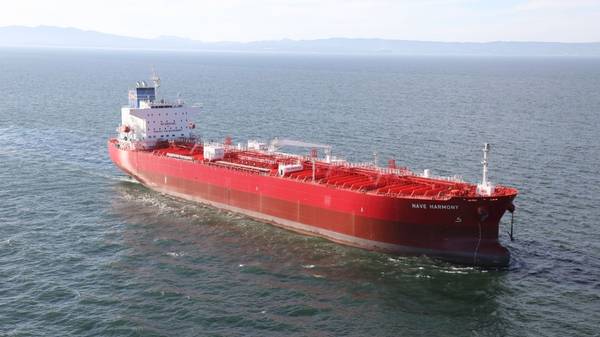
Navios Partners takes delivery of methanol-ready MR2 tanker Nave Harmony
Shipowner adds 49,998-DWT newbuild product tanker equipped with methanol-ready technology. |
|
|
|
||
|
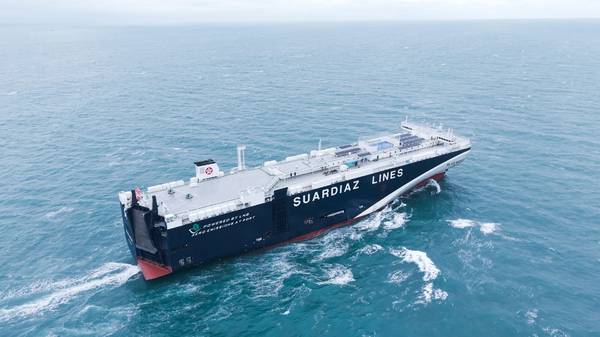
Eastern Pacific Shipping delivers LNG dual-fuel PCTC to Suardiaz
RS Atlantico is the first mid-sized 5,500-CEU car carrier built through the EPS–Suardiaz partnership. |
|
|
|
||
|
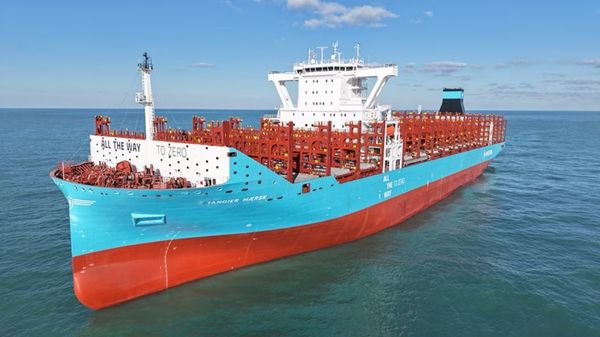
Maersk completes first US ethanol bunkering of a deep-sea container ship
Shipper tests US-produced corn ethanol as a marine fuel aboard the Tangier Maersk. |
|
|
|
||
|
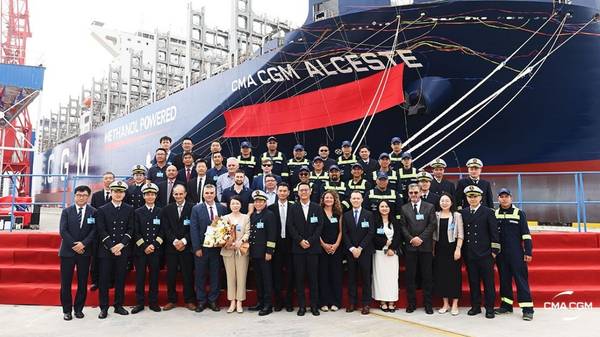
CMA CGM names methanol-powered vessel after Molière’s Alceste
Ship features a MAN B&W 8G85ME two-stroke engine configured to run on conventional marine fuel and methanol. |
|
|
|
||
|
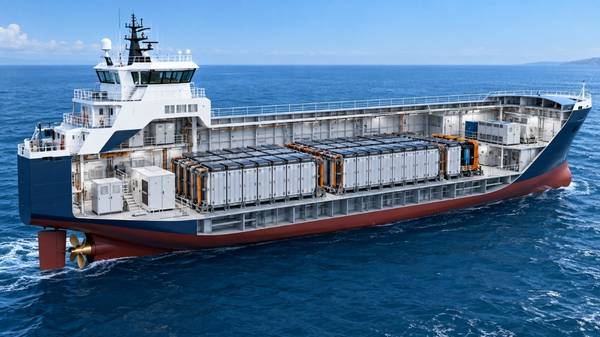
Why batteries still cannot power ships across oceans
Battery-electric ships dominate short-sea routes, but energy-density and infrastructure constraints keep deep-sea propulsion out of reach. |
|
|
|
||

|
VPS to run marine fuel management course in Singapore
Two-day programme in November covers fuel handling, testing and decarbonisation rules, including a laboratory tour. |
|
|
|
||
| Spain, Norway and Denmark lead Europe's green shipping fuel production, study finds [News & Insights] |
| Barents NaturGass begins LNG bunkering operations for Havila Kystruten in Hammerfest [News & Insights] |
| HD Hyundai Heavy Industries receives design approval for 20,000-cbm LNG bunkering vessel [News & Insights] |
| Titan and Sogestran agree long-term deal for new 6,000-cbm LNG bunker vessel in western Mediterranean [News & Insights] |
| Molgas secures 10-year LNG truck-to-ship licence at the Port of Bilbao [News & Insights] |
| MOL signs bio-LNG supply deals for car carriers across Northern Europe and Mediterranean [News & Insights] |
| Molgas completes first LNG bunkering operation at Palermo [News & Insights] |
| Molgas completes LNG cool-down and bunkering for Northern Pathliner at Northern Lights terminal in Norway [News & Insights] |
