
 |
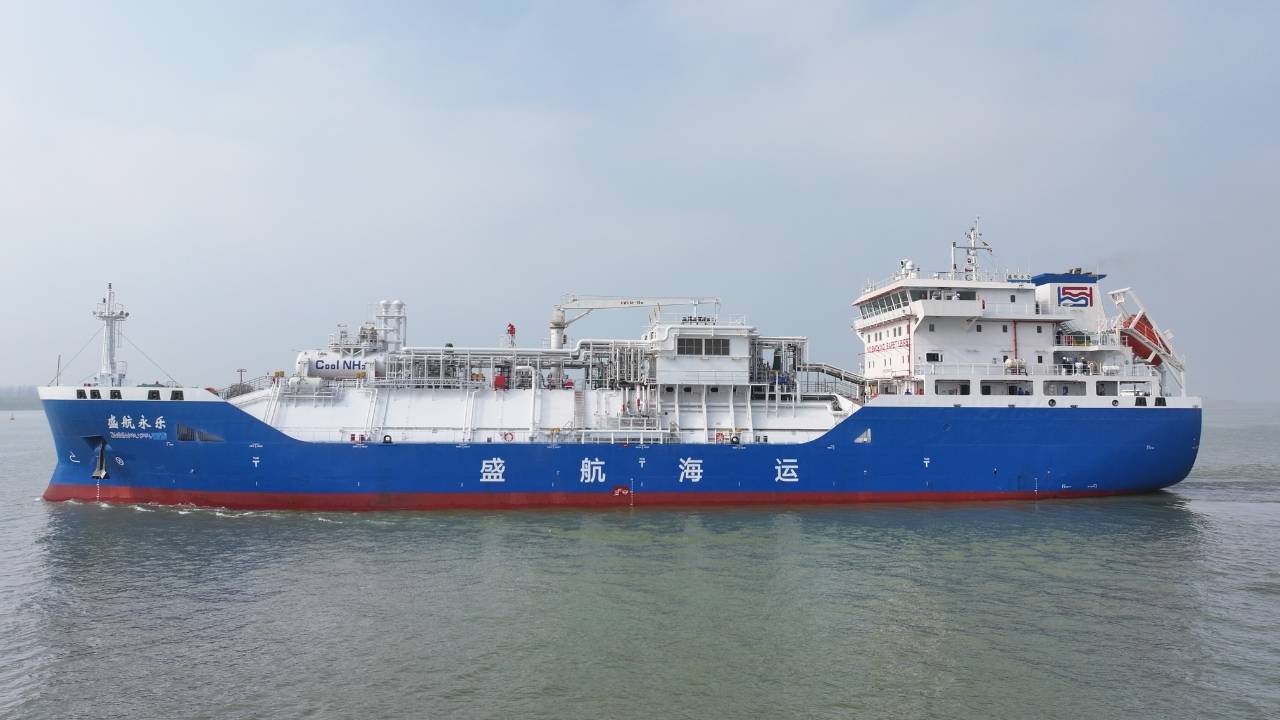
The world's first operational ammonia bunker vessel has entered service, Swedish naval architecture firm FKAB reports, marking the first time a vessel has received an ammonia bunkering class certificate and become operationally ready for ship-to-ship liquid ammonia fuel transfer.
The vessel, Shenghang Yongle, was originally designed as a flexible liquefied gas carrier before being converted into a dual-purpose vessel capable of both transporting liquid ammonia and delivering it as fuel through ship-to-ship bunkering. The conversion was led by Jiangsu Andefu Energy Development, with FKAB and cargo handling supplier Gloryholder providing the technical drawing documentation, and China Classification Society overseeing the certification process.
The 5,500-cbm semi-refrigerated and semi-pressurised liquefied gas carrier was designed by FKAB, built by China Merchants Shipbuilding Industry Dingheng shipyard, and is managed by Shenghang Shipping Co., Ltd. Designed for unrestricted navigation, the vessel is capable of carrying several liquefied gas cargoes including ammonia, LPG and vinyl chloride monomer. Its cargo tanks have a minimum design temperature of −48°C, and the vessel is equipped with two low-temperature reliquefaction systems.
While several ammonia bunker vessel projects have reached design, feasibility or construction stages in recent years, the Shenghang Yongle is said to be the first to have progressed into operational readiness.
The conversion work included modifications to the bunkering system, development of operating procedures, risk assessments, and the establishment of safety and emergency-response arrangements. According to FKAB, particular attention was given to the challenges associated with ammonia, including its toxicity, material compatibility, low-temperature operation, leak detection and risk control during bunkering operations.
Ammonia is regarded by parts of the shipping industry as one of the most promising potential zero-carbon marine fuels when produced using renewable energy. Its wider adoption, however, is widely considered to depend not only on ammonia-capable ships but also on a reliable supply chain, encompassing production, storage, transport and bunkering infrastructure. The absence of operational ammonia bunkering vessels has been cited as one of the gaps in that chain.
FKAB said the project demonstrates the value of designing vessels with operational flexibility, noting that having developed the original vessel design, it was able to support the conversion by preparing the technical drawing documentation. "Shenghang Yongle was designed and built as a capable, versatile working vessel," the company said. "Its conversion into an ammonia bunker vessel shows how robust naval architecture, adaptable cargo systems and carefully developed conversion documentation can help turn the marine energy transition into operational reality."
|
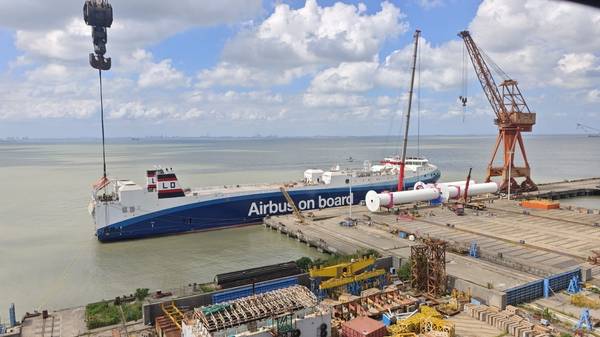
Norsepower installs first rotor sail aboard methanol-powered ro-ro vessel built for Airbus charter
The Spirit of Toulouse will carry six rotor sails alongside dual-fuel methanol engines on a transatlantic route. |
|
|
|
||
|
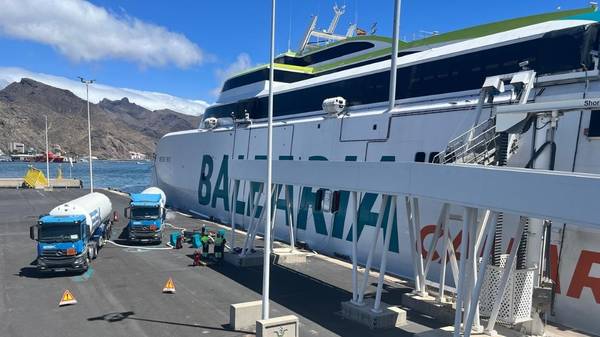
Baleària Canarias completes first truck-to-ship LNG bunkering for fast ferry at Tenerife
Mercedes Pinto received around 600 MWh of LNG via two tanker trucks simultaneously. |
|
|
|
||
|
O Bunkering claims 15-minute marine lubricant delivery at Duqm
Omani supplier says local stock enables rapid turnaround for vessel operators. |
|
|
|
||
|
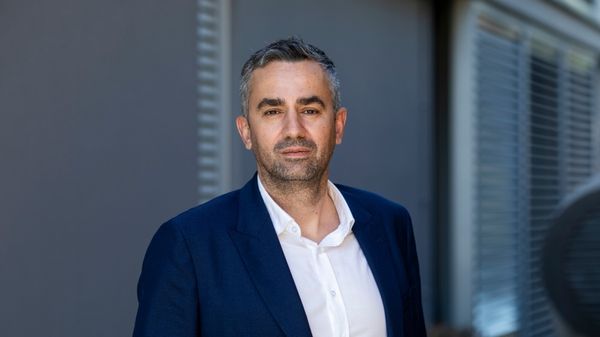
Shipowners risk financial exposure by delaying EU allowance transfers, EmissionLink warns
EmissionLink says last-minute EUA compliance habits are creating avoidable financial and commercial risk. |
|
|
|
||
|
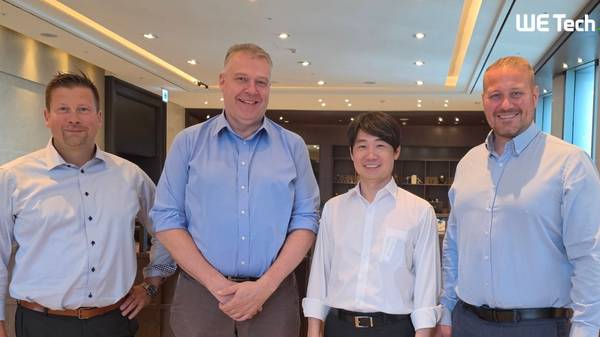
South Korea’s Vinssen signs MoU with Finland’s WE Tech Solutions to target European marine electrification market
The agreement combines hydrogen fuel cell systems with advanced power conversion and management technology. |
|
|
|
||
|
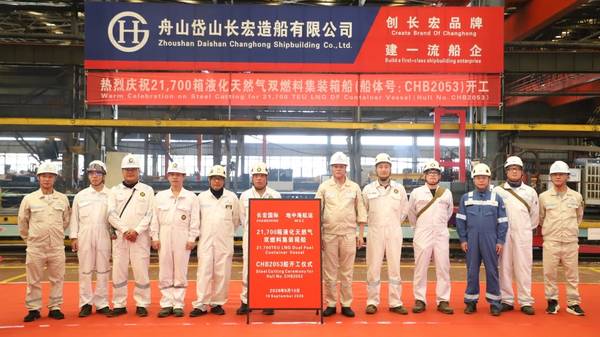
Changhong International starts building 21,700-TEU LNG dual-fuel container ship for MSC
Vessel is described as the largest container ship currently under construction in Zhejiang Province. |
|
|
|
||
|
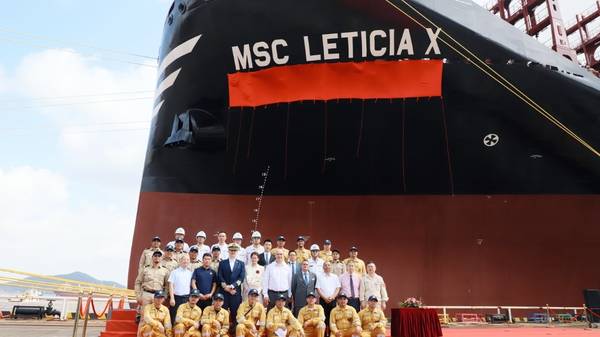
Changhong International delivers fifth MSC LNG dual-fuel boxship 324 days early
Chinese shipyard hands over 10,300-TEU vessel to MSC well ahead of contract schedule. |
|
|
|
||

|
Cosco Shipping names 88,000-cbm VLGC Chang Ping Yuan with dual-fuel LPG propulsion
Owner claims 20% CO₂ reduction and Panama Canal compatibility across both lock systems. |
|
|
|
||
|
World Fuel seeks senior marine fuels sales executive in London
Position requires minimum of 10 years' experience in marine fuels, marine energy, or shipping. |
|
|
|
||

|
Amogy and LOTTE Fine Chemical sign MoU to advance ammonia solutions in South Korea
Partnership structured around ammonia bunkering, hydrogen refuelling infrastructure, and distributed ammonia-to-power generation. |
|
|
|
||
| Trelleborg and Simwave launch LNG transfer equipment training programme at Gastech 2026 [News & Insights] |
| Trelleborg and Simwave launch LNG transfer equipment training programme at Gastech 2026 [News & Insights] |
| MOL names world’s first LNG carrier fitted with wind-assisted propulsion for Chevron charter [News & Insights] |
| DNV and India’s GRSE sign MoU on green propulsion and advanced shipbuilding [News & Insights] |
| LNG bunker fleet may need to more than double by 2030, DNV warns [News & Insights] |
