
 |
The European Community Shipowners’ Associations (ECSA) has called on the European Commission to make permanent the maritime derogations under the EU Emissions Trading System (ETS) ahead of the directive’s upcoming revision, warning that the current time-limited exemptions — set to expire at the end of 2030 — are insufficient and, in some cases, not fit for purpose.
In a position paper published on 13 July, ECSA set out a series of recommendations covering four areas: islands, ice-classed vessels, outermost regions, and transnational public service obligations (PSOs). The organisation also called for derogations to apply automatically across all EU member states, rather than depending on individual governments choosing to activate them during national transposition of the directive.
Shipping carries around 76% of the EU’s external trade, ECSA notes, providing essential connectivity to Europe’s islands, outermost regions, and ice-bound areas. European shipowners control 34.5% of global tonnage and account for 44% of the global orderbook for vessels powered by sustainable fuels, the association added.
Islands
Under the current EU ETS directive, passenger ships and ro-pax ferries operating between a member state’s ports and its islands are exempt from surrendering allowances, provided the island has fewer than 200,000 permanent residents and no road or rail connection to the mainland — and provided the relevant member state has chosen to activate the derogation.
ECSA argues that the 200,000-person population threshold is an arbitrary cut-off that does not reflect the structural realities facing larger islands, which share the same characteristics — no mainland road or rail links, limited bunkering infrastructure, and near-total dependence on maritime transport for essential goods. The association is calling for the derogation to be extended to all EU islands regardless of population, including island member states, and to cover both passenger and cargo vessels.
ECSA also recommends adding Ceuta and Melilla to the list of qualifying locations, noting that their geographical position on mainland Africa and the absence of land links with mainland Spain make them comparable to island ports in relation to mainland Europe — a position already reflected in the FuelEU Maritime regulation.
Ice-classed vessels
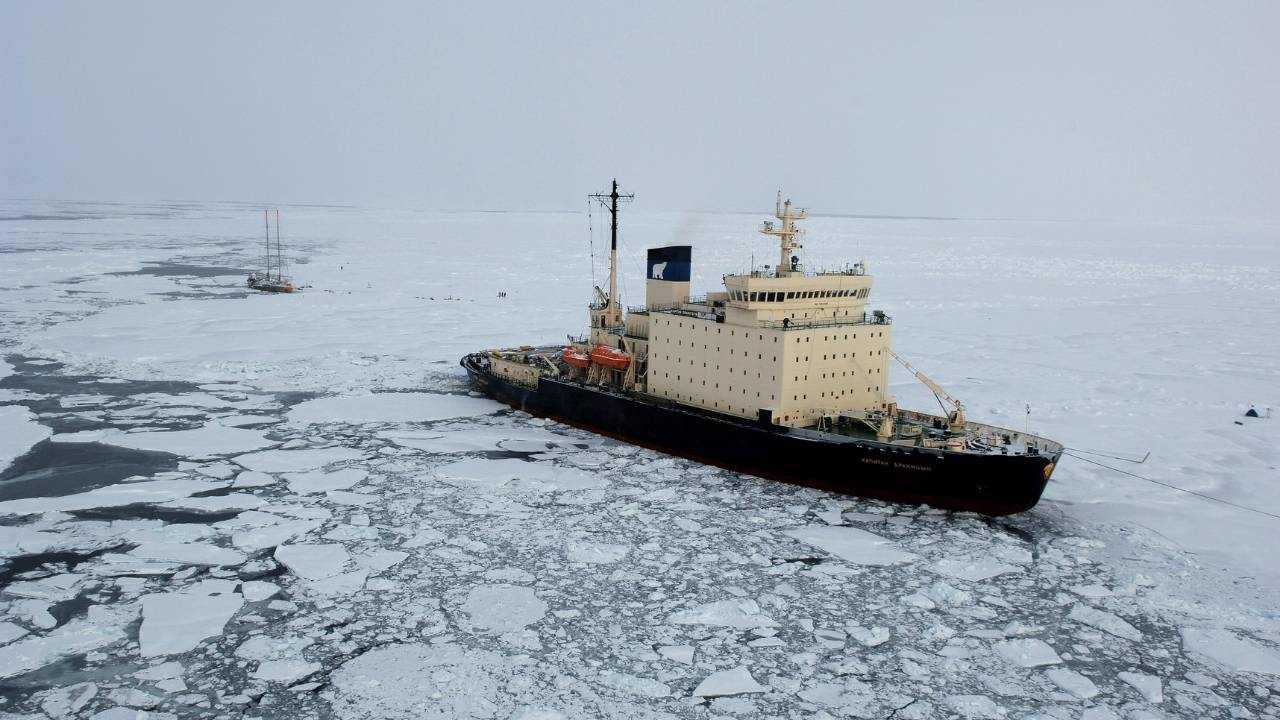
Currently, ships of ice class IA, IA Super or equivalent — as established by the Baltic Marine Environment Protection Commission (HELCOM) — may surrender 5% fewer allowances than their verified emissions until 31 December 2030.
ECSA argues this derogation should be made permanent and aligned with the equivalent provision under FuelEU Maritime, which also covers sailing in ice conditions rather than being limited to ice-classed ship designations. The association contends that higher fuel consumption on ice-classed vessels reflects safety and navigational requirements rather than commercial choices, and that penalising such vessels with additional ETS costs for emissions they cannot avoid would be, according to the organisation, “contrary to the polluter-pays principle on which the EU ETS is built.”
ECSA further noted that the International Maritime Organization’s (IMO) operational carbon intensity regulation for ships above 5,000 GT already recognises correction factors for ice-classed ships and for sailing in ice conditions, and called on the Commission to bring the ETS directive into line with this framework. It also highlighted vessels certified under the IMO Polar Code, whose reinforced hull structures and enhanced propulsion systems result in permanently higher fuel consumption, and recommended that an equivalent derogation be introduced for such vessels where comparable technical constraints can be demonstrated.
Outermost regions
The current ETS derogation for outermost regions — covering voyages between a member state’s outermost regions and its other ports — also expires at the end of 2030 and is restricted to voyages within the same member state.
ECSA contends that this restriction creates an internal inconsistency, given that all outermost regions share the same status under Article 349 of the Treaty on the Functioning of the European Union (TFEU) and face identical structural challenges. The association is calling for the derogation to cover all voyages from, to, and between outermost regions regardless of which member state is involved, and to extend to intermediate mainland port calls where these are exclusively linked to the loading, unloading, or redistribution of cargo originating from or destined for outermost regions.
ECSA also called for the derogation to be extended to EU Overseas Countries and Territories (OCTs), which the organisation says face the same remoteness-related challenges as outermost regions, even though they are not formally classified as such.
Public service obligations and search and rescue
ECSA is calling for the derogation on transnational public service obligations — currently covering passenger ships and ro-pax ferries operating between member states with no land border between them — to be retained on a permanent basis and aligned with the equivalent derogation for national PSOs under FuelEU Maritime.
In addition, the position paper calls for voyages related to search and rescue (SAR) operations to be explicitly exempted from ETS compliance requirements, on the grounds that vessels engaged in SAR operations are acting under binding legal obligations rather than conducting commercial voyages.
ECSA stated that, if the above recommendations are adopted, the current geographical scope of the EU ETS for shipping could be maintained. “A stable geographical scope gives the sector the predictability it needs,” the organisation said. “Permanent and fit-for-purpose derogations complete this framework, ensuring it works for islands, outermost regions and ice-bound regions and trade routes.”
|
FuelEU pooling drives surge in bio-LNG demand, Titan analysis finds
Clean fuel supplier's modelling shows pooling mechanism turning overcompliance into tradable value for LNG-fuelled ships. |
|
|
|
||

|
Ports told to prepare now for advanced nuclear power
Joint paper sets out a readiness pathway for ports facing nuclear-powered vessels, floating reactors and small modular units |
|
|
|
||
|
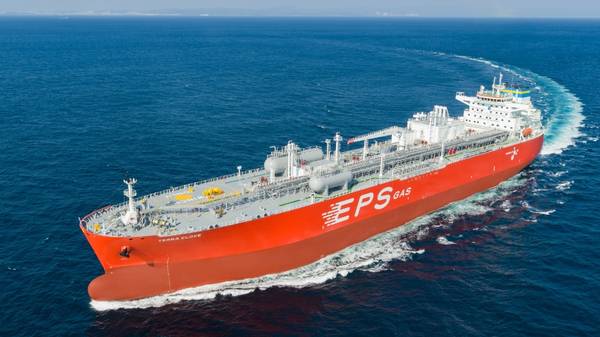
Eastern Pacific Shipping takes delivery of first ammonia dual-fuel VLAC
Terra Clove powered by first Everllence B&W 6G60ME-C10.5-LGIA ammonia dual-fuel two-stroke engine. |
|
|
|
||

|
Bureau Veritas approves WinGD's variable compression ratio technology for dual-fuel engines
Classification society grants type approval to engine technology enabling compression ratio adjustment across different marine fuels. |
|
|
|
||

|
Dual-fuel fleet passes 500 ships as investment tops $200bn
World Shipping Council data shows dual-fuel container ships and vehicle carriers growing fast, with IMO rules uncertain. |
|
|
|
||

|
VPS to host Athens seminar on fuel efficiency and carbon reduction
VPS's final European round table of 2026 will cover marine fuels, lubricants and decarbonisation in Athens. |
|
|
|
||
|
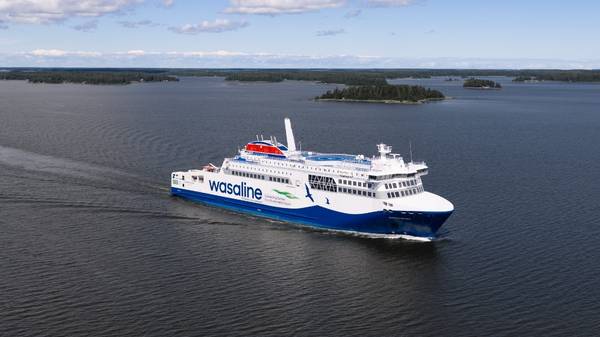
Wasaline secures locally produced biogas supply from St1 Biokraft for Vaasa–Umeå ferry
Agreement will supply 42 GWh of liquefied biogas annually, with deliveries due to start in January 2028. |
|
|
|
||
|
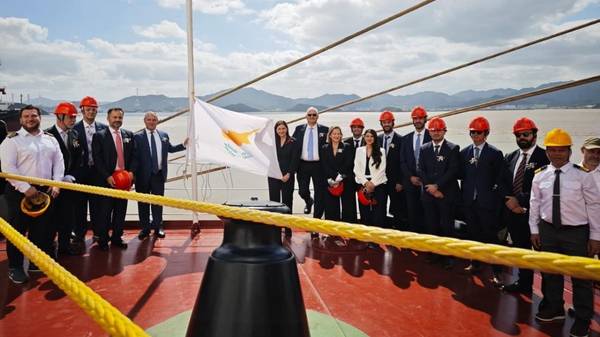
Safe Bulkers takes delivery of first dual-fuel methanol Kamsarmax newbuild
Kypros Island becomes the first dual-fuel bulker to enter the Cyprus Registry. |
|
|
|
||

|
PetroChina seeks LNG bunker trader to expand Asian marine fuel business
Role requires five to ten years of commercial experience in LNG, bunker trading, marine fuels, commodities, or energy trading. |
|
|
|
||

|
Shanghai and Melbourne ports move green shipping corridor into delivery phase
Ports launch implementation plan targeting green methanol, biofuels and shore power by 2035. |
|
|
|
||
| Dual-fuel fleet passes 500 ships as investment tops $200bn [News & Insights] |
| Wasaline secures locally produced biogas supply from St1 Biokraft for Vaasa–Umeå ferry [News & Insights] |
| WinGD CEO warns of mounting cost due to Net Zero Framework delay [News & Insights] |
| Steerprop to supply next-generation CRP units for Estonia's first electric ferry [News & Insights] |
| Battery-electric ferries grow in scale as aluminium multihulls gain market share [News & Insights] |
