
 |
Agastya Group has signed a memorandum of understanding (MoU) with the Government of Andhra Pradesh to develop the Agastya Green Fuels Hub at Mulapeta Port in Srikakulam District.
The proposed project on India’s east coast will require an investment of more than ₹54,000 crore, or about $6.5bn, the group stated.
The company said the hub is planned around a 1 million-tonne-per-year e-methanol export-oriented unit, targeting markets including Japan, South Korea, Singapore and Europe.
The development will combine large-scale green hydrogen production, green methanol manufacturing, carbon capture and utilisation (CCU), renewable energy integration, port-based export infrastructure and an AI-powered energy management system called Agastya GEMS.AI.
Agastya noted that the project would position Andhra Pradesh as a hub for sustainable marine fuels and green industrial products.
The Indian firm added that the facility will produce green methanol compliant with EU renewable fuels of non-biological origin (RFNBO) rules under RED III, supporting its plan to export the fuel to shipping and industrial customers.
Agastya thanked several state bodies for their involvement, including the Andhra Pradesh Economic Development Board, Andhra Pradesh Maritime Board, New and Renewable Energy Development Corporation of Andhra Pradesh, and Andhra Pradesh Industrial Infrastructure Corporation.
The announcement also cited support from Andhra Pradesh Chief Minister Nara Chandrababu Naidu and Deputy Chief Minister Pawan Kalyan Konidela.
|
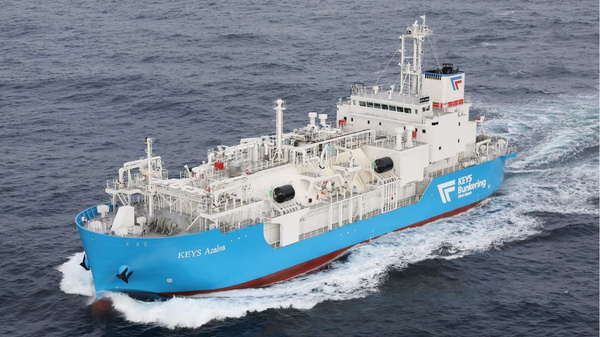
KEYS Azalea completes 100th LNG bunkering operation in western Japan
LNG bunkering vessel reaches landmark delivery in two and a half years. |
|
|
|
||
|
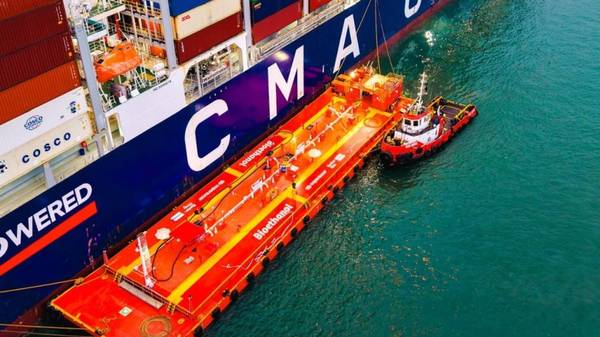
Port of Santos moves to regular ethanol bunkering for ships
CMA CGM, Copersucar and Bunker One expand July pilot into a commercial supply chain for ethanol as a marine fuel in Brazil |
|
|
|
||
|
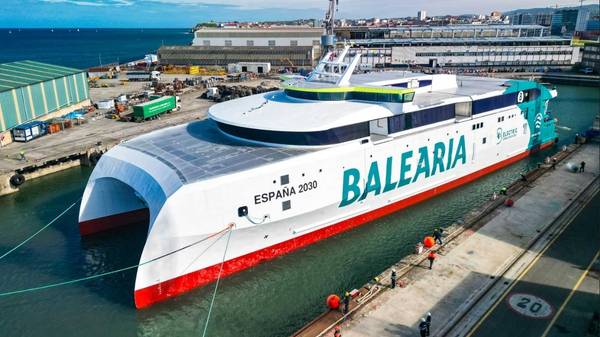
Baleària floats first fully electric fast ferry for Tarifa–Tangier route
Spanish operator's new catamaran, built at Armón's Gijón yard, will enter service in summer 2027. |
|
|
|
||
|
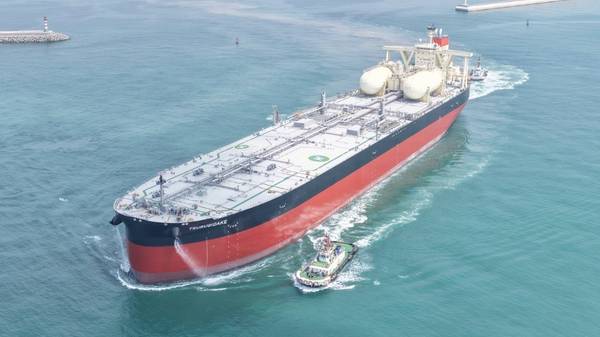
Kawasaki Heavy Industries delivers fourth LNG-fuelled VLCC
The 309,000-tonne Tsurugidake, built at a joint-venture shipyard in Dalian, is designed to cut CO₂ emissions by up to 30% when running on LNG. |
|
|
|
||
|
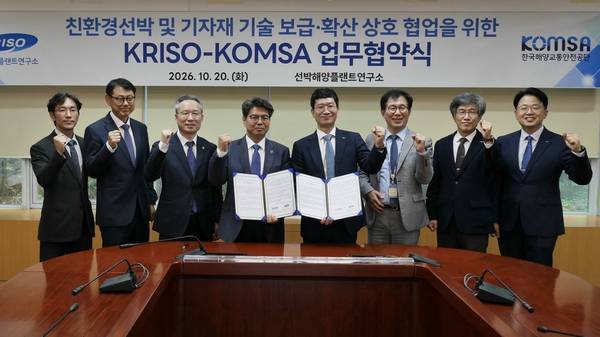
South Korean agencies link up on green shipping data and monitoring tech
KRISO and KOMSA sign an MOU to share demonstration data and remote monitoring capabilities for eco-friendly vessels. |
|
|
|
||
|
Peninsula seeks sales trader for Singapore bunker fuel desk
Role suited to candidates with prior sales or trading experience, ideally within the maritime or energy sector. |
|
|
|
||
|
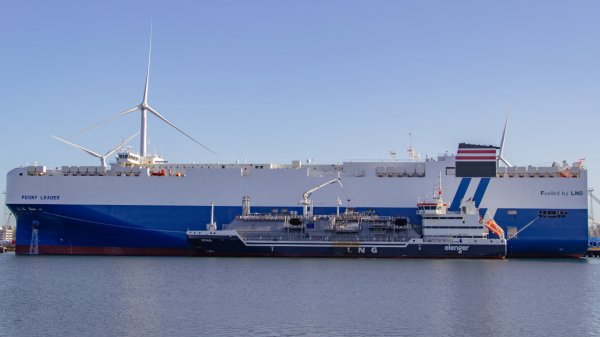
FuelEU pooling drives surge in bio-LNG demand, Titan analysis finds
Clean fuel supplier's modelling shows pooling mechanism turning overcompliance into tradable value for LNG-fuelled ships. |
|
|
|
||
|
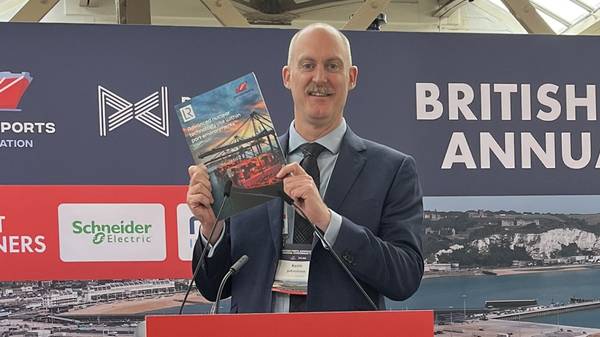
Ports told to prepare now for advanced nuclear power
Joint paper sets out a readiness pathway for ports facing nuclear-powered vessels, floating reactors and small modular units |
|
|
|
||
|
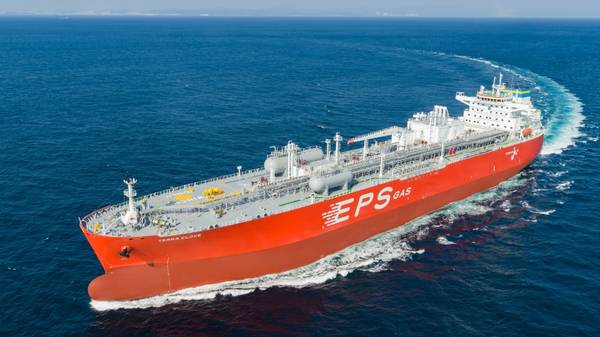
Eastern Pacific Shipping takes delivery of first ammonia dual-fuel VLAC
Terra Clove powered by first Everllence B&W 6G60ME-C10.5-LGIA ammonia dual-fuel two-stroke engine. |
|
|
|
||
|
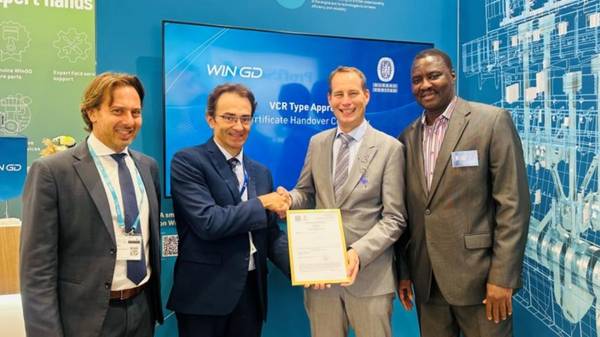
Bureau Veritas approves WinGD's variable compression ratio technology for dual-fuel engines
Classification society grants type approval to engine technology enabling compression ratio adjustment across different marine fuels. |
|
|
|
||
| Wasaline secures locally produced biogas supply from St1 Biokraft for Vaasa–Umeå ferry [News & Insights] |
| WinGD signs ten-year service deal for six COSCO LNG carriers [News & Insights] |
| HMM orders eight LNG dual-fuel container ships in newbuild push [News & Insights] |
| WinGD signs five-year service deal for NYK LNG carrier fleet [News & Insights] |
| Breeze Ship Design wins contract for Union Vega Offshore's battery-hybrid PSVs [News & Insights] |
