
 |
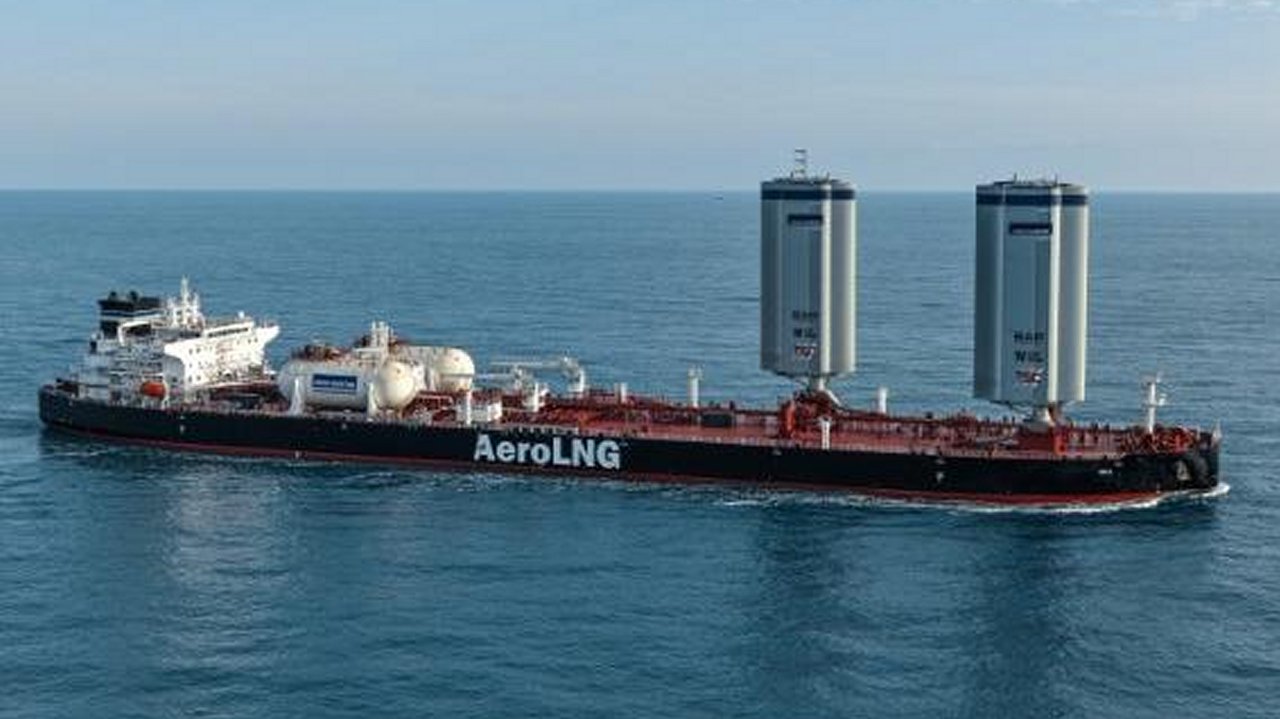
Bureau Veritas Marine & Offshore has completed a technical review confirming BAR Technologies’ calculation of available effective power generated by two 37.5-metre WindWings installed on tankers under the UML AeroPower LR2 programme.
The WindWings installations have a combined sail area of 760 square metres. According to Bureau Veritas, BAR Technologies’ computational fluid dynamics (CFD) methodology and resulting force matrix are consistent with International Maritime Organization guidance for innovative energy-efficiency technologies.
Following the review, the classification society concluded that the submission met all assessment requirements, including compliance with the CFD code specification, boundary conditions, grid independence, validation against experimental data, and the generation of installation-specific force matrices.
Bureau Veritas said the approval provides a class-reviewed calculation of wind-assisted propulsion power contribution without the need for extended full-scale testing.
WindWings technology is already in commercial service across the Union Maritime fleet, including on the AeroPower vessels Brands Hatch and SPA. Construction is also underway on the first 113,600-dwt vessel in the AeroPower newbuild programme at Xiamen Shipbuilding Industry, with additional LR2 and MR2 tanker projects under development at shipyards in Asia.
John Cooper, CEO of BAR Technologies, said: “WindWings are already delivering in commercial service. What this approval does is formalise how that performance is assessed and recognised by class. Owners don’t need promises — they need certainty. A consistent, class-recognised methodology provides that certainty.”
Lauren Eatwell, Head of WindWings at BAR Technologies, commented: “As WindWings continue to be adopted in larger tanker programmes, consistency in performance validation becomes critical. This approval ensures that the engineering analysis behind each installation is assessed to recognised standards, supporting predictable integration across vessel series.”
Alex Gregg-Smith, President of Marine & Offshore at Bureau Veritas, stated: “Bureau Veritas’ review confirmed that BAR Technologies’ WindWings available effective wind power calculation for UML AeroPower LR2 tankers is consistent with IMO Circ.896 guidance for innovative energy-efficiency technologies. Our assessment examined the underlying modelling approach, validation processes and generation of installation-specific force matrices. Independent verification supports the consistent application of recognised technical standards and enables safe integration of wind-assisted propulsion systems within existing regulatory frameworks.”
The approval is expected to support wider adoption of wind propulsion systems as they are incorporated into tanker and bulker newbuild programmes.
|
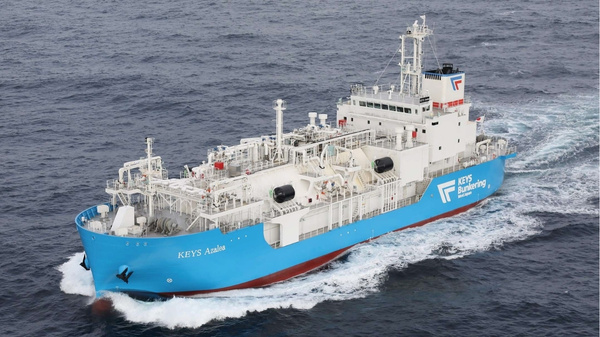
KEYS Azalea completes 100th LNG bunkering operation in western Japan
LNG bunkering vessel reaches landmark delivery in two and a half years. |
|
|
|
||
|
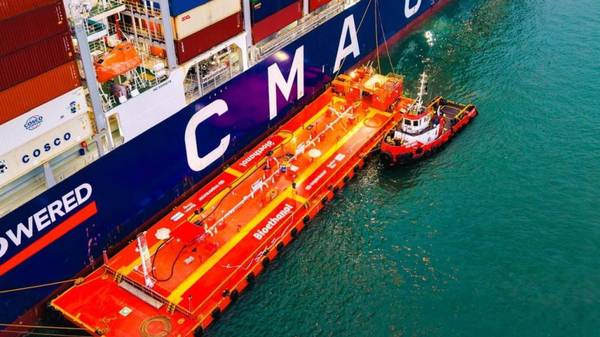
Port of Santos moves to regular ethanol bunkering for ships
CMA CGM, Copersucar and Bunker One expand July pilot into a commercial supply chain for ethanol as a marine fuel in Brazil |
|
|
|
||
|
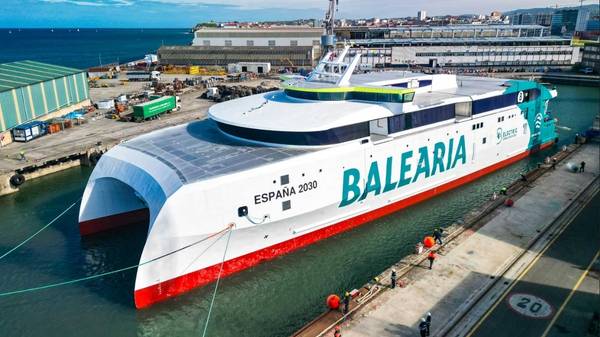
Baleària floats first fully electric fast ferry for Tarifa–Tangier route
Spanish operator's new catamaran, built at Armón's Gijón yard, will enter service in summer 2027. |
|
|
|
||
|
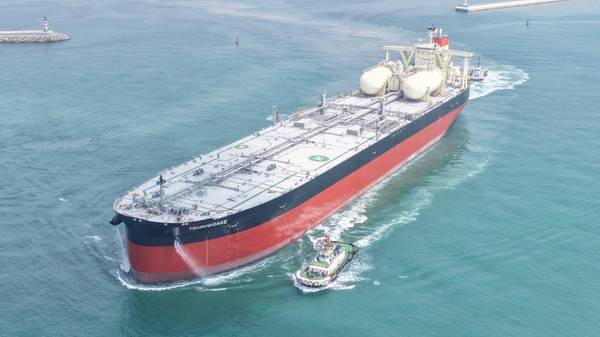
Kawasaki Heavy Industries delivers fourth LNG-fuelled VLCC
The 309,000-tonne Tsurugidake, built at a joint-venture shipyard in Dalian, is designed to cut CO₂ emissions by up to 30% when running on LNG. |
|
|
|
||
|
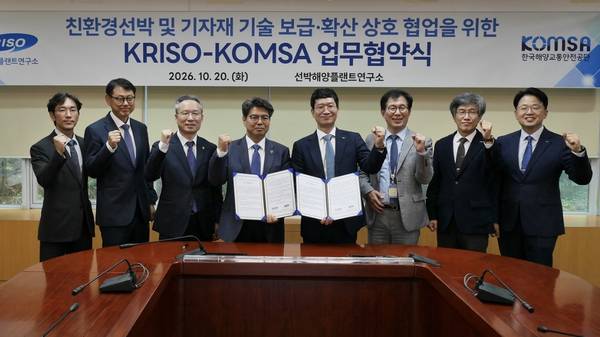
South Korean agencies link up on green shipping data and monitoring tech
KRISO and KOMSA sign an MOU to share demonstration data and remote monitoring capabilities for eco-friendly vessels. |
|
|
|
||
|
Peninsula seeks sales trader for Singapore bunker fuel desk
Role suited to candidates with prior sales or trading experience, ideally within the maritime or energy sector. |
|
|
|
||
|
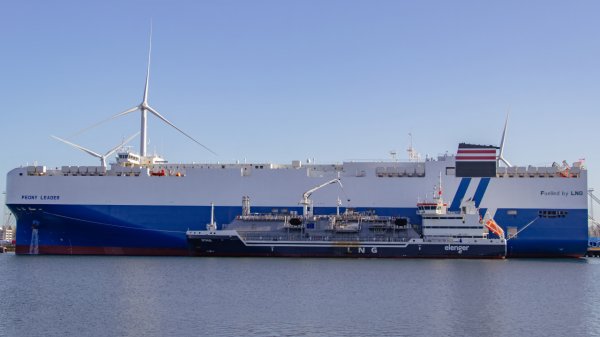
FuelEU pooling drives surge in bio-LNG demand, Titan analysis finds
Clean fuel supplier's modelling shows pooling mechanism turning overcompliance into tradable value for LNG-fuelled ships. |
|
|
|
||
|
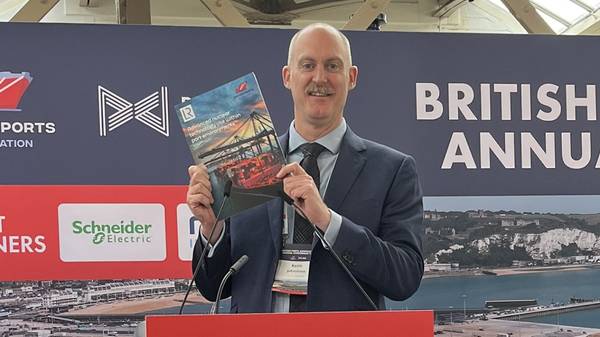
Ports told to prepare now for advanced nuclear power
Joint paper sets out a readiness pathway for ports facing nuclear-powered vessels, floating reactors and small modular units |
|
|
|
||
|
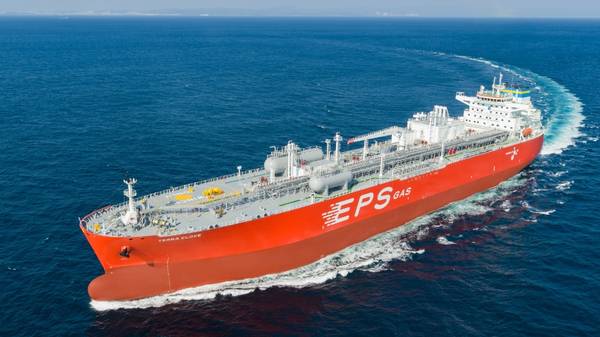
Eastern Pacific Shipping takes delivery of first ammonia dual-fuel VLAC
Terra Clove powered by first Everllence B&W 6G60ME-C10.5-LGIA ammonia dual-fuel two-stroke engine. |
|
|
|
||
|
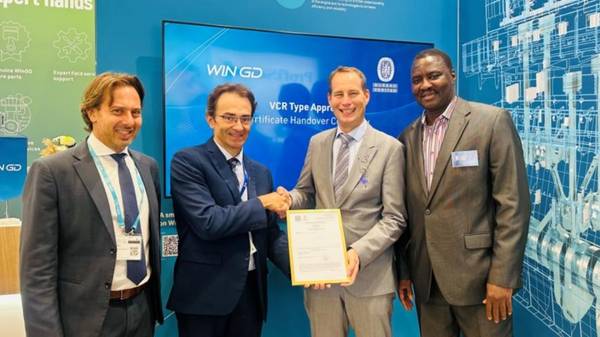
Bureau Veritas approves WinGD's variable compression ratio technology for dual-fuel engines
Classification society grants type approval to engine technology enabling compression ratio adjustment across different marine fuels. |
|
|
|
||
| Bureau Veritas grants approval in principle for five Hudong-Zhonghua gas carrier designs [News & Insights] |
| Dalian Shipbuilding's wind-assisted LNG carrier design receives Bureau Veritas approval [News & Insights] |
| Bureau Veritas and CMHI sign agreements to advance green and smart shipping solutions [News & Insights] |
| Bureau Veritas and C-Torq Marine Services sign MoU for hydrogen energy system development [News & Insights] |
| Fund for Energy Efficiency Technologies finances first wind-assisted propulsion projects with Eastern Pacific Shipping [News & Insights] |
| Bureau Veritas marks naming of Union Maritime's wind-assisted Aframax tanker [News & Insights] |
| Steel cut for third methanol-ready chemical tanker in ROC-Essberger series [News & Insights] |
| GT Wings launches compact AirWing S Jet Sail for smaller vessels [News & Insights] |
| LR publishes retrofit guidance covering alternative fuels and energy-saving devices in one framework [News & Insights] |
