
 |
Bunker One and Brazilian energy firm Acelen have joined forces to launch a marine supply operation outside the port of Itaqui, in the northern state of Maranhão.
A range of vessels, including large cargo ships and tankers, can now be supplied by Bunker One in the anchorage area of Itaqui, located in São Marcos Bay.
And the new operation will also be able to service different trade routes, including those either originating from or having Europe and the United States as destinations.
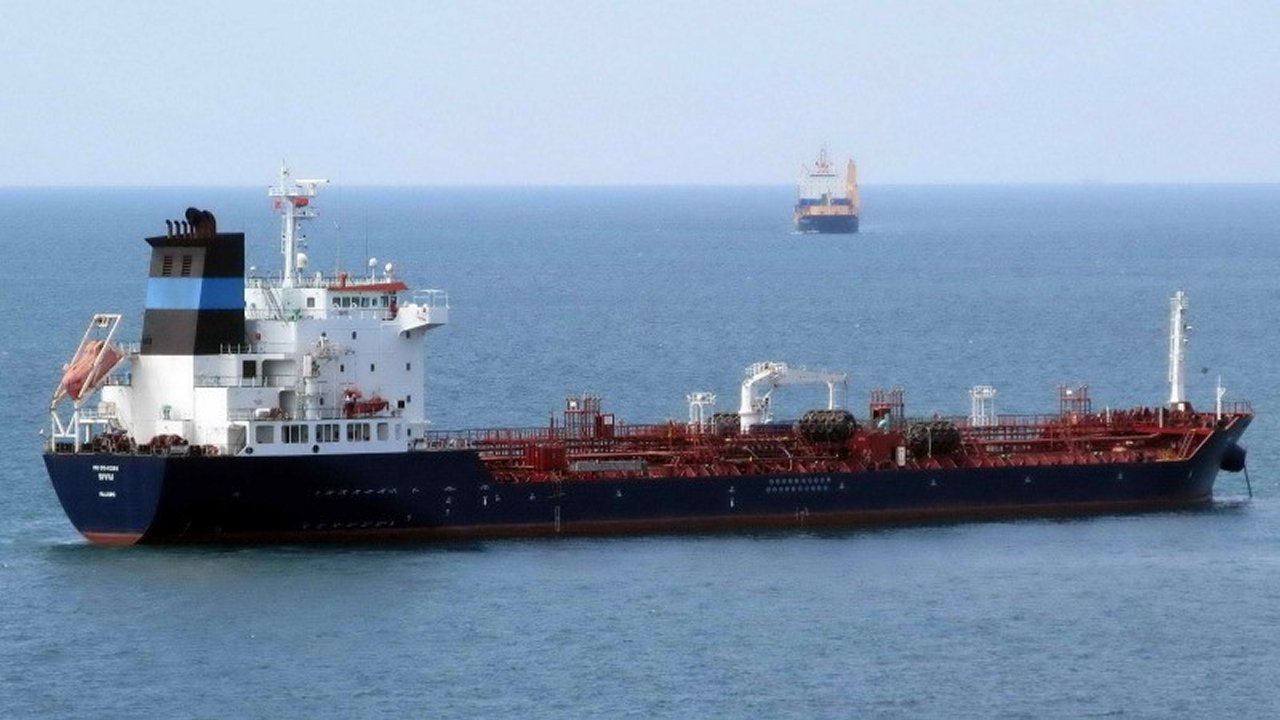
Nova Offshore, a subsidiary of Bunker One, has chartered the barge MT China Spirit for fuel deliveries in Itaqui.
The vessel is described as being highly equipped with a specialised crew, highly stable for navigation and mooring, whilst also complying with oil spill prevention requirements, with an emergency response contract in place.
Built in 2009, the tanker has a total length of 144 metres and a carrying capacity of 17,567 dwt tonnes.
The delivery location is a strategic hub for international trade, particularly for exports of raw commodities such as iron and soybeans and oil-related product distribution inside Brazil.
The option to bunker at anchorage reduces waiting times and calling costs as it allows for bunkering without interfering with loading and unloading operations at the terminals. Up to two ships can be supplied daily, taking into account the time required for each operation and the specifics of each bunkering operation.
"It is a convenient option for long-haul and coastal vessels that want to opt for the so-called Bunker Only Call when the ship heads to that location solely for refuelling. And as clients increasingly look to more sustainable bunker alternatives, we are preparing to meet demand, as we expect it to grow," explained Fillippe Fernandez, Marine Fuels Director at Bunker One (Brazil).
As a result of the tie-up, Bunker One says it expects to "significantly" increase sales volume at the location.
"This partnership will boost Bunker One's operations in Brazil by approximately 30 percent. And it's not just about another line of business or geographic area covered, but the beginning of a promising alliance that has the potential to offer new solutions for the shipping industry in Latin America," commented Flavio Ribeiro, CEO of Bunker One (Brazil).
According to Cristiano da Costa, Vice President of Commercial, Trading, and Shipping at Acelen, the partnership will support the region's growth, increasing the supply and competitiveness of Brazil as a hub option for bunker supply.
"It's an excellent partnership, capable of guaranteeing competitiveness to Brazil's bunker supply in the São Luís do Maranhão region."
The two firms expect the collaboration to increase the domestic market by up to 10 percent of bunker exports.
To deeply understand the bunkering operations in Itaqui, both companies invested in two studies: one on the meteoceanographic conditions of the anchorage areas and another on vessel approach and mooring during the marine fuel supply operations.
The studies used national and international data for analysis of wind, wave, and sea currents to ensure excellence in operational conditions.
The project partners say detailed knowledge of weather conditions will enable operations to be carried out to the highest supply standards.
Energy company Acelen owns the Mataripe Refinery, located near the ports of Madre de Deus and Salvador. The company represents around 14% of Brazil's total refining capacity, covering more than half of supplies in the the northeast of the country.
|
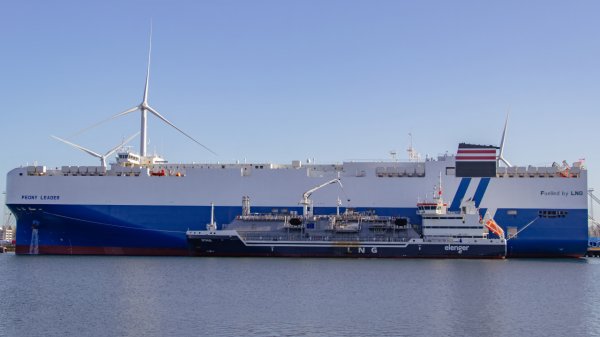
FuelEU pooling drives surge in bio-LNG demand, Titan analysis finds
Clean fuel supplier's modelling shows pooling mechanism turning overcompliance into tradable value for LNG-fuelled ships. |
|
|
|
||
|
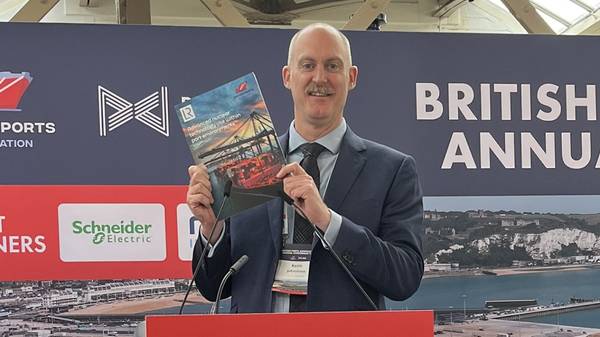
Ports told to prepare now for advanced nuclear power
Joint paper sets out a readiness pathway for ports facing nuclear-powered vessels, floating reactors and small modular units |
|
|
|
||
|
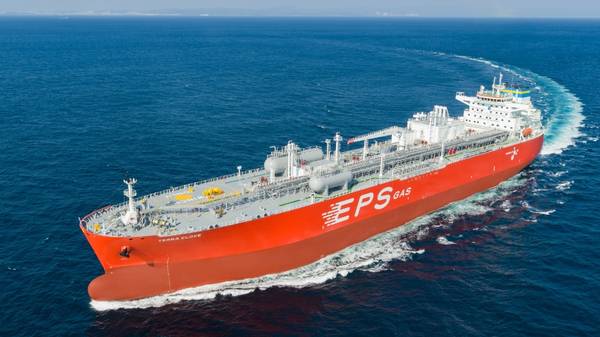
Eastern Pacific Shipping takes delivery of first ammonia dual-fuel VLAC
Terra Clove powered by first Everllence B&W 6G60ME-C10.5-LGIA ammonia dual-fuel two-stroke engine. |
|
|
|
||
|
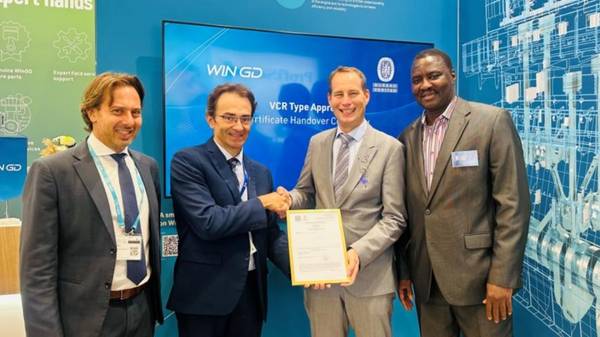
Bureau Veritas approves WinGD's variable compression ratio technology for dual-fuel engines
Classification society grants type approval to engine technology enabling compression ratio adjustment across different marine fuels. |
|
|
|
||
|
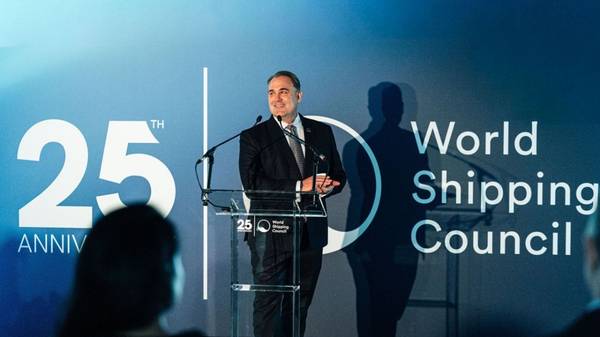
Dual-fuel fleet passes 500 ships as investment tops $200bn
World Shipping Council data shows dual-fuel container ships and vehicle carriers growing fast, with IMO rules uncertain. |
|
|
|
||

|
VPS to host Athens seminar on fuel efficiency and carbon reduction
VPS's final European round table of 2026 will cover marine fuels, lubricants and decarbonisation in Athens. |
|
|
|
||
|
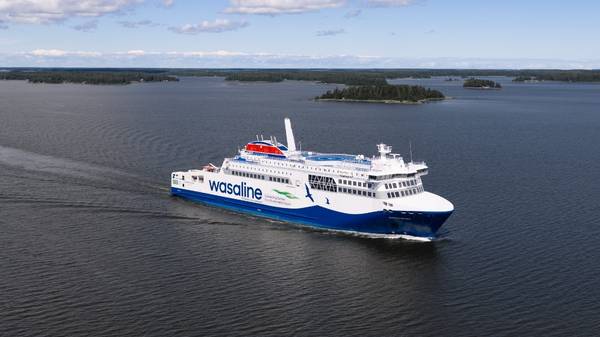
Wasaline secures locally produced biogas supply from St1 Biokraft for Vaasa–Umeå ferry
Agreement will supply 42 GWh of liquefied biogas annually, with deliveries due to start in January 2028. |
|
|
|
||
|
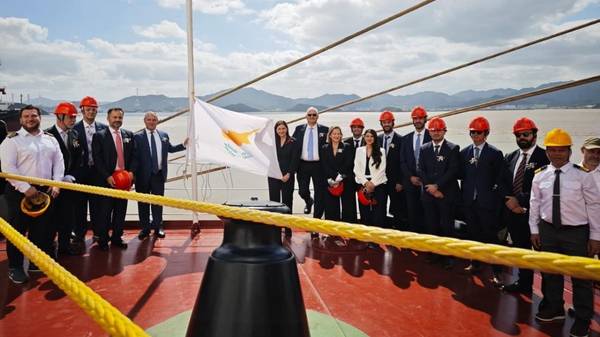
Safe Bulkers takes delivery of first dual-fuel methanol Kamsarmax newbuild
Kypros Island becomes the first dual-fuel bulker to enter the Cyprus Registry. |
|
|
|
||

|
PetroChina seeks LNG bunker trader to expand Asian marine fuel business
Role requires five to ten years of commercial experience in LNG, bunker trading, marine fuels, commodities, or energy trading. |
|
|
|
||
|
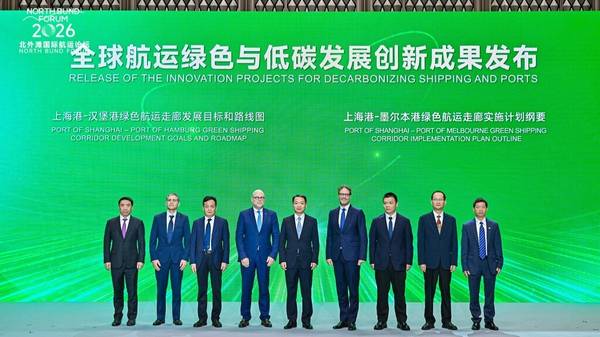
Shanghai and Melbourne ports move green shipping corridor into delivery phase
Ports launch implementation plan targeting green methanol, biofuels and shore power by 2035. |
|
|
|
||
| Bunker One launches its first methanol bunker tanker [News & Insights] |
| Bunker Holding and NeoGreen Hydrogen sign MoU for green ammonia and synthetic fuels [News & Insights] |
| KPI OceanConnect and Uni-Tankers complete biofuel trial [News & Insights] |
| Bunker Holding launches five-year plan [News & Insights] |
| Shanghai and Melbourne ports move green shipping corridor into delivery phase [News & Insights] |
| CIMC SOE advances construction on three LNG bunker vessels [News & Insights] |
| Pinnacle Marine launches two B100-compatible utility boats for Excelessel Offshore [News & Insights] |
| World's first ship-to-ship green ammonia bunkering operation completed in China [News & Insights] |
| CLPe and CNOOC complete Hong Kong's first LNG bunkering of a pure car and truck carrier [News & Insights] |
