The pilot behind the massive fuel oil spill in
San Francisco Bay in a November 2007 incident has pleaded guilty to two criminal charges, according to the US Department of Justice.
John Cota was at the helm of the 900-foot
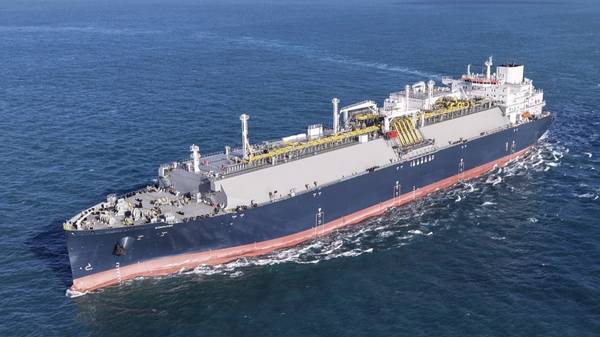
Cosco Busan [pictured] when it hit the San Francisco-Oakland Bay Bridge in heavy fog on November 7th, 2007. Following the incident, approximately 53,000 gallons of oil were spilled into the water, killing and injuring thousands of birds.
Cota, a California ship pilot, pleaded guilty to negligently causing the discharge of fuel oil into San Francisco Bay in violation of the Oil Pollution Act of 1990, and to violation of the Migratory Bird Treaty Act for the death of protected migratory birds, the US Department of Justice said.
If the plea terms are accepted by U.S. District Court Judge
Susan Illston, Cota will be sentenced to serve between two and ten months in prison and be fined between $3,000 to $30,000. The plea also requires Cota to serve the maximum one year of supervised release during which he will not serve as a ship pilot or ship Captain. Sentencing has been scheduled for June 19th 2009.
Cota was taking Wellbutrin, a drug usually prescribed to combat depression, as well as medication for migraines and glaucoma. He was also suffering of pancreatitis, a disease often linked to alcoholism. Despite all these evidences, Jeff Bornstein, Cota’s attorney claims there is no link between his client’s prescription drugs and the crash.
However, according to the
National Transportation Safety Board, the probable cause of the accident was 1) the pilot's degraded cognitive performance due to his use of impairing prescription medications; 2) the lack of a comprehensive pre-departure master/pilot exchange and a lack of effective communication between the pilot and the master during the short voyage; and 3) the master's ineffective oversight of the pilot's performance and the vessel's progress.
Contributing to the cause of the accident, the Board cited 1) the ship's operator, Fleet Management, Ltd., for failing to properly train and prepare crew members prior to the accident voyage, and for failing to adequately ensure that the crew understood and complied with the company's safety management system; and 2) the U.S. Coast Guard for failing to provide adequate medical oversight of the pilot.
"How a man who was taking a half-dozen impairing prescription medications got to stand on the bridge of a 68,000-ton ship and give directions to guide the vessel through a foggy bay and under a busy highway bridge, is very troubling, and raises a great many questions about the adequacy of the medical oversight system for mariners," said Acting Chairman
Mark V. Rosenker.
The plea agreement contains factual admissions by Cota including: “I acknowledge that my negligence was a proximate cause of the discharge of approximately 53,000 gallons of heavy fuel oil into San Francisco Bay.” During the voyage in less than a half mile of visibility, Cota gave the helm commands that crashed the Cosco Busan into the fendering system at the base of the Delta tower of the San Francisco Bay Bridge. In the plea agreement, Cota admitted that he:
* Failed to adequately discuss the intended route through San Francisco Bay with the Master or crew as is required;
* Failed to use the ship’s radar in the final approach to San Francisco Bay Bridge;
* Failed to recognize two red triangles on the ship’s electronic chart system that actually are the buoys marking the Delta bridge tower;
* Failed to verify the meaning of the red triangles by using the ship’s paper chart or radar.
* Failed to inform the crew of his method of navigation that he relied on using a particular radar setting; and
* Failed to advise the crew of a radar beacon that marked the center of the Delta-Echo span.
At the hearing, Judge Illston set trial for the remaining defendant in the case, the ship’s manager,
Fleet Management Ltd. (Hong Kong), for September 14th 2009.
Fleet Management is also charged with acting negligently and being a proximate cause of the pollution and killing protected migratory birds. In addition to the environmental crime charges, Fleet is charged with obstructing justice and making false statements by falsifying ship records after the incident.
As part of the plea agreement with Cota, the government agreed to dismiss pending statement charges relating to allegations that Cota failed to disclose his medications on required Coast Guard forms in 2006 and 2007 necessary to maintain his license, and which the court ruled would be tried separately from the case involving the Cosco Busan incident.
Cota admits in the plea papers that his 2006 physical exam form failed to disclose some of the medications he was prescribed including Provigil (a medication prescribed to treat sleep apnea), Lorazepam (an anti-anxiety medication that had been prescribed as a sleeping aid), Vicodin (a pain medication), Tylenol 4 (a pain medication), Darvon 65 (a pain medication), Zoloft (an anti-depressant prescribed for an off-brand purpose) and Ambien (a sleeping aid).
Regarding the form he signed in 2007, Cota admits that three medications, Vicodin, Zoloft and Tylenol 4 were not disclosed to the Coast Guard. According to the plea papers, while Cota reported taking various other drugs “occasionally” on the 2007 form, he now admits that he “refilled many of these prescriptions regularly.”