Canaveral Fire Rescue Chief
David Sargeant has moved to allay fears regarding the upcoming 2020 launch of Carnival's largest-ever cruise ship, which is set to be the first US-based cruise vessel to be powered by LNG, and will be homeported in Canaveral.
Speaking during a meeting of the Propeller Club of Port Canaveral, Sargeant explained that his department was already making preparations for the supply of LNG to Carnival's new 180,000-tonne vessel.
The measures, according to news outlet Florida Today, include employing a fire protection engineer to review all procedures related to LNG fuel loading; reviewing equipment that may be needed to enhance emergency response capabilities; visiting LNG operations in other parts of the country and other fire departments to establish best practice procedures; and hiring additional staff.
Sargeant also noted that half of the Canaveral Fire Rescue staff are already trained in handling LNG emergencies and that training for other personnel and nearby fire departments that would assist in an emergency is also due to take place.
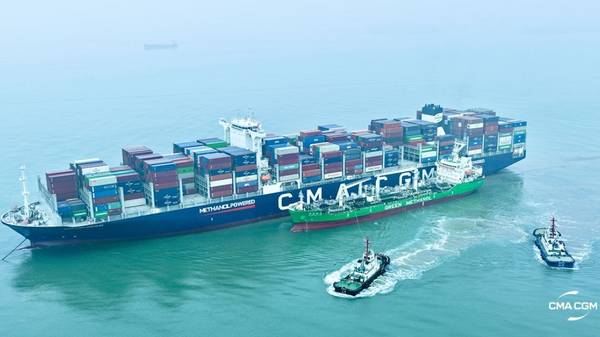
Discussing the barge that will arrive from Savannah, Georgia, to perform LNG bunker transfers to Carnival's ship, Sargeant noted that the delivery vessel would be operated by "highly trained mariners" and equipped with breakaway valves and automatic emergency protection systems for vapour dispersion in case of emergency.
Canaveral Fire Rescue is to also have a fireboat on standby in the water during bunkering operations.
As
previously reported, Carnival reached an agreement in principle with Canaveral Port Authority (CPA) during the month of August for its new ship to homeport at Canaveral.
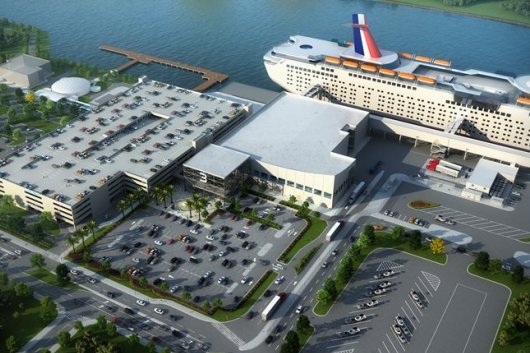
This was rubber-stamped on August 29 when CPA's Board of Commissioners approved the terms of a long-term agreement with Carnival Cruise Line that will also see CPA and Carnival construct a new two-story, 185,000-square-foot terminal - named Cruise Terminal 3 (
CT-3) - to accommodate Carnival's new LNG-fuelled vessel.
The facility is planned for completion by June 2020; however, there are currently no current plans for LNG storage at Canaveral, according to
Barry Compagnoni, the port's senior director of public safety and security.
Referring to the 1944 Cleveland East Ohio Gas explosion involving an LNG storage tank that resulted in 130 deaths, Sargeant put the incident down to "poor design and construction of LNG tanks" and was cited as saying that the incident would not happen today because "the technology has changed and the safety has changed right along with it".