Tue 12 Jun 2018, 09:38 GMT

Newly converted LNG-fuelled ferry classed by ABS


Technical compliance achieved by Spirit of British Columbia, which has been back in operation since Jun 7.


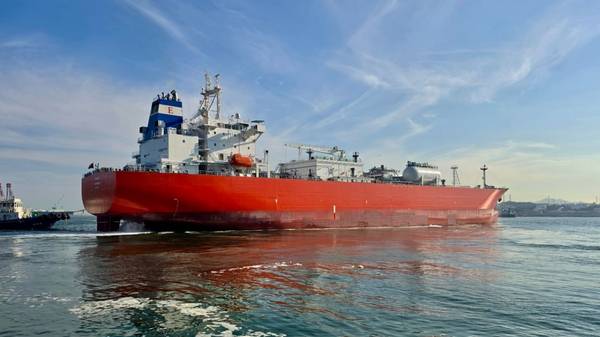
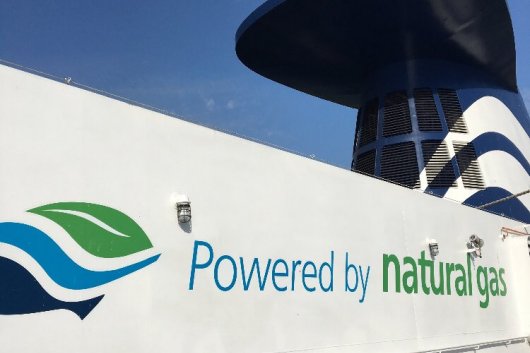
BC Ferries' Spirit of British Columbia is the first of two 'Spirit-class' ships to undergo conversion to natural gas.
Image credit: BC Ferries
The American Bureau of Shipping (ABS) reports that it was responsible for classing the Spirit of British Columbia, which has just completed its conversion for LNG operation and has been back in operation since last Thursday.

The Spirit of British Columbia was the first of two 'Spirit-class' ships to undergo conversion, while its sister vessel, the Spirit of Vancouver Island, is expected to have its conversion completed during the spring of 2019.

The two vessels are the largest ships in BC Ferries' fleet with a capacity to carry 2,100 passengers and crew. Together, they consume approximately 16 percent of BC Ferries' fuel annually.

As previously reported, the Spirit of British Columbia was removed from service on September 6 and conversion to LNG fuel was completed at the Remontowa Ship Repair Yard in Gdansk, Poland.

Now that the conversion to dual-fuel has been completed, the vessel is able to operate on LNG or ultra-low sulphur marine diesel (ULSD).

"The conversion of these vessels to operate on LNG is an important milestone for BC Ferries and the region, supporting more efficient and environmentally-friendly transportation," said ABS Vice President for Global Gas Solutions, Patrick Janssens. "With the increased pressure for environmental compliance, LNG as fuel is a practical option for many marine owners and operators."

BC Ferries Vice President of Strategy and Community Engagement, Mark Wilson, remarked: "We are excited to welcome the Spirit of British Columbia back into our fleet and the environmental benefits and efficiency advantages that come with its conversion. We worked closely with ABS who helped us navigate the technical compliance challenges of converting existing vessels to run on LNG and played a key role in bringing this project to fruition."

Recognizing the changing landscape and increased industry focus on gas, ABS launched its Global Gas Solutions team in 2013 to support industry in developing gas-related projects. The ABS Global Gas Solutions service provides guidance in LNG floating structures and systems, gas fuel systems and equipment, gas carriers, and regulatory and statutory requirements.


Container ship near a port. Ammonia emerges as most feasible alternative fuel for deep-sea shipping in 2050 emissions study  

Research combining expert survey and technical analysis ranks ammonia ahead of hydrogen and methanol.

Cargo vessel at sea. EMSA study examines biodiesel blend spill response as shipping adopts alternative fuels  

Research addresses knowledge gaps on biodiesel-conventional fuel blends as marine pollutants and response measures.

BIMCO ETS BARECON clause 2026 graphic. BIMCO adopts ETS clause for bareboat charters, delays biofuel provision  

BIMCO’s Documentary Committee has approved an emissions trading compliance clause while requesting further work on a biofuel charter provision.

SALEFORM 2025 standard form graphic. BIMCO and Norwegian Shipbrokers’ Association launch SALEFORM 2025 ship sale contract  

Updated agreement addresses banking changes, compliance requirements and environmental regulations affecting vessel transactions.

Everllence H2 test engine. Everllence develops hydrogen test bench for marine engines  

German engine maker upgrades Augsburg facility under HydroPoLEn project backed by federal maritime research funding.

CMA CGM Osmium vessel. CMA CGM names 13,000-teu methanol-fuelled containership in South Korea  

CMA CGM Osmium to operate on Asia–Mexico service as part of the carrier’s decarbonisation strategy.

NorthStandard logo. NorthStandard publishes biofuel guide as marine insurance claims emerge  

White paper addresses quality issues and compliance requirements as biofuel testing volumes surge twelvefold.

Clean Maritime Fuels Platform (CMFP) logo. Maritime fuel platform calls for EU shipping ETS revenues to fund clean fuel deployment  

Clean Maritime Fuels Platform urges earmarking of national emissions trading revenues for renewable fuel infrastructure.

Seatransport 73m SLV Lloyd’s Register grants approval for hybrid nuclear power design for amphibious vessels  

Classification society approves Seatransport’s concept integrating micro modular reactors with diesel-electric systems.

Everllence ME-LGIE engine. Everllence and Vale partner on ethanol-powered marine engine development  

Brazilian mining company to develop dual-fuel ethanol engines based on ME-LGI platform.