Mon 17 Oct 2016, 15:17 GMT

Emission Monitoring System fully certified


DYNAMARINe system is designed to help operators optimize fuel consumption.


Emissions verification company Verifavia has fully certified DYNAMARINe's Emission Monitoring System against EU Monitoring Reporting and Verification (MRV) regulation requirements.

From 2018 onwards, owners and operators of ships exceeding 5,000 gross tons will be required to monitor, report, and submit their independently verified carbon emissions on all voyages to, from and between EU ports. The data collected will be made publicly available for over 10,000 vessels visiting EU ports.

DYNAMARINe's Emission Monitoring System is designed to enable technical operators to access energy data monitored on board in order to optimize the energy consumption of the ship. In addition, the system includes analytical tools with built-in functionality to identify inconsistencies, errors, and any unanticipated deviations in the data.

Nikolas Theodorou, Managing Director, Verifavia Shipping Hellas, commented: "DYNAMARINe's Emission Monitoring System has been rigorously reviewed by our expert team of verifiers using the ISO standards 25051 on software engineering and 17065 on product certification. As part of the certification, we conducted a site visit to observe and evaluate the IT system, and were impressed by the robustness and quality of reports automatically generated by the system. We believe that it will genuinely support shipping companies in complying with the Regulation by providing transparent and accurate data."

To obtain certification, DYNAMARINe's Emission Monitoring System was assessed against the requirements of the EU MRV Regulation (2015/757) in terms of process and functionality. The system effectively demonstrated its ability to automatically generate both voyage reports and annual reports for individual ships - taking into consideration the location of the ports of call, and the cargo / pax activity at these ports of call throughout the year.

Alexandros Glykas, director at DYNAMARINe, remarked: "We pride ourselves in being able to align with our customers' business objectives - ensuring that they are able to efficiently, accurately, and cost-effectively cope with the requirements of the EU MRV Regulation."

Stelios Perissakis, director at DYNAMARINe, said: "By receiving early MRV certification from experienced, independent verifier Verifavia Shipping, we hope that our customers will be reassured in our system's ability to accurately monitor, gather, and report any vessel type's carbon emissions."

Greece 

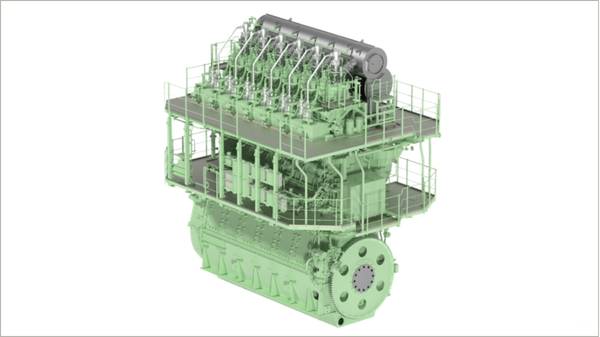
UEC60LSJ ammonia-fuelled engine render. J-ENG secures orders for four ammonia-fuelled engines under Japanese PCTC project  

Vessels form part of plan to build four ammonia-fuelled car carriers, a dedicated bunkering vessel and supply chain.

Hanwha Power receives ABS AiP for battery-powered containership design. ABS grants AIP to Hanwha Power for 1,700-TEU battery-powered container ship  

Design uses roughly 151 MWh of swappable battery storage for fully electric propulsion on a container vessel.

Peter Krahenbuhl, WinGD. WinGD signs first licence deal with HD Hyundai Marine Engine to expand Korean production  

Mid-bore engine portfolio gains new production route into Korea's bulk carrier and tanker newbuild markets.

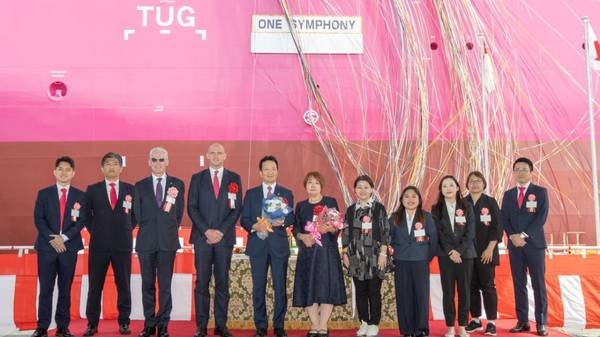
ONE Symphony naming ceremony. Ocean Network Express names ammonia- and methanol-ready newbuild ONE Symphony  

Vessel features conventional diesel main engine, with concept designs approved for possible future conversion to methanol or ammonia.

Sing Fuels logo. Sing Fuels seeks Asia-based supply trader to bolster bunker procurement team  

Singapore bunkering firm is recruiting a supply trader to manage marine fuel purchasing across Asia.

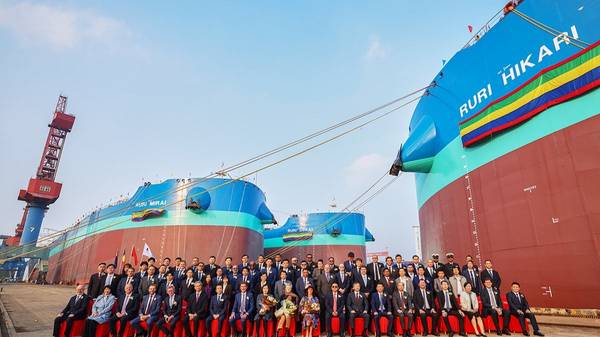
MOL joint naming ceremony. MOL names world's first ammonia-fuelled Capesize bulk carriers  

Naming of Ruri Mirai, Ruri Sekai and Ruri Hikari signals ammonia's arrival as a marine fuel for large bulk carriers.

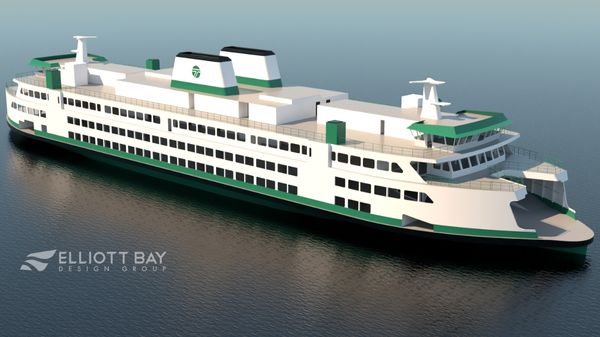
Washington State Hybrid-Electric 160-Auto Ferry vessel render. ABB wins Washington State Ferries' third hybrid-electric vessel order  

ABB extends its role in the US ferry operator's electrification programme, which targets emission-free operations by 2050.

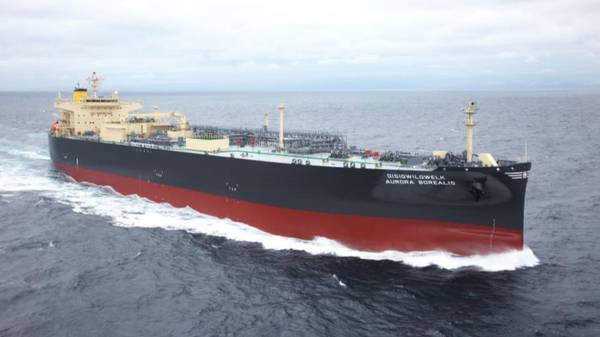
Aurora Borealis vessel. Kawasaki Heavy Industries delivers LPG-fuelled carrier Aurora Borealis  

Ship could also be modified in future to allow for ammonia-fuelled operation.

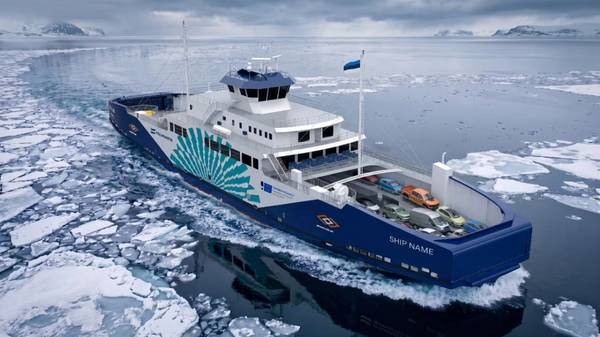
Rendering of Estonia's first shore-charged electric ferry. Estonian State Fleet's shore-charged electric ferry completes model testing in Germany  

Hull and propulsion tests show the vessel's energy consumption remains within contracted limits with room to spare.

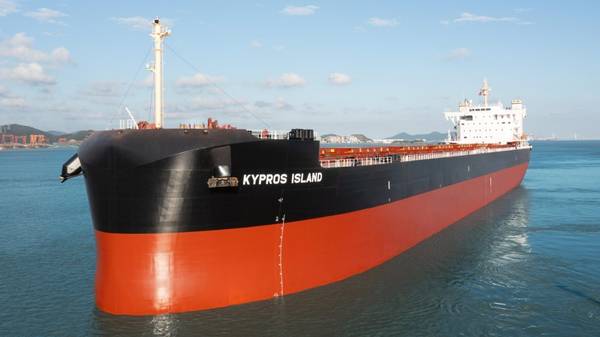
Kypros Island vessel. Tsuneishi delivers first methanol dual-fuel Kamsarmax bulk carrier from Chinese yard  

Shipbuilder claims progress towards establishing a mass-production system for vessels designed to reduce environmental impact.