Wed 6 Jul 2016, 12:47 GMT

LNG-fuelled bulkers set for 2018 Baltic launch


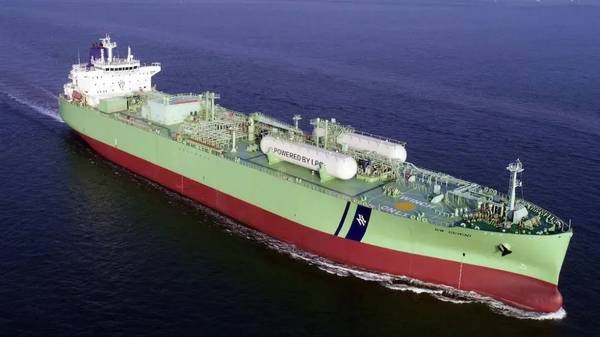
Vessels have received their classification as large LNG-powered bulk carriers.


ESL Shipping has recently announced the intention to launch two new LNG-fuelled bulk carrier vessels into use in the Baltic Sea region in 2018.

Deltamarin and ESL Shipping cooperating on the project

For the concept and design of the ships, ESL Shipping chose to work with Finnish ship design company Deltamarin. This company was chosen primarily for their past successes in designing vessels appropriate for trade and carriage in the harsh conditions in the Baltic Region.

The two companies worked together to design a ship would be both energy efficient and cargo efficient. In order to meet future International Maritime Organization (IMO) standards, the vessels will be powered entirely by LNG fuel. This is set to cut carbon dioxide (CO2) emissions by more than 50 percent compared to similar vessels in operation today.

Vessels are set to be built at the Sinotrans & CSC Qingshan Shipyard located in China.

Features of the new vessels

Two vessels are set to be launched in 2018, both bulk carriers with the same features. They will be powered by LNG and created with cargo hulls designed for rapid onloading and offloading. The vessels are to be used to deliver raw materials to power generation companies and heavy industries around the region.

The specifications for the vessels have been provided below.
- 25,600 dwt
- 400-cubic-metre LNG fuel tanks
- Satisfies IMO Phase 3 environmental mandates
- Modified B.Delta26LNG bulker design
- Optimized hull form

Designs submitted to DNV GL have received their classification as large LNG-powered bulk carrier vessels. These are the first vessels that will be built to the newest DNV GL general dry cargo ship rules, as well as the first LNG large bulk carriers. In addition to these classifications, the vessels will also hold DNV GL Ice Class IA notations, as they are to be used in the wintery conditions around the Baltic region.

Commenting on the new bulk carriers, Knut Orbeck-Nilssen, the CEO of DNV GL Maritime, said: "We have created these rules to be ready for the future and we have long pioneered the use of LNG as a ship fuel. To see these two come together in a double first for the industry is a remarkable moment."

Bermuda Container Line (BCL) logo. Bermuda Container Line imposes emergency bunker surcharge citing Iran War fuel price spike  

Shipping operator to add $150 per TEU charge from 1 May amid geopolitical fuel cost pressures.

China flag. Zhejiang’s first methanol-powered container ship launches in Jiaxing  

Vessel uses methanol propulsion technology to reduce carbon dioxide emissions by 90%.

TES flag with a model vessel in the background. TES joins SEA-LNG coalition to advance e-methane as marine fuel  

Green energy company targets 1m tonnes annual e-methane production by 2030 for shipping decarbonisation.

Ethanol and methanol workshop graphic. IBIA to host workshop on ethanol and methanol marine fuels during Singapore Maritime Week  

Half-day event will examine alcohol-based fuel pathways and integration into shipping’s multi-fuel landscape.

Steel-cutting ceremony for 13,000-dwt vessel. ROC begins construction of second chemical tanker for Essberger  

Chinese shipbuilder holds steel-cutting ceremony for 13,000-dwt methanol-ready vessel with ice class capability.

Norsepower and CHIC sign agreement. Norsepower and Cosco Shipping Heavy Industry Equipment sign wind propulsion cooperation agreement  

Wind propulsion technology provider partners with Chinese shipyard to scale rotor sail production.

Wärtsilä logo. Shipping firms struggle to prioritise decarbonisation investments amid regulatory uncertainty, Wärtsilä survey finds  

Survey of 225 maritime executives reveals 70% say uncertainty hinders investment decisions despite regulatory pressure.

IMT Isca G-Flex vessel render. Longitude Engineering unveils IMT Isca G-Flex PSV design with alternative fuel capability  

Naval architecture firm launches adaptable platform support vessel design based on the IMT-984 G-Class hull.

Philippos Ioulianou, EmissionLink. Shore power infrastructure is key to cutting ferry emissions in European cities, says EmissionLink  

Port electrification is needed to enable vessels to switch off engines at berth, reducing urban pollution.

Maritime and Port Authority of Singapore logo. Singapore prioritises maritime resilience amid geopolitical uncertainty, eyes digitalisation and green fuels  

MPA chief outlines the sector’s adaptation to supply chain disruptions while advancing automation and alternative fuels.