Tue 13 May 2008, 09:12 GMT

Marshall Islands accedes to five UN conventions


Pacific Ocean nation accedes to UN treaties on marine pollution and safety


The Marshall Islands has acceded to five important International Maritime Organization (IMO) conventions that aim to discourage environmental pollution and promote safety on the high seas.

Mr. Joseph A. Bigler, Counsellor to the Maritime Administration, Republic of the Marshall Islands, has deposited with IMO Secretary-General, Efthimios E. Mitropoulos, instruments of accession to the 1996 Protocol to the Convention on the Prevention of Marine Pollution by Dumping of Wastes and Other Matter, 1972 (1996 London Convention Protocol); the International Convention on the Control of Harmful Anti-fouling Systems on Ships, 2001 (AFS Convention); the Protocol of 2005 to the Convention for the Suppression of Unlawful Acts against the Safety of Maritime Navigation, 1988 (2005 SUA Convention); the Protocol of 2005 to the Protocol for the Suppression of Unlawful Acts against the Safety of Fixed Platforms Located on the Continental Shelf, 1988 (2005 SUA Protocol); and the International Convention on Civil Liability for Bunker Oil Pollution Damage, 2001 (2001 Bunkers Convention).

The 1996 London Convention Protocol revises the structure of the original Convention, codifies the precautionary approach, prohibits the practice of incineration at sea (except for emergencies), and prohibits the export of wastes or other matter to non-Parties for the purpose of dumping or incineration at sea. It entered into force on 24 March 2006; accession by the Marshall Islands brings the number of States having ratified the Protocol to 35 and the tonnage figure to 29.73 per cent of the world’s fleet.

When in force, the AFS Convention will prohibit the use of harmful organotins in anti-fouling paints used on ships and will establish a mechanism to prevent the potential future use of other harmful substances in anti-fouling systems. Parties to the Convention are required to prohibit and/or restrict the use of harmful anti-fouling systems on ships flying their flag, as well as ships not entitled to fly their flag but which operate under their authority, and all ships that enter a port, shipyard or offshore terminal of a Party. The Convention will enter into force, generally and for the Marshall Islands, on 17 September 2008. Accession by the Marshall Islands brings the number of States having ratified the Convention to 30 and the tonnage figure to 49.17 per cent of the world’s fleet.

The 2005 SUA Convention amends the original treaty, by broadening the list of offences to include terrorist offences (such as the offence of using a ship itself in a manner that causes death or serious injury or damage and the transport of weapons or equipment that could be used for weapons of mass destruction). It also introduces provisions for the boarding of ships where there are reasonable grounds to suspect that the ship or a person on board the ship is, has been, or is about to be, involved in committing an offence regulated by the Convention.

The 2005 SUA Protocol extends the scope of provisions on the new offences to fixed platforms on the continental shelf, as appropriate. Neither the Convention nor the Protocol is yet in force.

The 2001 Bunkers Convention was adopted to ensure that adequate, prompt, and effective compensation is available to persons who suffer damage caused by spills of oil, when carried as fuel in ships' bunkers, and will enter into force, both generally and for the Marshall Islands, on 21 November 2008.

IMO secretary general Efthimios Mitropoulos expressed satisfaction with Marshall Islands’ action and the hope that many other IMO Members would do the same, at the earliest opportunity, to the benefit of enhanced safety, security and environmental protection.


MAmmoSS graphic. Mitsubishi Shipbuilding receives order for ammonia fuel handling system  

MAmmoSS system will support shop testing of ammonia marine engines from two licensors.

Neoliner Origin vessel. Kongsberg Maritime to lead EU Horizon project targeting wind-assisted propulsion at scale  

A 15-partner European consortium will use two full-scale vessel demonstrators to validate wind propulsion technology.

Petrobras logo. Petrobras warns of extended MGO and VLSFO supply suspension at Port of Itaqui  

Fuel distributor announces pipeline maintenance shutdowns affecting both MGO and VLSFO supply.

Richard Berkling, PowerCell Group. PowerCell secures SEK 50m marine fuel cell order for two liquid hydrogen cargo ships  

Swedish fuel cell maker wins contract to power two North Sea hydrogen vessels by 2028.

Wärtsilä hydrogen engine. MatH2 consortium launched to tackle hydrogen materials barriers  

New Finnish-led alliance targets materials compatibility challenges holding back hydrogen adoption.

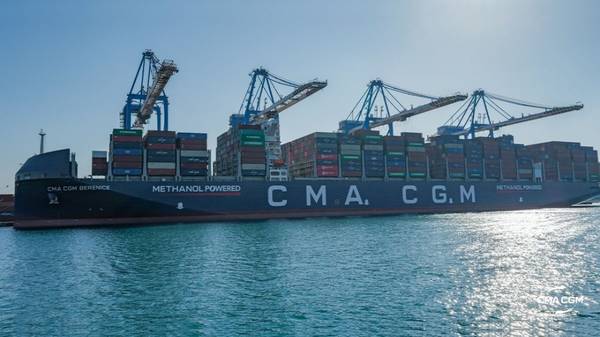
CMA CGM Berenice vessel. CMA CGM takes delivery of fifth methanol dual-fuel boxship in series from Jiangnan Shipyard  

15,000-teu vessel is the penultimate ship in a six-vessel series due for completion in September.

VeriSphere logo. VPS launches VeriSphere Webshop in push to digitise marine fuel services  

Veritas Petroleum Services unveils self-service digital platform giving customers direct access to fuel data tools.

Titus vessel. ExxonMobil and Wallenius Wilhelmsen complete first trial of biofuel blend made from FAME distillation residue  

Vehicle carrier bunkered in Zeebrugge with B30 VLSFO blend.

Chimbusco and Shenergy green methanol agreement signing. 'China’s largest single-order green methanol procurement deal' announced  

Chimbusco and Shenergy seal agreement for 6,000 tonnes of methanol.

Moriond vessel. Exmar takes delivery of third dual-fuel LPG midsize gas carrier in newbuild programme  

Belgian shipping group Exmar takes delivery of the 41,000-cbm LPG carrier Moriond.