Gulf Coast Shipyard Group (GCSG) has confirmed that
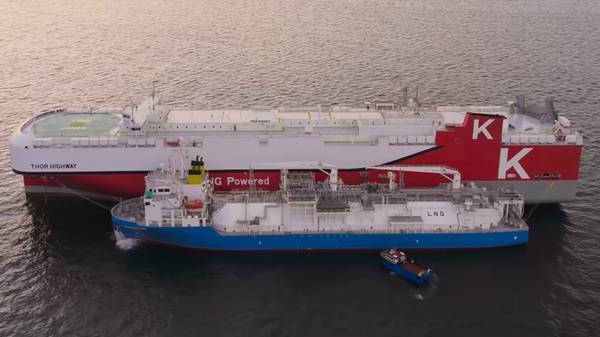
Harvey Energy [pictured] - the first liquefied natural gas (LNG) vessel operating in the United States for
Shell Upstream America's deep water operations in the Gulf of Mexico - is fully in service.
Harvey Energy is the first of six LNG offshore support vessels (OSVs) being built for
Harvey Gulf International Marine.
It is capable of operating on LNG or diesel and is said to meet the criteria of the ABS Enviro+, Green Passport notation. When running only on LNG, the ship is also said to meet the new Tier IV sulphur and nitrogen oxide emissions regulations.
Harvey Energy is to refuel with LNG at Harvey Gulf's new LNG bunkering facility at
Port Fourchon in southern Louisiana, which allows access to more than 600 oil and gas rigs and platforms within a 40-mile radius.
Running on 99 percent LNG fuel, Harvey Energy is a 310' x 64' x 24.5' platform supply vessel powered by three Wärtsilä 6L34DF dual fuel gensets, providing 7.5 megawatts (MW) of power and fuelled by Wärtsilä's LNGPac system.
The 5,150-deadweight-tonne (dwt) vessel is capable of carrying 253,000 US gallons of fuel oil, 18,000 barrels of liquid mud, 1,600 barrels of methanol, 10,250 cubic feet of dry cement and 78,000 US gallons of LNG fuel.
The vessel is able to operate on LNG for seven days before refuelling. To increase efficiency, Harvey Energy uses Shell's Gadinia 40 engine oil.
"The culmination of innovation represented by her successful operation on LNG, Harvey Energy is a source of great pride for the employees of Gulf Coast Shipyard Group. The vessel represents the highest form of meeting market, regulatory and environmental demand with solutions for each. We are honoured to be part of this historic vessel, setting new building standards for our clients and working in partnership with pioneering companies like Harvey Gulf," commented Gulf Coast Shipyard Group's president
John Dane III.
Shane Guidry, chairman and CEO of Harvey Gulf, remarked: "The realization of the first OSV capable of operating on LNG is an example of Harvey Gulf's commitment to its customers and the environment to provide the most affordable, innovative, environmentally friendly technology solutions to meet their business demands."