Netherlands-based
Van der Velden Marine Systems says its cooperative approach to R&D is resulting in fruitful synergies and the sharing of expertise with other maritime experts in the development of its fuel-saving technology.
In a statement,
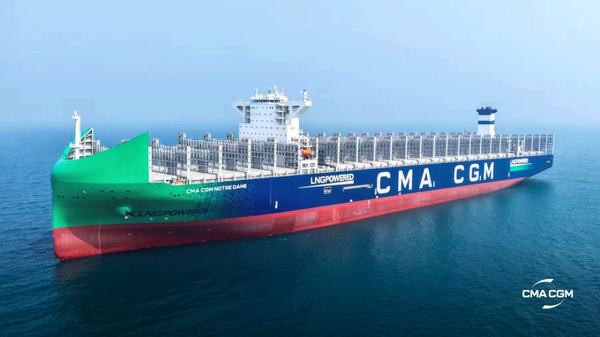
Edwin van Buren, Director R&D at Van der Velden Marine Systems, said: "We are currently building a 97 square metre Energy Saving Package (ESPAC) system for a series of three 18,000-TEU vessels being built for
CMA CGM at the CSSC-affiliated Shanghai Waigaoqiao Shipyard in China.
"These are the largest rudders we have ever built and, by putting them together with 10-metre MMG propellers, the whole package will minimise fuel consumption, cavitation, vibration and maintenance."
The ESPAC system system was developed with German propeller manufacturer Mecklenburger Metallguss (MMG).
Drawing on the expertise from both companies, Van der Velden says the propulsion package combines the advantages of an optimised, highly efficient fixed pitch propeller and an asymmetric leading edge rudder with a propulsion bulb and adapted hubcaps.
Rudder feedback
The second innovation concerns the Barke Optimised Steering System (BOSS), which provides direct feedback to the helmsman about forces acting on the rudder. This information is a valuable tool to optimise navigation and manoeuvring.
"It is important to know how much stress is placed on the rudder. The greater the resistance, the more fuel is consumed. The BOSS sensors measure these forces," explained van Buren. The measured values are displayed on an LCD bridge display panel and are transferrable to the ship's navigation system. "Less steering corrections reduces the overshoots and shortens the distance travelled. This quickly delivers significant fuel savings."
Van der Velden has already installed BOSS technology on two ultra-large CMA CGM-owned container vessels - the Ural and the Volga. The company recently carried commissioning and sea trials with the first BOSS system in cooperation with representatives from Damen's own R&D team. During the IMO manoeuvring and endurance tests, Van de Velden recorded BOSS data and synchronised with the vessels dynamics.
"This successful data collection represents a milestone for Van der Velden product development and creates future opportunities for the next generation of BOSS," Van der Velden said.
The system is not limited to container vessels, however. The technology is said to be also transferrable to the superyacht, cruise ship and dredging sectors.
The company can also pre-install measurement sensors on rudder stocks with an eye to future installation of the total system. "It's what we call a 'BOSS-prepared' delivery. This pre-installation avoids costly dry-docking in the future," commented van Buren.
Van der Velden FLEX tunnel system
Another recent innovation is Van der Velden's retractable FLEX tunnel system, designed for inland and coastal ships. The system is designed to improve manoeuvrability, speed and overall fuel efficiency by approximately 10 percent.
"We developed a retractable tunnel because, for about 85% of the time, loaded inland barges sail in deeper water. In these situations, tunnels are unnecessary. In fact, they only decrease propulsion capacity and increase fuel consumption," remarked van Buren.
With an optimised hull design, the retractable tunnel system - developed in close collaboration with the German Development Centre for Ship Technology and Transport Systems (DST) - is designed to ensure optimal water flow in both loaded and empty conditions and all water depths of inland rivers and canals.
Partnerships
Commenting on its past partnerships and R&D projects, the company said: "Damen was the first to develop arithmetical schemes and computer models to better understand propulsion characteristics - yielding more accurate predictions of strength, vibration, noise and thrust.
"Damen built up its knowledge base through close cooperation with renowned scientific institutions such as Delft University of Technology and the University of Hamburg. Research using scale models in the testing tanks of MARIN (Maritime Research Institute Netherlands) and DST has also played a key role.
"In combining the experience of manoeuvring systems experts Van der Velden Marine Systems with propeller nozzle specialists Damen Marine Components, the Damen Shipyards Group is creating a centre of excellence producing products such as include propeller nozzles, rudders and fuel saving systems that can be found across the entire shipping industry, on board vessels ranging from the smallest tugboats to the largest container vessels."