Mon 30 Dec 2013, 14:11 GMT

Global Vision Market Report


The most recent US indicators (employment figures, GDP) gave bullish signals to the markets on concerns of oil demand. Faster economic growth means rising oil consumption and higher prices. Therefore analysts with BNP Paribas believe that OPEC's production cuts will be only marginal in 2014.Also, it is highly uncertain whether Irak can increase its production capacities due to ongoing unrest in the country, and when Libyan and Iranian oil production will return to normal. As a consequence the bank leaves unchanged its forecast of 110 dollars for a barrel of Brent next year. In the Libyan city of Tobruk preparations are being made for the first shipment of crude to leave the terminal after the facilities are back in operation.

In France only two more refineries of Total, the one in Gonfreville (247.000 bpd) and the one in La Mede (153.000 bpd) are affected by the oil worker's strike. The workers in Feyzin have ended the strike over the Christmas holidays which is seen as a sign that progress is being made and the strike will soon be finished which would weigh on ICE prices as France would reduce its oil product imports.

The thin volume over the Christmas holidays is not expected to pick up today. The few traders that have returned to the market will certainly be cautious ahead of the release of the DoE's inventory report in the afternoon so that not much momentum is expected and prices are seen staying within their trading range. Even though trading volume is seen increasing next week it will nevertheless be below normal as markets will be closed again on Wednesday, the first of January.

ICE Gasoil contract for January delivery settled at 950.00 USD on Thursday. This was 5.75 USD above Wednesday's settlement. With some 10,500 deals the traded volume was well below average.

Trading volume in London and New York remained thin over the Christmas holidays, prices at ICE and NYMEX consolidating in a tight range at a high level. Escalating violence in South Sudan lent some support, where oil production dropped after the indic oil company ONGC Videsh Ltd. had stopped all activities. Some encouraging US indicators that confirmed that the US economy is recovering also helped oil up while news from Libya had a slightly bearish effect. For the first time in several months oil is going to be exported from the Libyan oil terminal in Tobruk. As for today, traders are eyeing the release of the DoE's report on oil stocks after the API's slightly bearish figures of Tuesday night.

The Stochastic is bearish at the ICE charts giving a selling signal to the oil market while the lines of the indicator have not yet crossed at the WTI chart. The RSI is still neutral at all charts but might give additional selling signals at the ICE should it fall below the 70 line. This would increase the selling pressure in the course of the session. As long as there are no such signals we consider the technical constellation as only slightly bearish, the more as trading will be thin also today and market participants are expected to be cautious ahead of the weekend.

U.S.

Nymex easing: Oil futures dropped in Asian trading this morning as market participants took profit after Thursday's late gains. Still, in a thin market prices quickly recovered. The traded NYMEX volume is far below average for this time of day. In the absence of any important economic indicators, market players are waiting for the opening of stock and forex markets as well as for the DoE's oil inventory report to be released in the afternoon.

Survey: Crude oil -3.0; distillates -1.0; gasoline +1.1 million barrels vs previous week.
API: Crude oil +0.7; distillates -0.7; gasoline -2.5 million barrels vs previous week.
DOE: Due out tonight.

Houston (ex-wharf indications 20-12)
380cst $599
180cst $667
MGO $999

New Orleans (ex-wharf indications 20-12)
380cst $619
180cst $656
MGO $1005

Singapore

380cst $616
180cst $623
MGO $940

ARA (Amsterdam - Rotterdam - Antwerp)

Still a lot of lsfo problems in ARA. No loading prospects in Antwerp. At the moment suppliers are only offering from end of this week onwards.

Indications for delivered bunkers:
380cst : $586
(1.0 %) : $633 (if available)
180cst: $624
MGO 0.1%S: $ 910

BP   MGO  

Arctic Tern vessel. Wallenius Wilhelmsen takes delivery of first methanol-ready Shaper Class vessel  

The dual-fuel Arctic Tern will enter service on the Asia–Europe trade almost immediately.

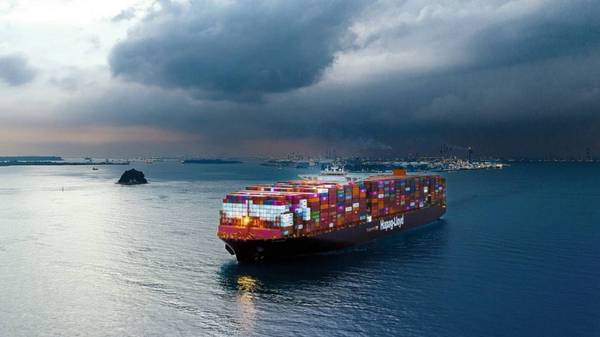
Al Muraykh vessel. Hapag-Lloyd signs shore power agreement with Hamburg Port Authority  

Deal commits the carrier to using onshore power supply at all Hamburg terminals.

Dorthe Karin Bendtsen, KPI OceanConnect. KPI OceanConnect reports 21% rise in pre-tax earnings for 2025/26  

Marine fuel firm delivers 13 million tonnes and expands carbon markets capabilities amid geopolitical turbulence.

VTTI logo. VTTI Dalian completes first large-scale 'green methanol' vessel loading  

Cargo to be supplied as marine fuel in Shanghai.

Steff Tan, Oilmar. Oilmar appoints Steff Tan as marine fuels trader in Singapore  

New hire's background spans bunker operations, logistics, commercial trading, marketing, and business development.

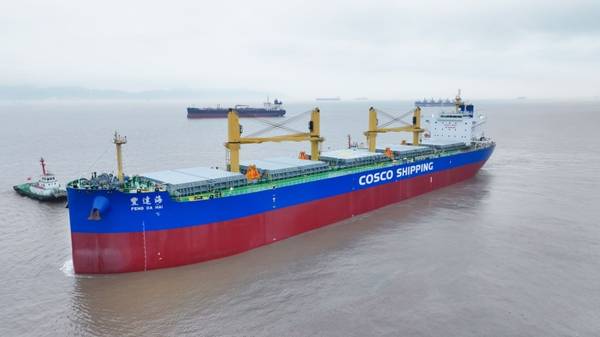
Feng Da Hai vessel. Cosco Shipping adds methanol-ready bulk carrier Feng Da Hai to fleet  

The 64,000-tonne vessel is equipped with a methanol fuel system for future low-carbon operations.

Oilmar office in Dubai. Oilmar welcomes summer intern to Dubai branch  

Arpit Aryan will rotate across the bunker fuel trading, finance and operations departments.

Aerial view of the Dubai skyline. Oilmar takes on trading and finance intern in Dubai  

New intern to rotate across trading, operations and finance teams.

Seaspan and Maersk signing. Seaspan and Maersk deepen fleet efficiency collaboration with $75m upgrade programme  

Retrofit package for four 13,000-teu vessels includes installation of shaft generator to reduce auxiliary engine fuel consumption.

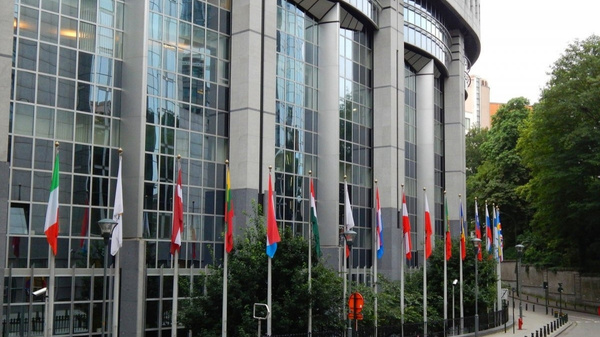
European Parliament building in Brussels. EU Parliament vote on soy biofuels could expose bloc to $5.6bn a year in trade sanctions  

MEPs reject regulation that would have phased out soy biofuels, risking WTO retaliation penalties.