DNV Group CEO
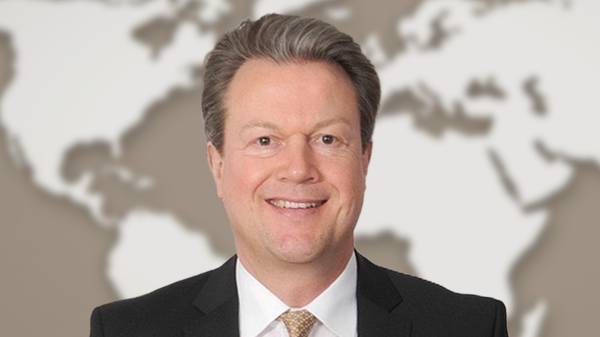
Henrik O. Madsen [pictured] says 2012 can be characterised as "a year of financial uncertainty and rapid technological change", which has led to an increasing complex risk environment for customers and, in turn, a continued demand for DNV’s technology and risk management services.
"The need to manage technical, societal and business risks is more urgent than ever," says Madsen. "We will continue our focus on safety and service quality and the ability to provide innovative services to help position us for the future and better serve our customers. Our financial strength is crucial in maintaining DNV’s independent role as one of the world’s leading and trusted technology and risk management service providers."
DNV achieved operating revenue of NOK 12,850 million in 2012, an increase of NOK 2,693 million from 2011. Of the 27% revenue growth, 9% is organic growth within DNV units and 18% is the result of the KEMA acquisition in March 2012. Both the Maritime and Oil & Gas and the Business Assurance business showed robust organic growth rates, primarily from DNV’s traditional classification and certification services.
"The net profit for 2012 is NOK 719 million, compared to NOK 730 million for 2011 and NOK 613 million for 2010. The cash flow from operations was positive at NOK 619 million in 2012, but the net cash flow was negative since the acquisition of KEMA was entirely financed by equity. DNV has a strong balance sheet with no interest-bearing debt and total equity of NOK 7,236 million or 60% of its total assets," says Thomas Vogth-Eriksen, DNV Group Chief Financial Officer.
In 2012 DNV secured 316 new-building classification contracts for ships and mobile offshore units, corresponding to 8.8million gross tonnes. This gives an estimated share of 17% of newbuilding classification in numbers and 22.5% in gross tonnes. The total DNV-classed fleet of ships and mobile offshore units fell from 6,134 at the end of 2011 to 6,115 at the end of 2012, mainly due to a high level of scrapping. This gives DNV a 9% share of the classed world fleet in number of ships/units and a 14.5% share in gross tonnage.
"Currently, the shipping industry is not experiencing overall growth. It is still suffering from tonnage overcapacity and weak developments in the global economy and trade. These will affect the shipping market for another one to two years,” predicts Madsen and adds that “DNV continues to invest in research and development and to provide innovative solutions for more fuel-efficient and environmental friendly shipping. This is currently the top priority for shipping companies, which are facing high fuel prices and lower freight rates at the same time as IMO implements new and far reaching environmental requirements."
The oil and gas industry is, contrary to shipping, experiencing strong growth and record investments. "DNV’s direct revenue from oil and gas activities is now almost the same as the revenue we generate from maritime-related services," Madsen points out and adds, "the activity level in the oil and gas industry also made the offshore and LNG shipping segments stand out as two of the few shipping segments that performed well in the past year. This contributed to our maritime business producing good results despite the overall weak developments in shipping in 2012."
As highlighted in the DNV Annual Report for 2012, the demand for energy continues to grow. "The supply will continue to rely heavily on fossil fuels during the next few decades. However, a major energy transition towards cleaner energy is needed to meet tomorrow’s energy demand while addressing climate change, energy security, the depletion of resources and the ageing infrastructure," emphasises Madsen and adds, the creation of DNV KEMA Energy and Sustainability business area, following the acquisition of the majority shareholding in KEMA, was in response to that.
While DNV’s target industries experience cyclical markets and are sensitive to global economic developments, its business assurance entity has shown “remarkable resilience to the financial crisis” comments Madsen. “Increasing demand for companies to demonstrate sustainable business practices beyond compliance has contributed to this positive development. DNV now certifies management systems for more than 80,000 customers worldwide”
CEO Madsen firmly believes that DNV has the "global positions, expertise and resources required to provide guidance and support in a business environment where the need for independent technical skills and risk management is evident,” he says and concludes, “We have demonstrated strong performance, and this coupled with the DNV GL merger agreement, which we announced in December 2012 and is subject to approval from competition authorities, forms an excellent foundation for the future. I really look forward to lead the new company and show customers, employees and society at large how we add more value, offer more opportunities and contribute to a safer and more sustainable future."