Thu 18 Apr 2013, 05:37 GMT

LNG carrier design could be used for bunkering


Bunker industry is a potential market for newly-approved LNG carrier design.


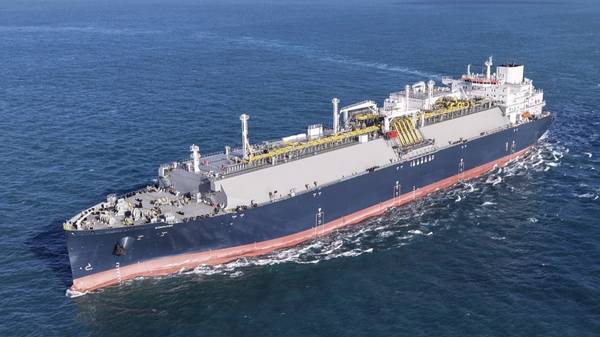
The American Bureau of Shipping (ABS), a leading provider of classification services to the global offshore industry, has granted French engineering company Gaztransport et Technigaz (GTT) approval in principle (AIP) for a 32,000-cubic metre (cbm) capacity LNG carrier design that could be used in the bunker industry.

"While a few membrane LNG carriers in the 20,000 cbm capacity range were built in the 1990s, this is the first new design to be introduced since that time," said ABS Vice President, LNG, Patrick Janssens.

The reason for this innovation, according to Janssens, is the development of new markets that have led to a keen interest in smaller LNG carrier designs.

"Potential markets for these smaller carriers include inland transportation, bunkering, feeder trade, archipelago trade in regions such as the Caribbean and coastal distribution,” Janssens remarked, noting, “this will help balance regional demand, particularly in China, where several companies are evaluating LNG carriers in the range of 20-30,000 m3 for regional redistribution from large satellite terminals.”

According to Philippe Berterottière, GTT Chairman and CEO, the membrane vessel combines high cargo capacity with flexibility. "Proposing this innovative and efficient design affirms GTT’s capability to be a key player over the full range of LNG carrier sizes. We are very happy with the technological partnership we had with ABS on this project."

ABS recognizes that working with industry to advance technology is critical.

"As new markets emerge, ABS is working with the industry to develop and employ the technologies that will allow access,” commented ABS President and CEO Christopher J. Wiernicki. "To fill the vital role of Class of the Future, ABS has to provide the services the industry needs to make adjustments as operating conditions and markets change. Granting AIP to new technologies is an essential component of that future."

Cargo vessel at sea. EMSA study examines biodiesel blend spill response as shipping adopts alternative fuels  

Research addresses knowledge gaps on biodiesel-conventional fuel blends as marine pollutants and response measures.

Container ship near a port. Ammonia emerges as the most feasible alternative fuel for deep-sea shipping in 2050 emissions study  

Research combining expert survey and technical analysis ranks ammonia ahead of hydrogen and methanol.

BIMCO ETS BARECON clause 2026 graphic. BIMCO adopts ETS clause for bareboat charters, delays biofuel provision  

BIMCO’s Documentary Committee has approved an emissions trading compliance clause while requesting further work on a biofuel charter provision.

SALEFORM 2025 standard form graphic. BIMCO and Norwegian Shipbrokers’ Association launch SALEFORM 2025 ship sale contract  

Updated agreement addresses banking changes, compliance requirements and environmental regulations affecting vessel transactions.

Everllence H2 test engine. Everllence develops hydrogen test bench for marine engines  

German engine maker upgrades Augsburg facility under HydroPoLEn project backed by federal maritime research funding.

CMA CGM Osmium vessel. CMA CGM names 13,000-teu methanol-fuelled containership in South Korea  

CMA CGM Osmium to operate on Asia–Mexico service as part of the carrier’s decarbonisation strategy.

NorthStandard logo. NorthStandard publishes biofuel guide as marine insurance claims emerge  

White paper addresses quality issues and compliance requirements as biofuel testing volumes surge twelvefold.

Clean Maritime Fuels Platform (CMFP) logo. Maritime fuel platform calls for EU shipping ETS revenues to fund clean fuel deployment  

Clean Maritime Fuels Platform urges earmarking of national emissions trading revenues for renewable fuel infrastructure.

Seatransport 73m SLV Lloyd’s Register grants approval for hybrid nuclear power design for amphibious vessels  

Classification society approves Seatransport’s concept integrating micro modular reactors with diesel-electric systems.

Everllence ME-LGIE engine. Everllence and Vale partner on ethanol-powered marine engine development  

Brazilian mining company to develop dual-fuel ethanol engines based on ME-LGI platform.


 Recommended