Hong Kong public policy think tank,
Civic Exchange, has today welcomed Chief Executive
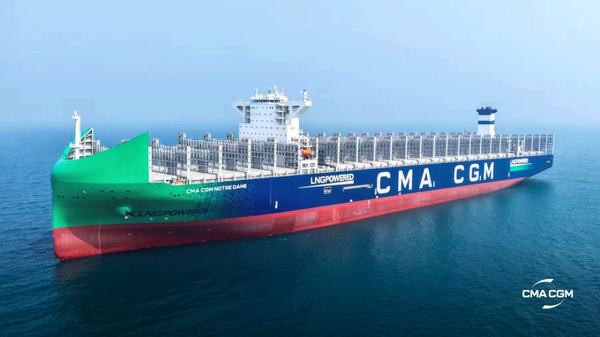
C Y Leung’s proposals in his maiden policy address to tackle the city’s pressing environmental issues, including air pollution from ships.
On January 11, the
Hong Kong Environment Bureau said that it will take serious measures to control ship and roadside vehicle emissions in order to make significant air quality improvements.
Commenting on the announcement, the think tank said: "Civic Exchange welcomes this policy direction, as we believe only tighter regulation can effectively protect public health."
"It is heartening to see a strong commitment from the Chief Executive to improving air quality during his term of government, and to highlight government’s responsibility to protecting public health. This is extremely important, as it signals a fundamental change in the government’s air quality management policy, from only focusing on emissions reduction at source, to also on reducing people’s excessive exposure to toxic air pollutants."
On the issue of ship emissions, the public policy think tank commented: "Civic Exchange supports government’s decision to regulate ocean-going vessels to switching to low sulphur fuel while at berth in Hong Kong, which is a major policy breakthrough in ship emissions control. This is also a very positive response to the voluntary, industry-led Fair Winds Charter, and the shipping companies’ constant call for a level playing field. Civic Exchange estimated that mandatory at-berth fuel switching inside Hong Kong waters would reduce sulphur dioxide and particulates emissions from ocean-going vessels by 33% and 25% territory-wide, respectively.
"It is also encouraging that the government has reiterated its intention to explore other means to reducing ship emissions, including the use of low sulphur fuel among local vessels. We also welcome that with the first berth of the new Kai Tak Cruise Terminal ready for use in summer this year, the government is planning to install on-shore power for cruise ships. It is important as cruise ships are a major source of ship emissions in Hong Kong, contributing about 10% sulphur dioxide, nitrogen oxides and particulates emissions among all ocean-going vessels. Larger cruise ships using the new Cruise Terminal will pose significant emissions and health impacts on the residents living in neighbouring communities."
As part of the city's plan to reduce emission from ships, Hong Kong launched an incentive scheme on September 26, 2012. ocean-going vessels (OGVs) are now eligible for a 50 percent reduction in port facility and light dues if they switch to cleaner fuel in Hong Kong. The incentive scheme is expected to last for three years.
In order to qualify for the reduction, vessels are required to switch from bunker oil to fuel with sulphur content of not more than 0.5 per cent for their auxiliary engines, boilers and generators while at berth in Hong Kong waters.
In 2011, approximately 32,500 calls to Hong Kong were recorded. They are subject to port facility and light dues based on their tonnage at $43 per 100 tonnes for every port call to Hong Kong.
Adding a cautionary note, Civic Exchange commented: "Only time will tell whether government plans will be turned into real actions that deliver a liveable environment for Hong Kong people."