This is a legacy page. Please click here to view the latest version.
Tue 28 Feb 2017, 10:35 GMT

Brightoil expects to 'greatly boost' bunker sales with Zhoushan terminal


Facility is due to become operational by the end of 2017.


Hong Kong-listed Brightoil Petroleum (Holdings) Ltd (Brightoil) said on Monday that it expects to "greatly boost" bunker sales volumes when its terminal facility is launched in Waidiao Island, Zhoushan, later this year.

Strategically located at the centre of the Yangtze River Delta region, which includes key locations such as Shanghai, Hangzhou, Ningbo and Zhoushan, the Waidiao Island facility will be equipped with 13 berths to accommodate vessels from 1,000 to 300,000 dwt and have a total capacity of 3.16 million cubic metres (cbm).

The first phase of the Zhoushan project - with 1.9 million tonnes of storage capacity - is due to be completed in the second half of 2017 and become operational by the end of 2017, whilst the second phase - with 1.3 million tonnes of additional capacity - is scheduled to be completed in 2018.

In addition to boosting bunker volumes, Brightoil said it expects to be able to reduce the costs of its bunkering business once the terminal is launched.

During the course of its next fiscal year (July 2017 to June 2018), Brightoil plans to increase the supply of oil to local refineries in order to raise crude oil sales volumes. With an increase in sales volumes, costs are expected to drop, which in turn will raise profit margins for its international trading and bunkering (ITB) business, Brightoil noted.

"With the commissioning of Zhoushan oil storage and terminal facilities, the group will enjoy more high value-added trading opportunities and will be able to transport crude oil with VLCCs to the storage depot directly. Through the oil pipeline network connected to our Zhoushan storage depot, our crude oil can be delivered to all the refineries located in Eastern China, which facilitates the operation of existing and potential customers and optimizes the efficiency of the entire supply chain. Leveraging on the advantages of our Zhoushan oil storage facilities, the group will enhance our regional competitiveness and expand our market share through procurement of VLCC-sized arbitrage cargo and in-storage blending. The expected cost reduction will translate to a 1 percent sale margin improvement based on the current bunker price level," Brightoil explained.

Breakdown of sales volumes in H2 2016

Fuel oil sales during the last six months of 2016 rose by 998,000, or 37.8 percent, to 3.641 million tonnes, up from 2.643 million tonnes the previous year.

In a breakdown of sales for the ITB division, fuel oil sales volumes made up 31 percent of total sales, compared to 33 percent the previous year.

Crude oil sales of 8.19 million tonnes made up 68 percent of overall ITB sales, compared to 65 percent the year before, when 5.174 million tonnes were sold.

The gas oil and petrochemical division managed to sell 157,000 tonnes (1 percent of the total) during the last half of 2016, compared to 132,000 tonnes (2 percent of the total) a year earlier.

Overall, the ITB division sold 11.988 million tonnes between July and December, compared to 7.949 million tonnes in 2015, which represents a rise of 4.039 million tonnes, or 50.8 percent.

Bunker Index reported last week that revenue from marine bunkering fell by HK$531 million, or 20.9 percent, from HK$2,539 ($327.2 million) during the last six months of 2015 to HK$2,008 million ($258.8 million) during the same period in 2016. ITB revenue - which includes both sales of petroleum products from international trading and revenue from marine bunkering - rose by HK$9,940 million ($1,281 million), or 49.9 percent, to HK$29,855 million ($3,848 million).

Brightoil acts as a physical supplier of marine fuels in Singapore and the Chinese ports of Shanghai, Shenzhen, Ningbo, Zhoushan and Qingdao.


Ubuntu Humanity alongside Fuelng Bellina vessel. DNV says existing LNG infrastructure can support low-GHG methane transition  

Classification society finds biomethane and e-methane compatible with current LNG fleet and bunkering networks.

IBIA bunker buyers working group graphic. IBIA launches Bunker Buyers Working Group for fuel procurement end users  

New forum aims to represent shipowners, charterers and ship managers in policy and regulatory discussions.

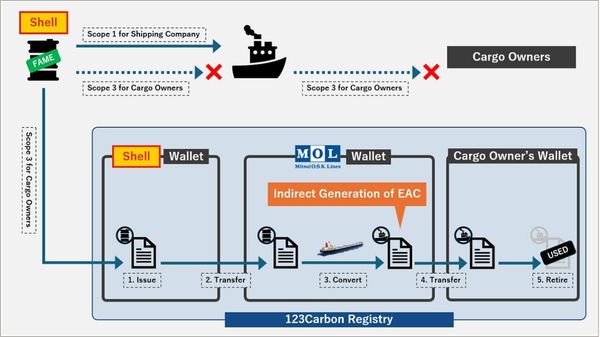
Carbon registry process diagram. MOL and Shell launch book-and-claim scheme for marine biofuel emissions credits  

Japanese shipping firm partners with Shell to offer environmental attribute certificates from third-party vessel operations.

Renewable Energy Directive (RED III) policy brief cover. Bureau Veritas releases report on EU Renewable Energy Directive’s impact on shipping  

Classification society examines RED III compliance challenges as member states transpose the directive into national law.

New York City skyline. IBIA to hold 2026 annual convention in New York  

The event marks the first time in recent years that the association’s gathering has been held in the Americas.

Port of Barcelona delegates. Port of Barcelona advances shore power rollout for cruise terminals  

Installation of OPS systems begins at MSC and Royal Caribbean terminals as port reorganises infrastructure.

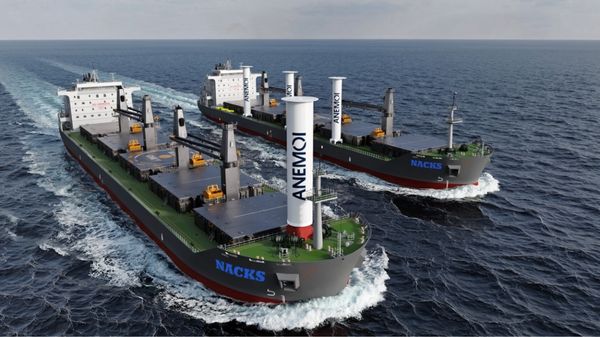
NACKS bulk carriers with rotor sails. Anemoi and NACKS secure ClassNK approval for Ultramax rotor sail designs  

Two configurations for wind-assisted propulsion systems on bulk carriers receive approval in principle.

DP World London vessel. Elbdeich Reederei takes delivery of first methanol-capable feeder vessel  

German shipowner receives 1,250-teu dual-fuel newbuild from Chinese yard, with three more to follow.

AuctionConnect and Asyad Shipping logos. Asyad Shipping adopts AuctionConnect digital bunker platform under three-year deal  

Middle East shipping company to implement auction-based procurement system across fleet operations.

Fuel for thought: LNG for Cruise report cover. LNG remains the most deployable decarbonisation option for cruise shipping, Lloyd’s Register report finds  

Classification society’s latest research examines the fuel’s role in the sector’s energy transition and pathway to net zero.


↑  Back to Top