Fri 9 Nov 2012, 13:38 GMT

Global Vision Market Report


The price of oil recouped some lost ground Thursday, a day after its biggest decline of the year. Benchmark crude for December delivery was up 69 cents to $85.13 per barrel at late afternoon Bangkok time in electronic trading on the New York Mercantile Exchange. The contract fell $4.27, or 5 %, to finish at $84.44 per barrel in New York. It was the lowest price since July 10.

As expected, oil futures at ICE and NYMEX saw a slight upward correction on Thursday morning. According to analysts, this was a mainly technical reaction on the considerable losses quotations had marked on Wednesday. In all, gains remained limited however, as did the losses oil futures marked later on Thursday evening. Market participants focused on consolidating their riskier positions after the ups and downs in the middle of the week had already swept many long and short positions off the market. There were no decisive clues from market fundamentals as breaking news were lacking. Weekly US unemployment data came out better than expected but might have been slightly skewed against the backdrop of hurricane Sandy. In the past week, Sandy has nearly brought public life to a halt. Oil futures eventually traded in a relatively narrow range - compared to the previous days -, showing no clear direction. Crude oil futures have settled with moderate gains whereas distillate futures have edged slightly lower.

ICE Gasoil contract for November delivery settled at 920.50 dollars on Thursday. This was 10.50 dollars below Tuesday's settlement. With some 32,000 deals the traded volume was below average.

The lines of the stochastic indicator have meanwhile crossed both at ICE and at NYMEX charts whereas the RSI is still neutral. Along with the stochastic, the long term trend channels also indicate that prices will continue retreating, particularly the WTI crude. The crucial point will be, whether quotations will fall below their supports at 84.05 dollars (WTI), at 106.10 dollars (Brent) and at 914.00 dollars (Gasoil), while currently showing a phase of consolidation. In this case, according to technical analysts, there might be more technical selling orders as well as more downward slack.

U.S.

Nymex Access rising: Oil prices have edged higher in East-Asia and on Globex electronic trading platform this morning bolstered by the euro. As the euro has meanwhile pulled back from its highs, oil futures have retreated as well. The traded volume is far slightly below average. Investors now keep track of the performance of stock markets and new clues from forex trade. Moreover they are eyeing to some economic indicators.

Houston (ex-wharf indications 08-11)

380cst $598
180cst $703
MGO $1010

New Orleans (ex-wharf indications 08-11)

380cst $603
180cst $702
MGO $1017

Singapore (correct as of 1430hrs LT - delivered indications)

Crude is steady with WTI +$0.07. Singapore paper is bearish, dropping with -$5.70 for 180cst and -$7.75 for 380cst for Nov, and for Dec 180 cst -$5.50 and 380cst -$5.75 with MGO Nov contracts at -$0.41 and for Dec at -$0.43. The cargo market is falling with 180cst -$17.21, 380cst -$18.33 and MGO -$3.46.

The Singapore fuel oil markets erased the previous day’s gains losing more than $17.0 during the Platts window yesterday. The Singapore heavy residual inventory saw a slight build of +0.5 mbbl to 20.9 mbbl. The delivered bunker premiums were ranging between $3.0 and $6.0 above cargo prices yesterday. Bunker fuel oil swaps lost nearly $10/mt at the front of the forward curve both for Singapore papers. Backend was a few dollars stronger, assessed app.$7/mt down. This morning the markets are trading slightly up.

High premiums for prompt deliveries.

380 cst $600
180 cst $610
MDO $910

ARA (Amsterdam - Rotterdam - Antwerp)

Although there are still a lot of waiting times at the loadinginstallations for HSFO, the avails for HSFO and LSFO are good.

Indications for delivered bunkers:

380cst : $ 582
(1.0 %) :$ 616
180cst: $ 654
(1.0 %):$ 690
MGO 0.1%S: $ 920

MGO  

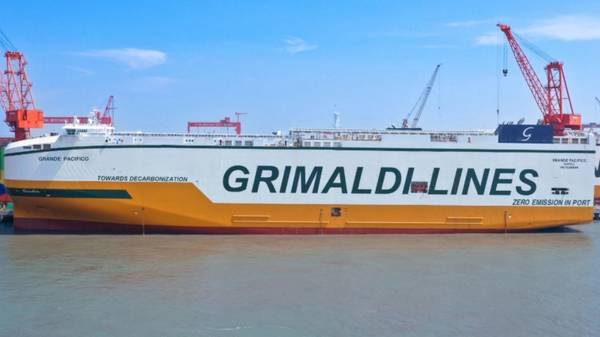
Grande Pacifico vessel. Grimaldi takes delivery of ammonia-ready Grande Pacifico  

9,800-ceu ship is the largest PCTC in the Neapolitan Group’s fleet and the first of five sister vessels on order.

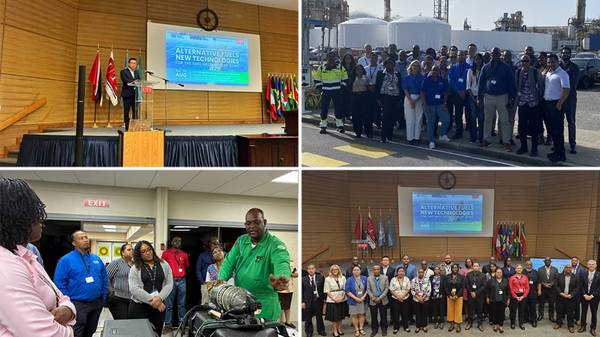
Regional seminar on alternative fuels and new technologies. IMO seminar in Trinidad and Tobago trains Caribbean maritime educators for the alternative fuels era  

A five-day regional seminar in Port of Spain addressed ammonia, methanol and hydrogen training for seafarers.

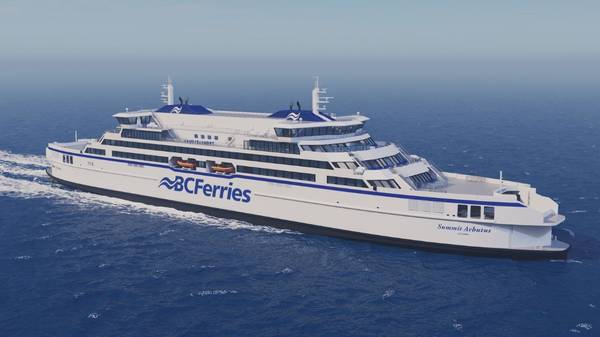
Summit Arbutus vessel. Corvus Energy wins 40 MWh battery contract for BC Ferries’ new biofuel-compatible Summit Class vessels  

Norwegian battery supplier to power four new hybrid-electric ferries for Canada’s BC Ferries.

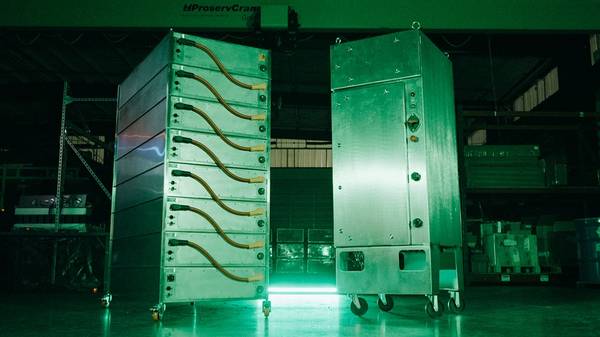
Fleetzero Leviathan Battery Energy Storage System (BESS). ABS issues product design assessment for Fleetzero’s Leviathan battery system  

The first US-manufactured lithium iron phosphate marine battery system receives classification society approval.

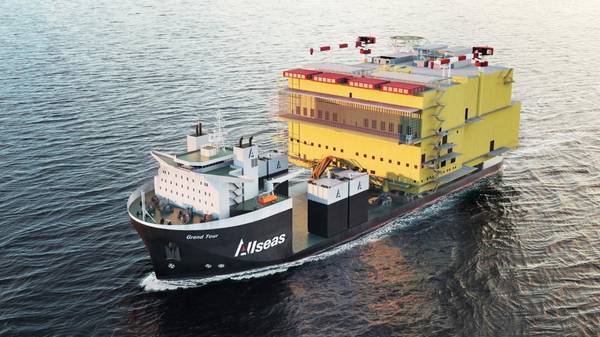
Grand Tour vessel render. ABB wins power and propulsion contract for Allseas’ offshore wind support vessel  

ABB will supply an integrated propulsion package for a new semi-submersible vessel supporting Europe’s offshore wind sector.

Keel-laying ceremony for SGC 005. Pinnacle Marine lays keel for fifth B100-compatible harbour craft as Singapore fleet build-out reaches full construction phase  

All five vessels in Pinnacle Marine's B100-compatible utility boat programme are now under construction.

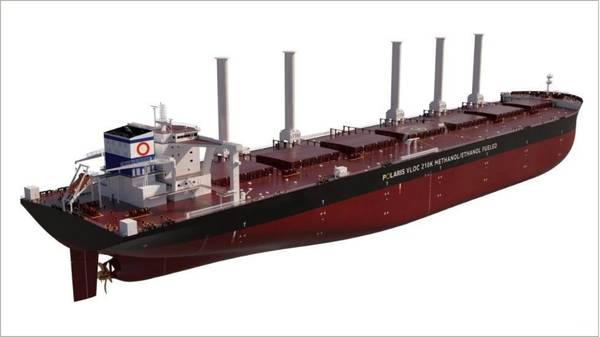
210,000-tonne tri-fuel ore vessel render. CSSC units sign contract for four tri-fuel ore carriers  

Ships feature a tri-fuel propulsion system combining ethanol, methanol and fuel oil.

Houston skyline. Bunker One seeks oil derivatives trader for Houston desk  

New hire to work alongside trading and sales, providing hedging solutions for physical exposure.

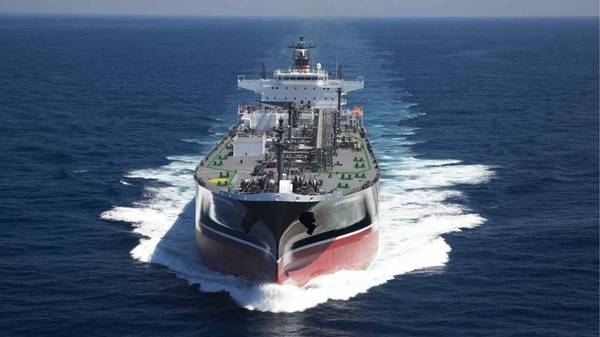
Lyla Pathfinder vessel. Kawasaki delivers 13th LPG-fuelled LPG/ammonia carrier  

86,700-cbm vessel is shipbuilder's 20th delivery featuring LPG-fuel propulsion.

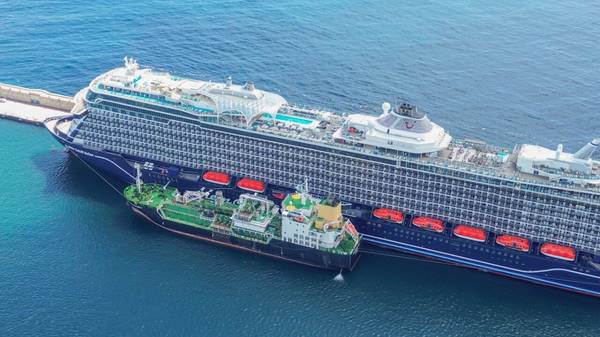
Mein Schiff Relax ship-to-ship (STS) bunkering operation. TUI Cruises puts both InTUItion-class ships on bio-LNG as fleet targets 50,000-tonne CO₂e saving in 2026  

German cruise operator says bio-LNG use across two newbuilds has already cut 26,000 tonnes of CO₂e.