Fri 19 Nov 2010, 15:52 GMT

EMSA expands oil spill response network


Newly-contracted vessel strengthens EMSA’s coverage in the Eastern Mediterranean.


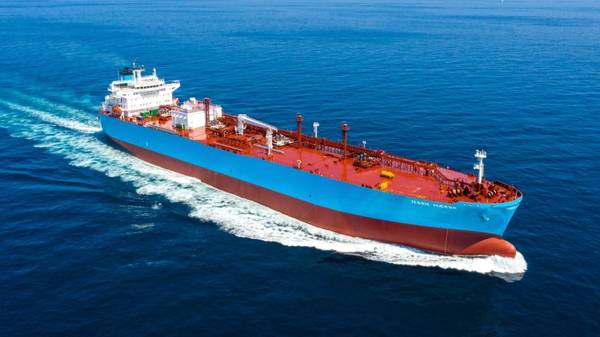
The European Maritime Safety Agency (EMSA) has signed a contract to provide pollution response capacity using the Limassol, Cyprus-based tanker Alexandria.

The newly-contracted vessel considerably strengthens the EMSA’s oil-spill response coverage of the Eastern Mediterranean Sea, a sensitive sea area given its proximity to major oil transport routes transiting the Suez Canal, and those originating in Black Sea and Middle-Eastern ports.

The EMSA selected Petronav Ship Management Limited, a Cypriot Company, to provide pollution response capacity through its tanker Alexandria. The service contract signed with Petronav has a duration of four years with a total value of 4.5 million euros, renewable once for an additional four years.

"EMSA’s network of vessels has been set up to ‘top-up’ the capacity of European Member States in the event of a major marine pollution crisis. We have been keen to reinforce the network’s coverage of the Eastern Mediterranean Sea, a very sensitive region as it is a major corridor for oil and petrochemicals, feeding ports and refineries across Europe," said EMSA Executive Director Willem de Ruiter.

"This was one of the main targets for 2010, so I am particularly pleased to have covered this gap in the network," added de Ruiter.

The Alexandria was built in 2008 and has a maximum speed of 12.6 knots. The dimension of the vessel — length 94m, breadth 18m and depth 9.60m — will facilitate the permanent storage of oil-spill response equipment on board, rather than in a land-based equipment stockpile.

The vessel’s standard activity is shipping oil from Haifa, Israel, to Cyprus, an activity that occupies about 24 days a month of the ship’s schedule.

The EMSA’s network of stand-by oil pollution response vessels Regulation 724/2004/EC gives EMSA the task of assisting EU/EEA Member States in their response to ship-sourced pollution within the Community.

The EMSA has built a network of stand-by oil pollution response vessels that covers the whole of the European coastline, and serves to 'top up' the existing pollution response capacity of member states.

The network is based on contracted vessels which are equipped with oil spill response equipment as per EMSA requirements. The vessels carry out their 'normal' commercial operations on a day-to-day basis, but when needed can be adapted at short notice to serve as oil spill response vessels.

With state-of-the art equipment, such as oil slick detection radars, sweeping booms and skimmers, the vessels can be scrambled into action at the command of the member state.


American Bureau of Shipping (ABS) logo. ABS introduces nuclear-ready notation for marine and offshore assets  

The classification society has released what it describes as an industry-first notation to support future nuclear conversion of vessels and offshore assets.

AiP handover ceremony for NEXTGEN Energy Hub (NGEH) design. ABS grants approval in principle for Seatrium’s NEXTGEN Energy Hub design  

The hub concept integrates ammonia bunkering, power generation and electric vessel charging in a single unit.

Jumbo Maritime crew aboard vessel. Jumbo orders two methanol-ready L-Class heavy lift vessels from Dajin Heavy Industry  

Dutch heavy lift specialist Jumbo signs newbuilding contract for two 25,000-dwt vessels.

China flag. Zhoushan completes first bonded bunker operation at Majishan port area  

The operation marks full fuel supply coverage across all general cargo terminals in Zhoushan's port system.

US dollar banknotes. Port of Long Beach launches $1m methanol bunkering challenge for oceangoing vessels  

A $1m prize aims to kick-start commercial methanol bunkering at one of North America's busiest ports.

Core Power, Athlos Energy, Deon Policy Institute and ABS logos. Greece floating nuclear study finds no fundamental barriers to implementation  

A PESTLE assessment of floating nuclear power plants in Greece identifies framework gaps, not feasibility barriers.

Northern Pathliner alongside Bergen LNG vessel. Molgas completes LNG cool-down and bunkering for Northern Pathliner at Northern Lights terminal in Norway  

Operation carried out at Øygarden facility, with K Line and Integr8 Fuels in the supply chain.

Rendering of a G2 Ocean OHGC vessel. G2 Ocean expands fleet with six future-fuel ready gantry crane vessels  

Open hatch specialist adds vessels and jet sail technology as part of a broad fleet renewal programme.

CMA CGM Adventure vessel at Port of Mombasa. LNG-powered CMA CGM Adventure makes first call at the Port of Mombasa  

Kenya Ports Authority receives its first large LNG-fuelled container vessel.

Liam Blackmore, Lloyd's Register. Maritime trio shapes IMO safety guidelines for ammonia as marine fuel  

Real-world operational experience feeds directly into new IMO ammonia fuel safety framework.