Nippon Yusen Kabushiki Kaisha (NYK Line) has announced the launch of its 'latest green vessel', the
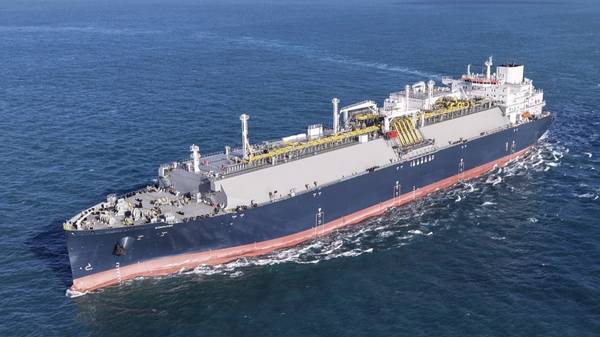
NYK Altair [pictured], which is said to consume less fuel than ships with conventional engines.
The ship recently made her maiden voyage to Europe, arriving in Hamburg at the end of October. NYK’s previous vessel named NYK Altair was launched in 1994. At the time, the ship's 4,743 TEU capacity made her the largest containership in Japan.
The new NYK Altair incorporates some innovative developments in engine design. She is fitted with a DU-Wartsila RT FLEX 96C propulsion engine. The environmental advantages of the engine are said to be:
* Lower fuel consumption than conventional engines
* Smokeless operation at all running speeds
* Reduced Nitrogen Oxide (NOx) emissions
* High-efficiency waste heat recovery
The launch of the NYK Altair follows the introduction of the award-winning
Auriga Leader and the unveiling of the company’s concept ship,
NYK Super Eco Ship 2030.
The solar-power-assisted Auriga Leader is the world's first ever cargo ship partly powered by solar energy. The vessel, which is equipped with 328 solar panels, was named the ship of the year at the 2009 Lloyd’s List Global Awards. It has been used to experiment with propulsion systems that run in part on solar power. The systems were jointly developed with
Nippon Oil Corporation.
In a two-year experiment, which looked into how solar power can be used to assist with powering a vessel, solar power was able to provide 0.05 percent of the ship’s propulsion power and 1 percent of the electricity used on the vessel.
The NYK Super Eco Ship 2030 is a low emission container freight vessel that the company says it wishes to have in service by 2030.
The ship was designed in cooperation with the Monohakobi Technology Institute along with Garroni Progetti s.r.l, an Italian ship design firm, and Elomatic Marine, a Finnish marine-technology consultant.
The vessel will be powered by Liquid Natural Gas (LNG) fuel cells, solar cells, and wind power, all of which NYK says will lead to a CO2 reduction of 69 percent per container carried.
The design also features a bow-mounted bubble projector to reduce friction as the ship moves through the water and it is proposed that the vessel will actually break into segments in port so as to facilitate freight handling and thus aid efficiency. NYK also proposes to decrease the weight of the hull and therefore reduce water friction and the amount of power needed to propel the ship.
NYK says that it plans for its fleet to produce zero emissions by 2050.