
 |
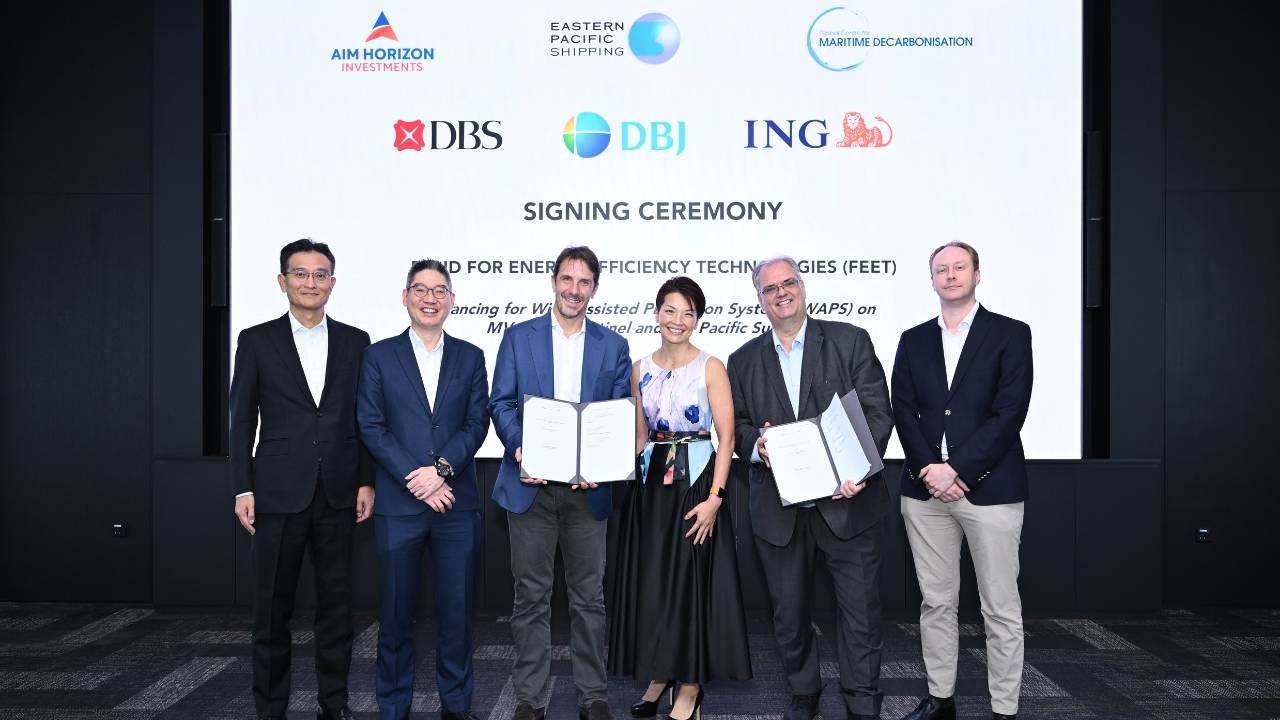
The Global Centre for Maritime Decarbonisation (GCMD), AIM Horizon Investments and Eastern Pacific Shipping (EPS) said on 20 October that they have arranged financing for two wind-assisted propulsion system (WAPS) projects through the Fund for Energy Efficiency Technologies (FEET), marking the fund’s first deployment.
FEET links verified fuel and regulatory savings from energy efficiency technologies (EETs) installed on vessels to a pay-as-you-save mechanism. The fund offers up to 100% upfront financing through a blended finance structure, and it is managed by AIM Horizon Investments, with GCMD acting as the fund's decarbonisation adviser. FEET is also supported by the Development Bank of Japan, DBS Bank and ING.
The financing will support wind-assisted propulsion systems installed on board the MV Pacific Sentinel and MV Pacific Sunstone. Each vessel has three 22-metre suction sails fitted, making them the first ships in the EPS fleet to use WAPS.
The deployment builds on earlier work between GCMD and EPS, which led to the development of a methodology for quantifying fuel savings from the WAPS installed on board the MV Pacific Sentinel. To isolate the retrofit's impact from changes in operating conditions, GCMD said it collected 276 million data points over four months of spot-market trading in the Americas, from mid-May to mid-September 2025. From these, 203 valid on-off transitions were screened to quantify performance, according to GCMD.
Going forward, FEET is to apply this methodology — which has been reviewed by an independent third party — to determine fuel savings for the WAPS projects it finances. Project data will be audited, and the calculated fuel savings independently verified. These verified savings will then be used to determine payments from shipowners, according to the organisations.
Professor Lynn Loo, CEO of GCMD, stated: "Scaling EETs depends not just on proving that they work, but on establishing how much fuel they save under real-world operating conditions. With a methodology now in place to quantify those savings, FEET's first projects with EPS take the next step: testing how pay-as-you-save financing works in practice, by linking payments to verified fuel savings. This is how we aim to turn operational evidence into investor confidence and unlock wider adoption of EETs across fleets."
Marcel de Bruijckere, CEO of AIM Horizon Investments, commented: "Launching an innovative fund like FEET required a lot of effort, strong co-operation with GCMD and support by anchor investor Development Bank of Japan and debt providers ING and DBS Bank. The first deployment of FEET's capital makes all that hard work worth it and delivers the proof of its concept. We learned a lot from our interaction with the finance and technical teams of EPS and look forward to applying those lessons when making our next investments and scaling up the fund."
Cyril Ducau, CEO of EPS, remarked: "Decarbonisation moves faster when the technology, the data, and the financing come together. MV Pacific Sentinel has shown what wind-assisted propulsion can do in real operations, and we are pleased to now showcase this first FEET financing designed to assist shipowners wanting to invest in proven solutions. We look forward to seeing more energy-efficient technologies make their way onto ships."
|
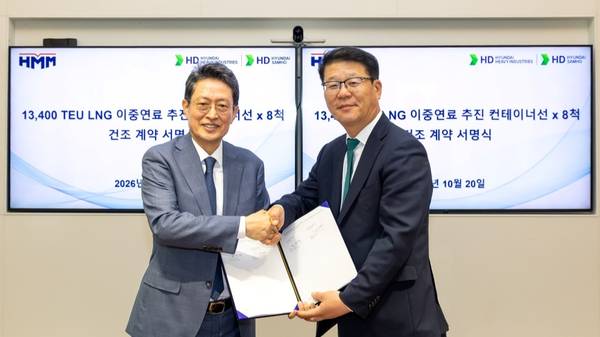
HMM orders eight LNG dual-fuel container ships in newbuild push
South Korean carrier commissions 13,000-TEU vessels from HD Hyundai, with deliveries due to begin in 2029. |
|
|
|
||
|
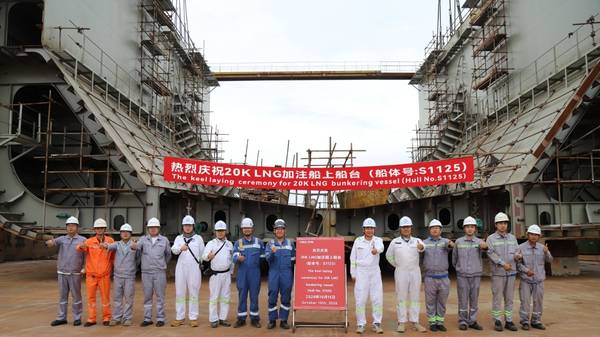
CIMC SOE advances construction on three LNG bunker vessels
Chinese shipbuilder progresses three bunker vessel projects in the same week. |
|
|
|
||
|
Verde Marine Energy adds two staff as it expands bunkering operations in ARA region
Dutch bunker supplier hires former Melroh Trading employees and launches RMG 380 3.5% HSFO barge service following Sunoco Marine tie-up. |
|
|
|
||
|
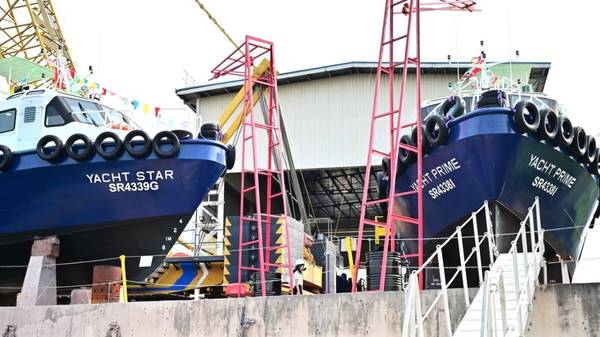
Pinnacle Marine launches two B100-compatible utility boats for Excelessel Offshore
Singapore shipbuilder nears completion of six-vessel B100 series. |
|
|
|
||
|
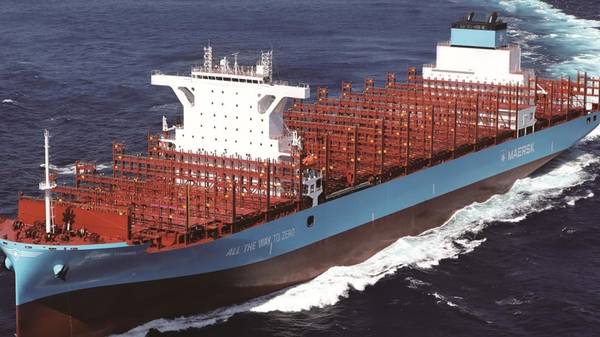
BSM takes over methanol-fuelled Maersk Torino, building alternative fuel experience
Ship manager adds methanol-fuelled container vessel to its fleet, citing growing expertise in alternative fuel operations. |
|
|
|
||
|
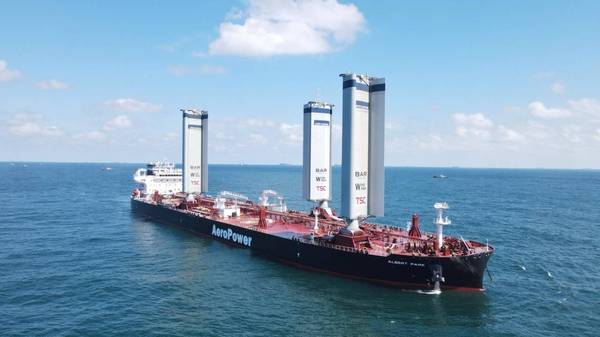
Bureau Veritas marks naming of Union Maritime's wind-assisted Aframax tanker
Albert Park, fitted with three WindWings sails, is Chinese yard's first wind-assisted Aframax product tanker. |
|
|
|
||
|
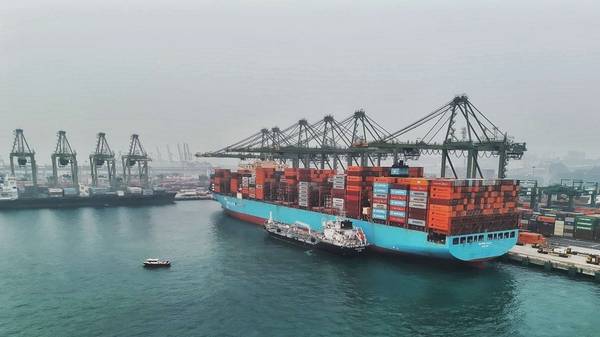
Singapore completes world's largest ethanol bunkering operation
Maersk, Golden Island and PSA perform ethanol bunkering in Singapore, drawing on methanol handling experience and safety protocols. |
|
|
|
||
|
WinGD signs five-year service deal for NYK LNG carrier fleet
Swiss engine designer WinGD will support ten dual-fuel engines across five Japanese-operated LNG carriers. |
|
|
|
||
|
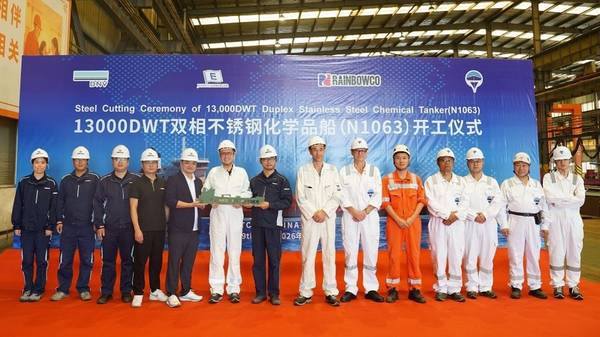
Steel cut for third methanol-ready chemical tanker in ROC-Essberger series
Chemical tanker series is designed with provisions for methanol fuel and wind-assisted propulsion systems. |
|
|
|
||
|
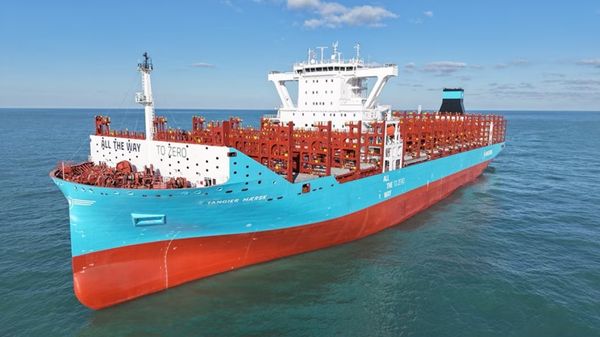
WinGD engine completes first in-service ethanol voyage on Maersk container ship
Tangier Maersk sails from Houston to New York using 100% bioethanol in WinGD's X-DF-M/E engine. |
|
|
|
||
| IMO seminar examines technical hurdles facing ammonia as a marine fuel [News & Insights] |
| GCMD and Equinor sign five-year partnership on alternative fuels and carbon storage [News & Insights] |
| GCMD outlines practical approach to quantity assurance in marine biofuel supply chains [News & Insights] |
| Project CAPTURED secures EU ETS recognition and IMO support for onboard carbon capture pathway [News & Insights] |
| GCMD shares biofuel assurance and green finance insights at Hong Kong shipping decarbonisation forum [News & Insights] |
