
 |
ClassNK has released an updated edition of its 'Guidelines for Ships Using Alternative Fuels' (Edition 3.1), incorporating the latest IMO interim guidelines for hydrogen-fuelled ships and introducing new structural strength requirements for methanol and ethanol fuel tanks.
The Tokyo-based classification society announced the revision on 18 August, stating that the updated guidelines are intended to enable shipyards, designers and shipowners to carry out design and safety assessments in line with current international standards.
The revision makes changes to two key sections. In Part D, covering hydrogen-fuelled ships, ClassNK has incorporated the IMO’s 'Interim Guidelines for the Safety of Ships Using Hydrogen as Fuel' (MSC.1/Circ.1701), which were finalised at the 11th session of the IMO Sub-Committee on Carriage of Cargoes and Containers (CCC 11) in September 2025. ClassNK notes that the updated Part D also introduces a hydrogen leak frequency table, derived using a Bayesian statistical method, that can be used for the safety assessments required under the IMO guidelines. The Bayesian approach had previously been applied by ClassNK to estimate ammonia leak frequencies.
In Part A, covering methanol- and ethanol-fuelled ships, ClassNK says it has established structural strength requirements for methanol and ethanol fuel tanks. These requirements were not previously addressed in the relevant IMO guidelines (MSC.1/Circ.1621), which were issued in 2020. According to ClassNK, the new requirements have been developed based on its experience in design reviews of such vessels and are intended to enable more efficient implementation of tank design assessments.
ClassNK noted that it participated as a member of the Japanese delegation to CCC 11 and contributed to discussions that led to the finalisation of the IMO’s hydrogen fuel guidelines now reflected in Part D.
The guidelines also cover LPG and ammonia as alternative fuels, though the current revision is focused on hydrogen and methanol/ethanol provisions.
According to ClassNK, the revisions are intended to allow the development of alternative-fuelled ships to proceed “in a more rational” manner, by providing design and assessment guidance that aligns with the latest international standards and incorporates the classification society’s own leak frequency estimates.
The guidelines are available to registered ClassNK users via the 'My Page' section of its website.
|
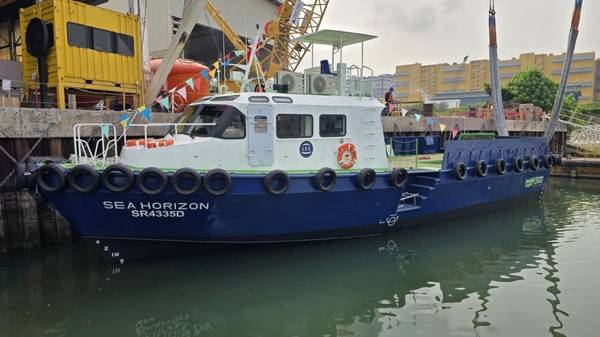
Pinnacle Marine launches second B100-compatible harbour craft for Les Star
Sea Horizon joins Singapore’s harbour craft fleet. |
|
|
|
||
|
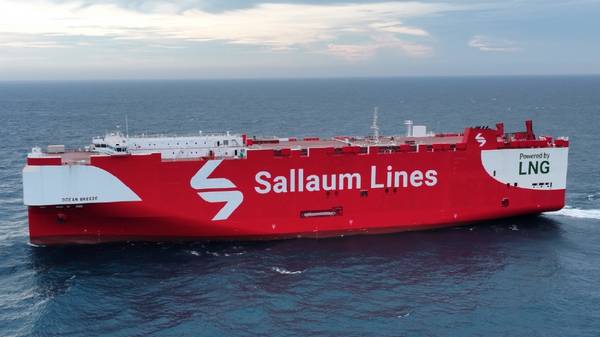
Sallaum Lines orders LNG-fuelled, ammonia-ready PCTCs from Chinese yards
Operator signs shipbuilding agreements for new generation of 8,600-CEU vessels, taking its newbuild investment past $1bn. |
|
|
|
||
|
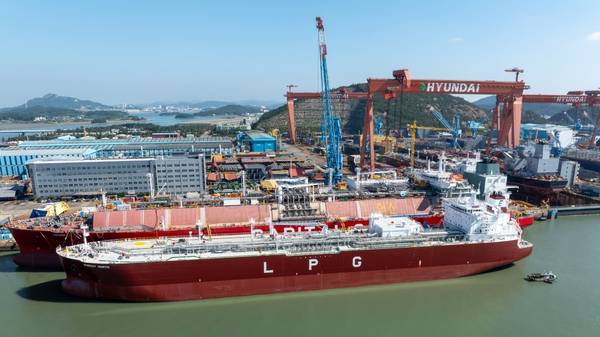
Nakilat takes delivery of dual-fuel carrier in South Korea
Ammonia-ready design positions vessel to play key role in future low-carbon energy supply chains, says Qatari firm. |
|
|
|
||
|
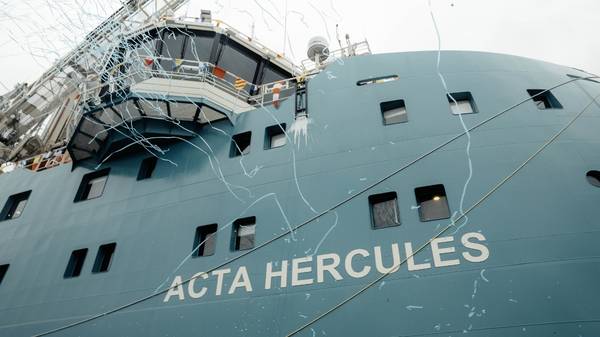
Acta Marine christens methanol dual-fuel vessel Acta Hercules in IJmuiden
Dutch operator marks the christening of its second newbuild CSOV. |
|
|
|
||
|
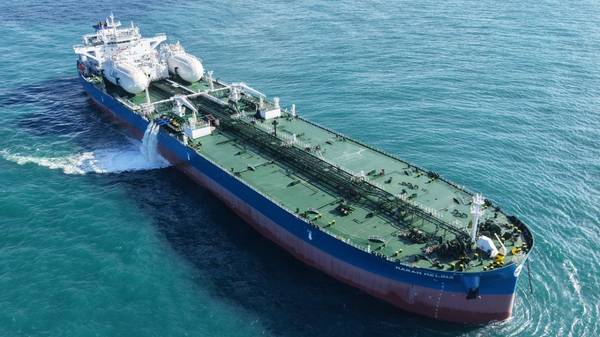
Angelicoussis Group takes delivery of fifth dual-fuel Suezmax tanker
Maran Tankers Management adds the 155,500-DWT Maran Melina to its fleet. |
|
|
|
||
|
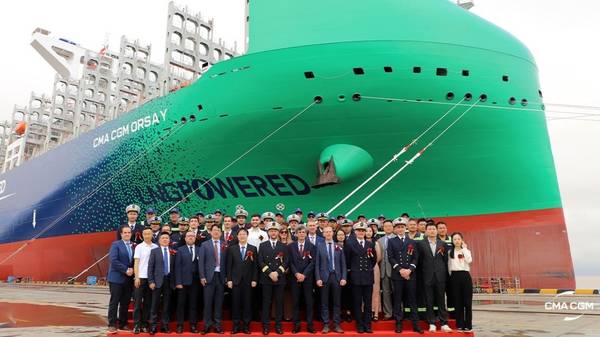
CMA CGM takes delivery of LNG-powered Orsay for Asia-Europe trade
24,212-TEU vessel joins 10-ship series, adding capacity to the carrier's FAL3 route. |
|
|
|
||
|
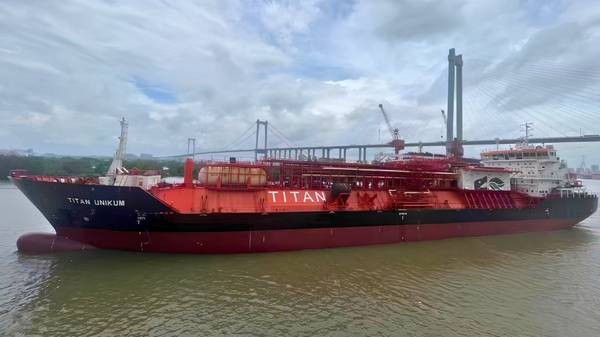
Titan Clean Fuels completes 15-year survey on LNG bunkering vessel Titan Unikum
Multi-gas carrier has undergone dry-docking work at a Chinese yard, preparing it for future upgrades. |
|
|
|
||
|
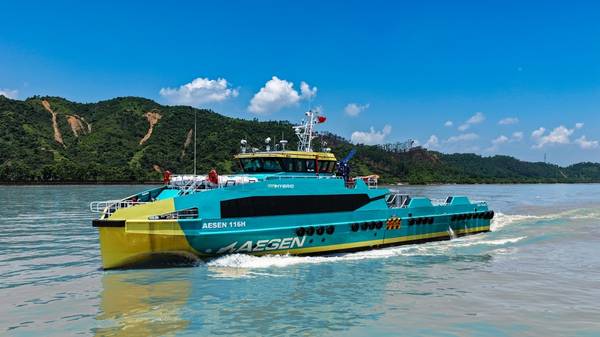
Lehmann Marine’s CUBE battery system debuts in China aboard hybrid crew boat
German battery maker’s first Chinese installation targets fuel savings on a Cheoy Lee-built vessel for a Singapore operator. |
|
|
|
||

|
Iino Lines secures transition loan from Mizuho Bank for LPG dual-fuel VLGC
Japanese shipowner finances the acquisition of Lumi Aurora through a green transition finance framework aligned with ICMA guidelines. |
|
|
|
||
|
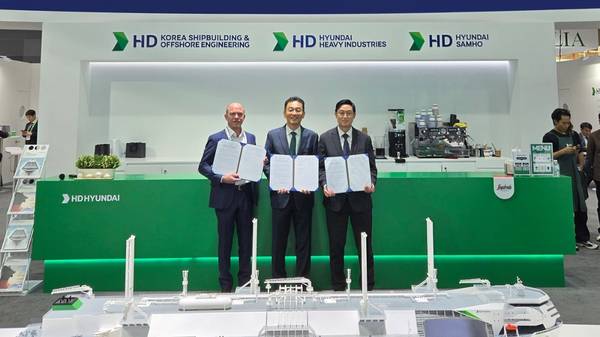
ABS, HD KSOE and Siemens partner on digital twin technology for ammonia-fuelled ship safety
Three firms will combine CFD analysis and digital twin technology to assess ammonia leak scenarios in vessel design. |
|
|
|
||
| Pinnacle Marine launches second B100-compatible harbour craft for Les Star [News & Insights] |
| Petrobras launches HSFO bunker sales in Rio de Janeiro [News & Insights] |
| Changhong International launches eighth LNG dual-fuel container ship for MSC [News & Insights] |
| CSL and OWL launch first subsea rock installation vessel for offshore wind [News & Insights] |
| Portsmouth switches on UK’s first multi-berth shore power system [News & Insights] |
