
 |
SEA-LNG, the multi-sector coalition spanning the LNG value chain, has published its 2026 Mid-Year Market Review, pointing to continued growth in LNG-fuelled vessels, bunkering infrastructure and liquefied biomethane (LBM) production. The review coincides with the coalition's tenth anniversary and its receipt of provisional consultative status at the International Maritime Organization (IMO).
According to analysis of vessel orders from January to June 2026 by SEA-LNG member DNV, LNG dual-fuel orders stood at 73 vessels in the first half of the year, accounting for close to 90% of the alternatively fuelled order book when measured against ammonia, hydrogen and methanol orders. The LNG bunker vessel fleet now numbers 67 in operation, with a further 42 on order.
The LNG order book continues to be dominated by vessels serving liner trades, particularly container vessels and pure car and truck carriers (PCTCs). According to the World Shipping Council, LNG accounts for 58% of total tonnage ordered among container ship owners, compared with 36% for conventional fuels.
Global LNG bunker volumes reached around 770,000 cbm per month between January and May 2026, according to analysis cited by SEA-LNG — an increase of approximately 13% on the same period in 2025, driven by the entry into service of more LNG-fuelled vessels alongside favourable pricing conditions for LNG relative to conventional fuels.
The report also highlights growth in the biomethane sector. Data from the European Biogas Association show that biomethane production capacity reached 8.2 billion cubic metres (bcm) per year by the end of Q2 2026, an increase of 1 bcm — or around 14% — in a single year. The number of operational biogas plants rose from 1,678 to 1,975, supported by €36 billion in allocated capital investment. SEA-LNG notes that liquefied e-methane remains in development.
Steve Esau, SEA-LNG chief operating officer, stated: "Despite geopolitical and regulatory uncertainties in 2026, the industry is maintaining momentum on the methane decarbonisation pathway. This year's mid-year review confirms that methane is the practical and realistic solution for shipping decarbonisation. This is reflected in the growing numbers of LNG-fuelled vessels, LNG bunker vessels, and LNG bunkering volumes, as well as biomethane bunkering and production growth. As we look ahead, with e-methane also materialising, we are confident in the trajectory of the methane pathway to decarbonisation."
SEA-LNG was granted provisional consultative status at the IMO on 9 July 2026, enabling the coalition to engage directly with member states as it advocates for what it describes as practical and technology-neutral decarbonisation regulations. The organisation says its focus has shifted from raising awareness of LNG as a marine fuel to sharing technical expertise on areas such as well-to-wake emissions reductions and the scaling up of bio- and e-methane.
Founded on 12 July 2016, SEA-LNG now counts 37 members. Over the decade since its founding, the number of LNG-fuelled ships in operation and on order has grown from 81 to over 1,550, LNG bunker vessels have risen from 9 to 109, and LNG bunkering locations have expanded from 10 to 222 ports worldwide, SEA-LNG notes.
Peter Keller, SEA-LNG chairman, commented: "I have been with SEA-LNG since we founded it 10 years ago, and what strikes me is how methane has ramped up from a pathway to a clear runway for shipping decarbonisation. When building the first LNG-powered containership, I didn't imagine that within ten years over 10% of the global fleet by deadweight could be powered by methane. What started as a solution to reduce harmful local emissions has cemented itself as the practical and realistic option for reducing greenhouse gas emissions today and into the future."
|
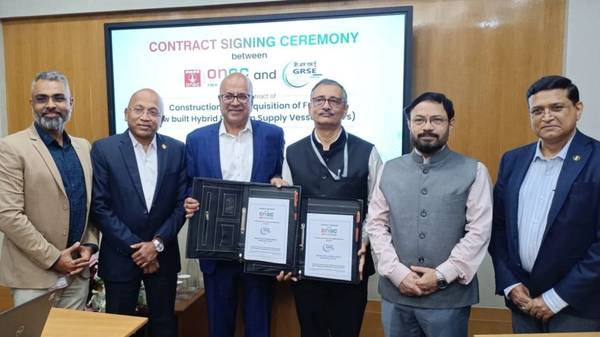
GRSE signs contract with ONGC to build four hybrid platform supply vessels
Indian shipbuilder adds offshore support vessels to its portfolio with hybrid propulsion contract for state oil firm. |
|
|
|
||
|
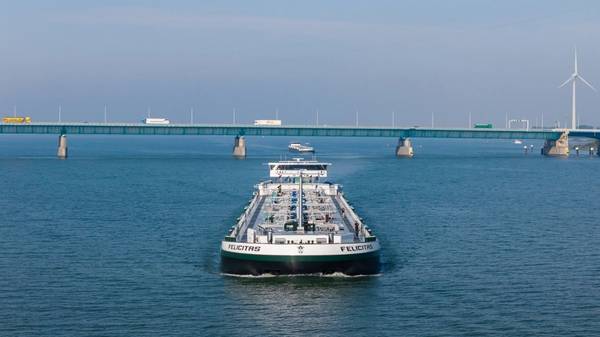
AMS Barging christens methanol-ready tanker as fleet reaches 17 vessels
Dutch inland shipping company adds 9,000-cbm diesel-electric tanker Felicitas, designed for future conversion to methanol bunkering. |
|
|
|
||
|
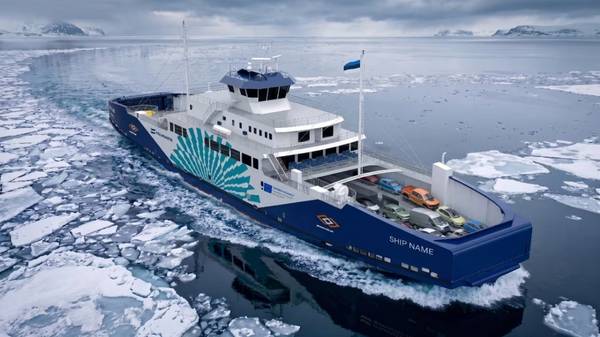
Steerprop to supply next-generation CRP units for Estonia's first electric ferry
Finnish propulsion specialist Steerprop will equip a CRIST-built electric ferry with upgraded contra-rotating propeller technology for the Estonian State Fleet. |
|
|
|
||
|
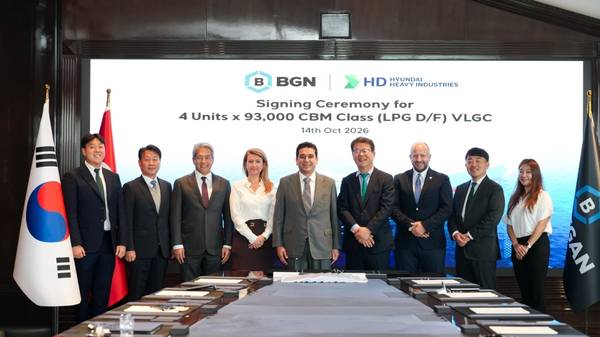
BGN orders four more dual-fuel LPG carriers from HD Hyundai Heavy Industries
New contract brings BGN's 2026 orders with HD HHI to 10 vessels and will increase its owned VLGC fleet to 23 ships. |
|
|
|
||
|
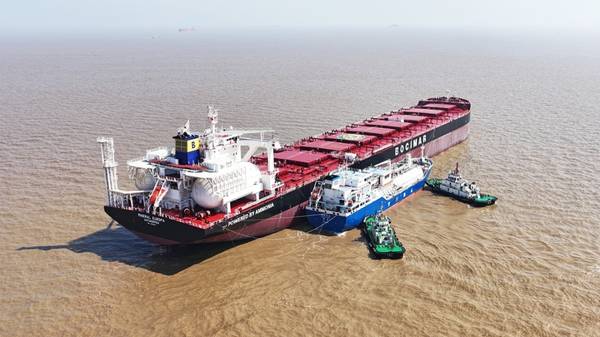
World's first ship-to-ship green ammonia bunkering operation completed in China
Shenghang Yongle supplied 1,000 tonnes of green ammonia to CMB.Tech's Mineral Europa, connecting the fuel's full supply chain. |
|
|
|
||
|
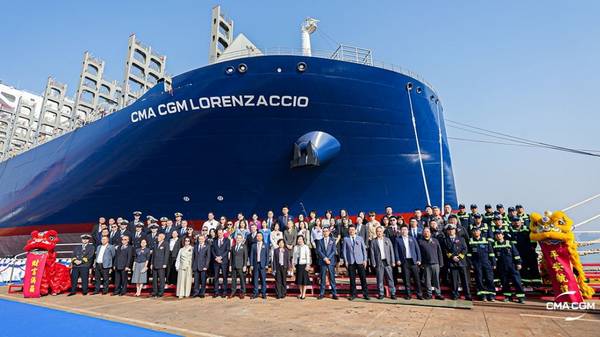
15,000-TEU methanol-powered boxship named CMA CGM Lorenzaccio
French carrier adds literature-inspired vessel to its methanol-powered fleet for deployment on the REX2 service. |
|
|
|
||
|
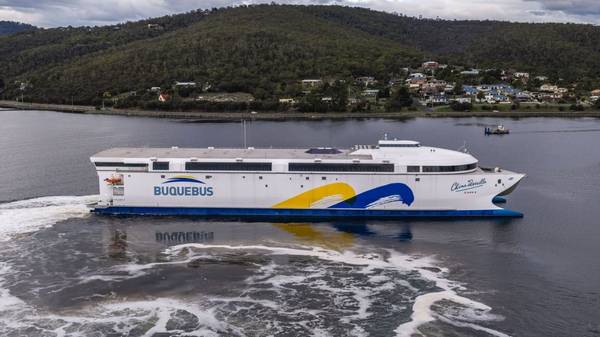
Battery-electric ferries grow in scale as aluminium multihulls gain market share
DNV highlights the rise of battery-electric aluminium ferries, spotlighting the delivery of the world's largest such vessel. |
|
|
|
||
|
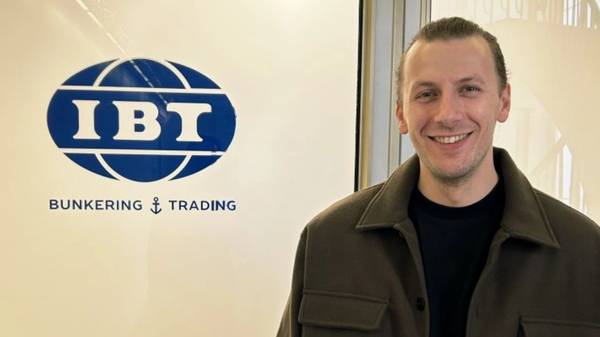
IBT Bunkering & Trading appoints Sales Support Specialist
Björn Hauschild joins from shipyard broker CombiTrade. |
|
|
|
||
|
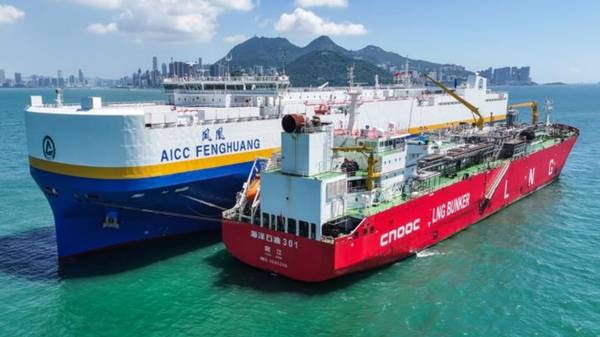
CLPe and CNOOC complete Hong Kong's first LNG bunkering of a pure car and truck carrier
Ship-to-ship operation delivered around 2,600 cbm of LNG to dual-fuel vessel AICC Fenghuang. |
|
|
|
||
|
Mercuria seeks senior sales and account manager for bunker delivery platform
Role can be based either remotely or at one of its offices in London, Geneva, Athens or Las Palmas. |
|
|
|
||
| World's first ship-to-ship green ammonia bunkering operation completed in China [News & Insights] |
| 15,000-TEU methanol-powered boxship named CMA CGM Lorenzaccio [News & Insights] |
| Battery-electric ferries grow in scale as aluminium multihulls gain market share [News & Insights] |
| CLPe and CNOOC complete Hong Kong's first LNG bunkering of a pure car and truck carrier [News & Insights] |
| Maritima holds steel-cutting ceremony for Cap Morgiou, first of two Petroineos bunker vessels [News & Insights] |
