
 |
The Global Centre for Maritime Decarbonisation (GCMD) has shared findings from its pilot programmes at a shipping decarbonisation forum held at the Hong Kong University of Science and Technology (HKUST) Institute for the Environment (IENV), as Hong Kong develops its inaugural Five-Year Plan and pursues ambitions to become a green maritime hub.
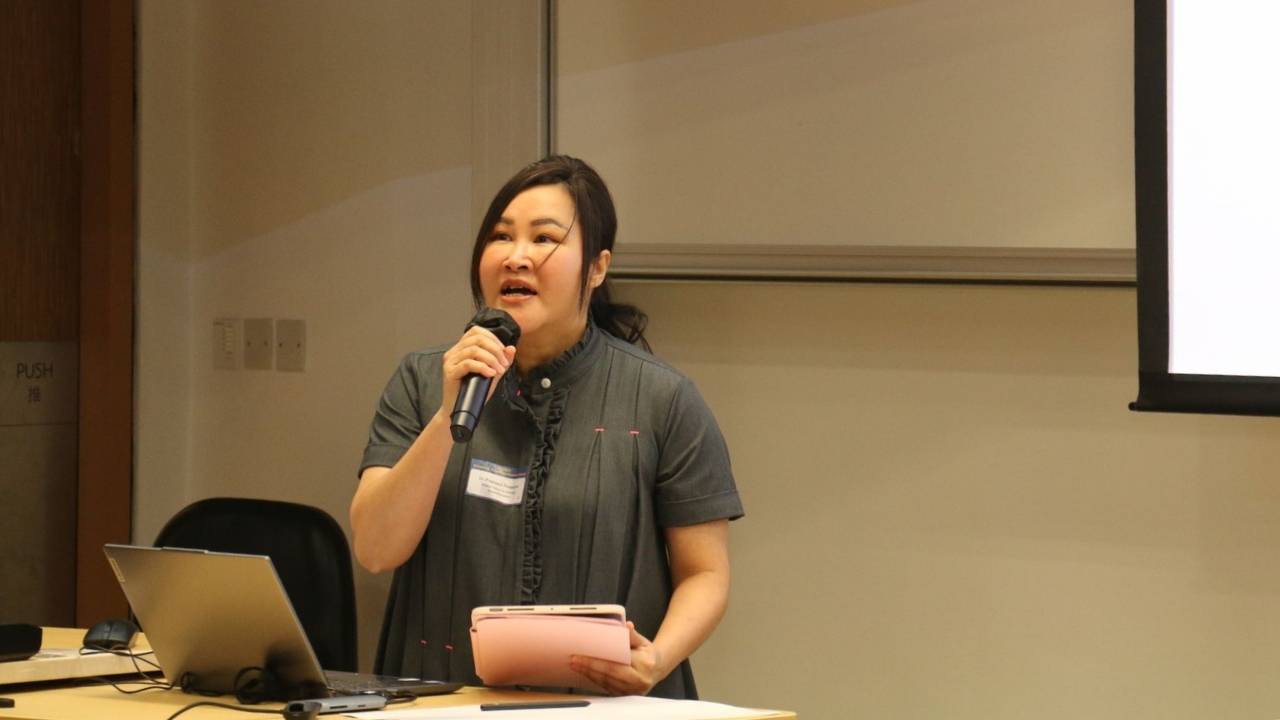
GCMD’s directors of projects, Dr Prapisala Thepsithar and Shane Balani, joined maritime stakeholders and trade associations at the forum, where discussions centred on biofuels, energy efficiency technologies (EETs) and green financing.
Biofuels: assurance and traceability
Dr Prapisala presented on drop-in biofuels, arguing that adoption requires an assurance framework covering quantity, quality and greenhouse gas (GHG) emissions abatement across the supply chain. According to GCMD, traceability tools — including chemical fingerprinting and tracers dosed into biofuels — can independently verify GHG abatement claims made on paper.
GCMD’s pilots indicated that FAME-based biofuels are operationally stable under commercial conditions over a six-month period, which the organisation says supports their near-term decarbonisation potential.
During a panel discussion, Dr Prapisala highlighted that, while Asia holds abundant biomass resources, clear sustainability criteria are needed to ensure surplus biomass is used responsibly. She cautioned that without such criteria, biofuel demand could perversely incentivise deforestation, land-use change, or the expansion of crop production solely for biofuel feedstock.
Energy efficiency: unlocking capital through blended finance
Shane Balani presented on GCMD’s Fund for Energy Efficiency Technologies (FEET), outlining how blended finance and pay-as-you-save financing models could, according to GCMD, accelerate EET deployment across the shipping sector.
Balani noted that rising regulatory costs and fuel transition pressures are strengthening the business case for EET retrofits. He said that robust performance measurement, high-frequency operational data and standardised methods for measurement and analysis are, according to GCMD, essential to validating EET fuel savings claims.
Balani also highlighted that blended finance and a diversified portfolio of projects can distribute risk, unlock capital and support wider adoption of energy efficiency solutions. He pointed to taxonomies and capital relief — recognising retrofit investments as green or transitional finance — as mechanisms that could incentivise financial institutions to manage the complexity of tracking EET performance.
The forum was hosted by Christine Loh and Kam Hing Billy Cheung of HKUST.
|
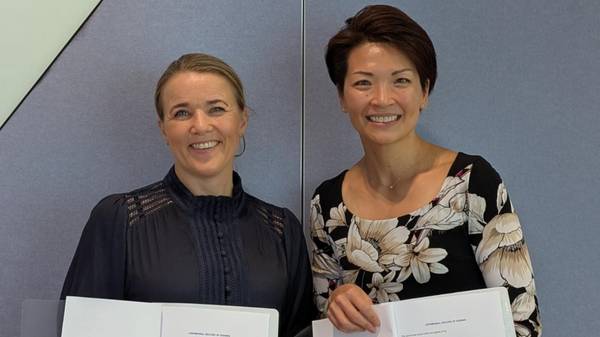
GCMD and Equinor sign five-year partnership on alternative fuels and carbon storage
Singapore-based centre and Norwegian energy company to combine expertise in maritime pilots and low-carbon fuel supply. |
|
|
|
||
|
Petrobras suspends bunker deliveries at Rio Grande after tropical storm
Storm damage and power outage leave resumption timeline unclear. |
|
|
|
||
|
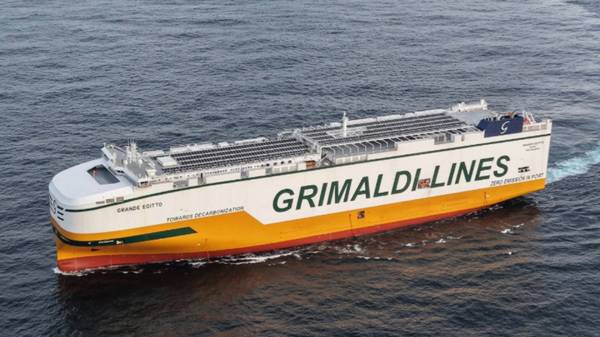
Grimaldi adds fourteenth ammonia-ready car carrier to fleet
Grande Egitto, built by China Merchants Heavy Industries Jiangsu, will operate on the Asia–East Africa trade route. |
|
|
|
||
|
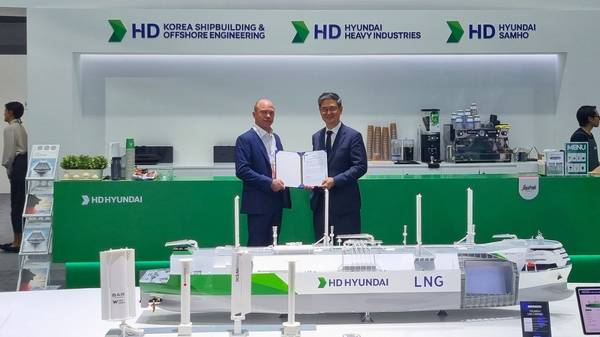
ABS grants design approval for ammonia bunkering vessel from HD HHI and HD KSOE
Approval in principle covers a 22,000-cbm multi-purpose vessel intended to supply ammonia as marine fuel. |
|
|
|
||
|
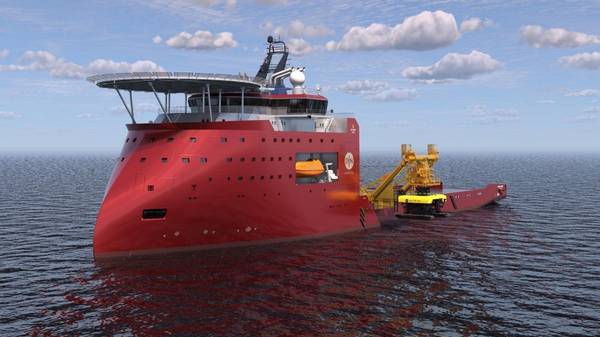
Jan De Nul exercises option for alternative-fuel-capable trenching vessel
Belgian marine contractor confirms option for a second subsea trenching vessel built on Ulstein's customised design platform. |
|
|
|
||
|
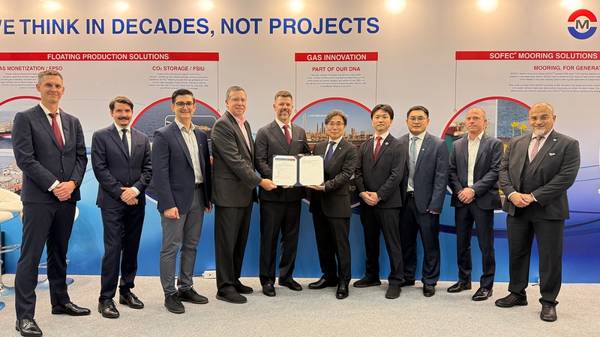
ABS grants technology qualification approval for FPSO fuel cell system
MODEC and Eld Energy’s solid oxide fuel cell system moves towards offshore trials after clearing initial ABS review stages. |
|
|
|
||
|
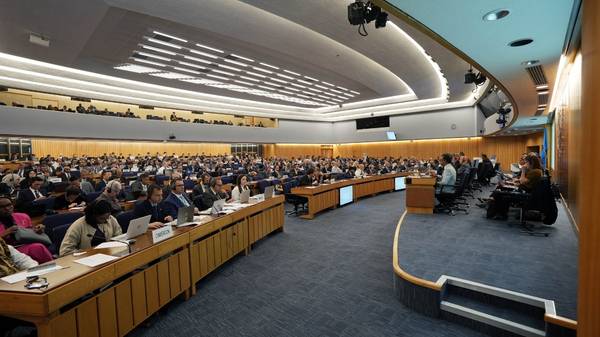
IMO sub-committee finalises revised methanol fuel safety guidelines
CCC 12 completes revision of interim methanol fuel guidelines while advancing work on carbon capture and low-flashpoint fuel rules. |
|
|
|
||
|
Trafigura spins off VLCC fleet into new listed shipping company
Volare Shipping established, with eight ammonia-ready vessels on order. |
|
|
|
||
|
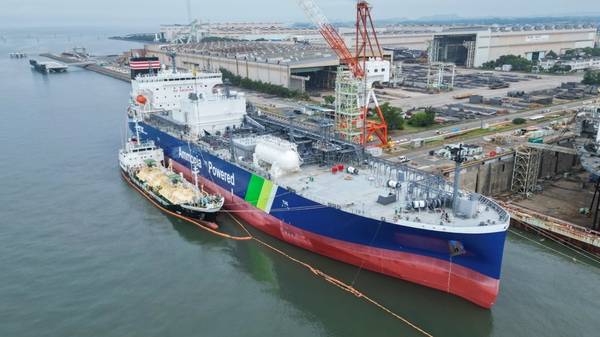
Japan completes world's first ship-to-ship ammonia bunkering to ammonia-fuelled vessel
Ammonia fuel transferred between ships at Ariake Shipyard ahead of gas carrier’s sea trials. |
|
|
|
||
|
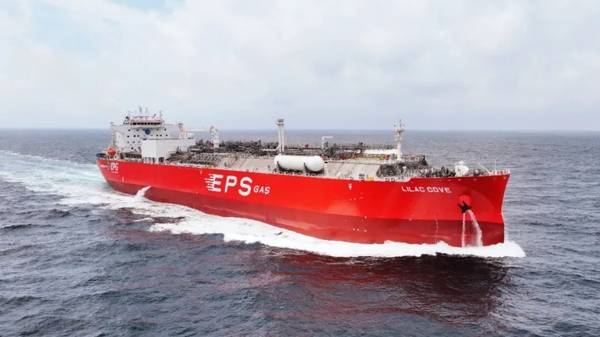
Jiangnan delivers second LPG dual-fuel VLAC in series to Singapore’s EPS
Lilac Cove, the world’s largest liquid ammonia carrier, joins Ivy Cove as Jiangnan advances its six-ship VLAC programme. |
|
|
|
||
| GCMD and Equinor sign five-year partnership on alternative fuels and carbon storage [News & Insights] |
| GCMD outlines practical approach to quantity assurance in marine biofuel supply chains [News & Insights] |
| Project CAPTURED secures EU ETS recognition and IMO support for onboard carbon capture pathway [News & Insights] |
| BHP and GCMD trial multi-feedstock B100 biofuel blend on bulk carrier voyage [News & Insights] |
| GCMD highlights BHP biofuel trials to address scaling challenges in maritime decarbonisation [News & Insights] |
