 |
By the end of October 2025, six months had passed since the implementation of the Mediterranean Emission Control Area (ECA). This article will set out to review what’s changed in terms of the fuel mix and fuel quality across the region between 1 November 2024 and 31 October 2025.
Pre-Mediterranean ECA
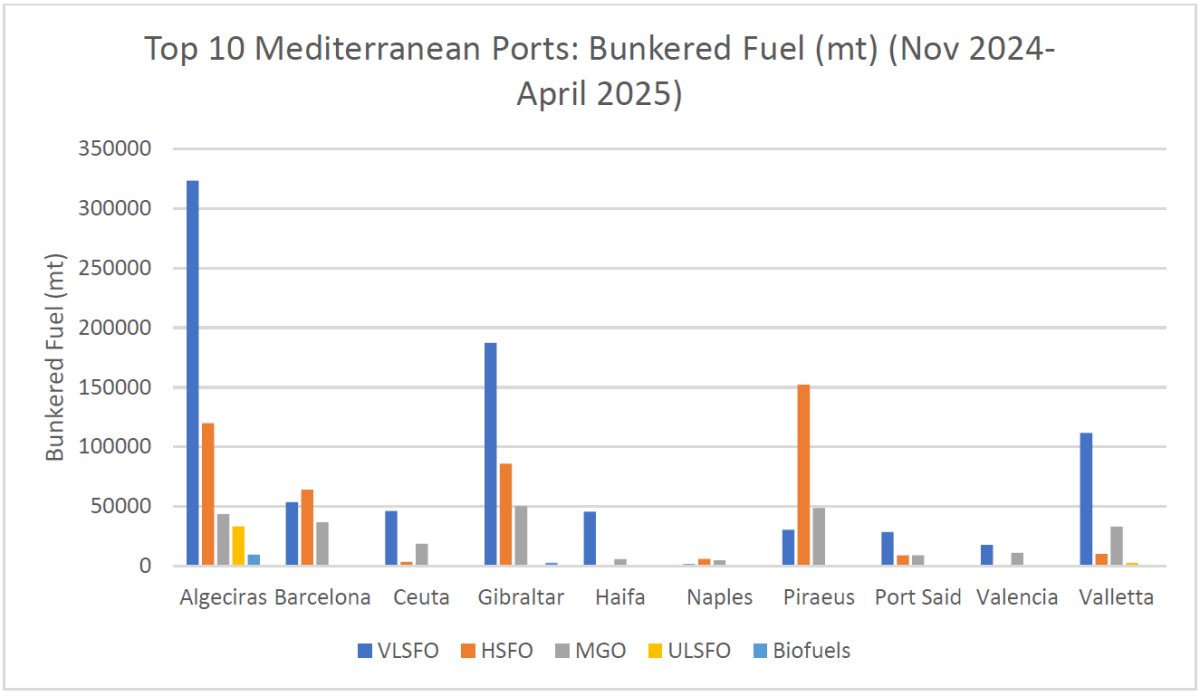
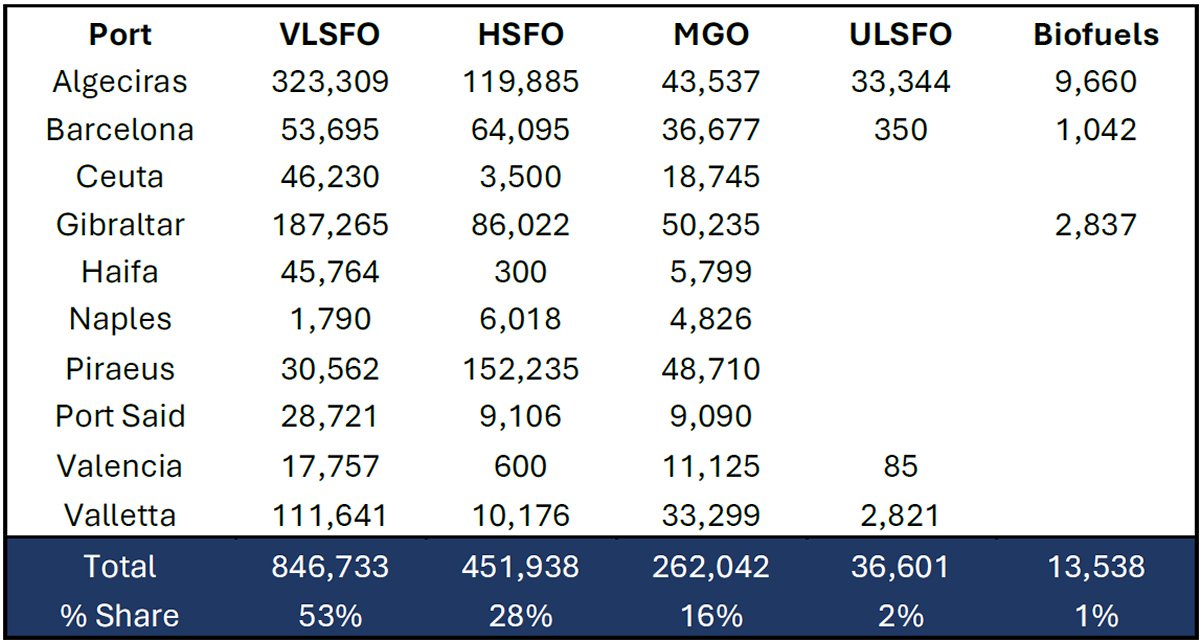
The six months leading up to the implementation of the Mediterranean ECA (1 November to 30 April 2025), VPS tested marine fuels representing 1,610,852 mt, bunkered in the Top 10 Mediterranean ports. This consisted of 53% VLSFO, 28% HSFO, 16% MGO, 2% ULSFO and 1% biofuels. These Top 10 Mediterranean ports during the six months leading up to the ECA coming into force provided approximately 90% of the total fuel tested by VPS from the whole region. The breakdown by port and fuel type in mt was as follows:
 |
 |
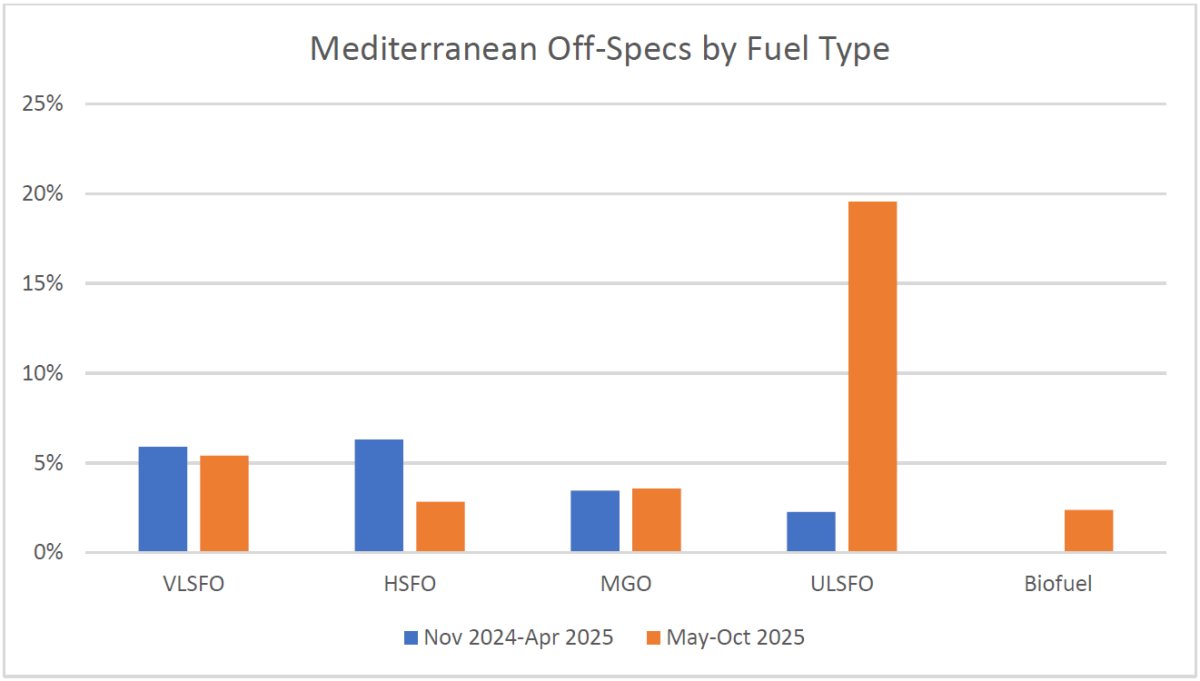
Over the six month period pre-ECA (Nov '24 to Apr '25), 5.5%, by volume, of all fuels bunkered across the Top 10 Mediterranean ports, were off-specification. However, by fuel type over that time period, the following off-specification rates were observed:
In terms of the off-specification parameters by fuel type pre-ECA, these were mainly the following:
Post-Mediterranean ECA
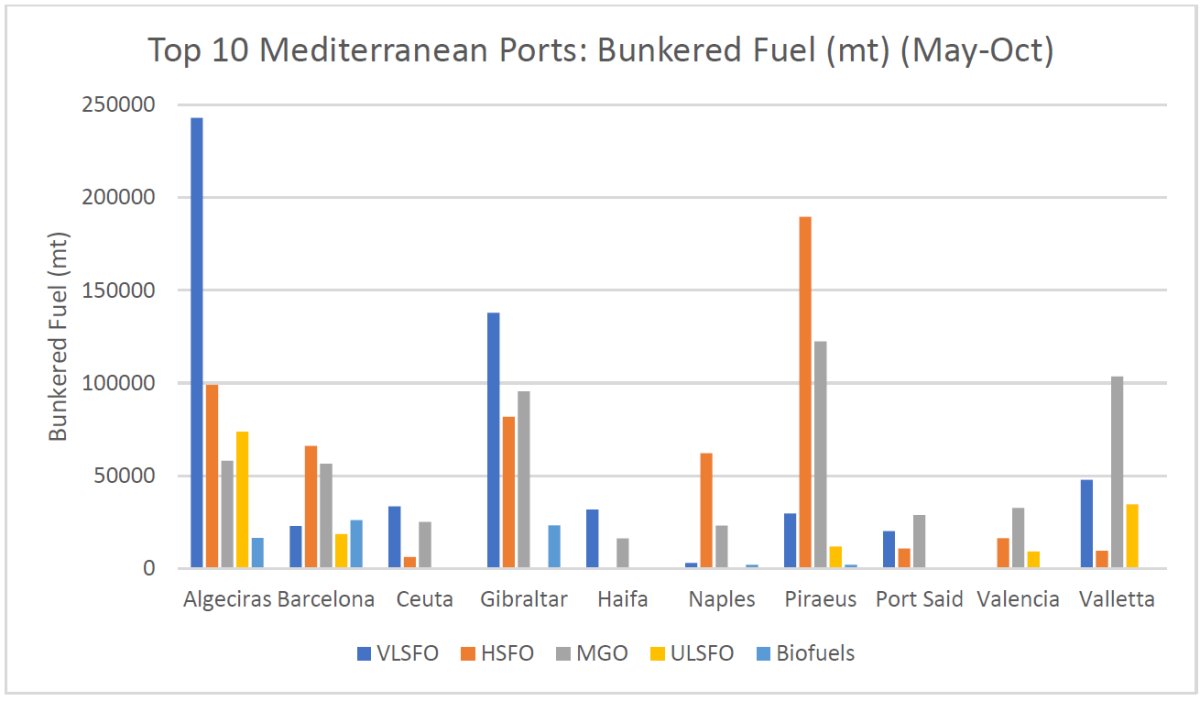
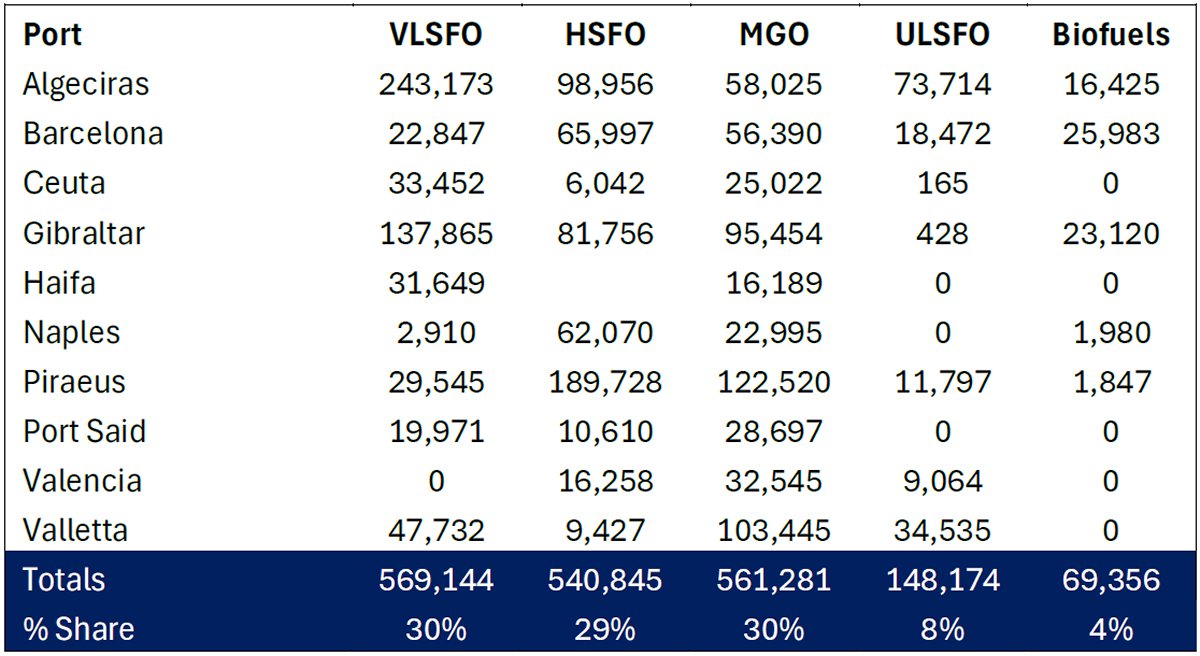
From the implementation of the Mediterranean ECA on 1 May until 31 October 2025, VPS tested marine fuels representing 1,888,799 mt from the Top 10 Mediterranean ports. This consisted of 30% VLSFO, 29% HSFO, 30% MGO, 8% ULSFO and 4% biofuels.
Looking at the Top 10 Mediterranean ports since the start of the ECA and up to 31 October, these ports have supplied approximately 90% of the total fuel tested by VPS, which is a similar percentage to the six-month period pre ECA.
The breakdown by port and fuel type in mt is as follows:
 |
 |
Impact of the Mediterranean ECA
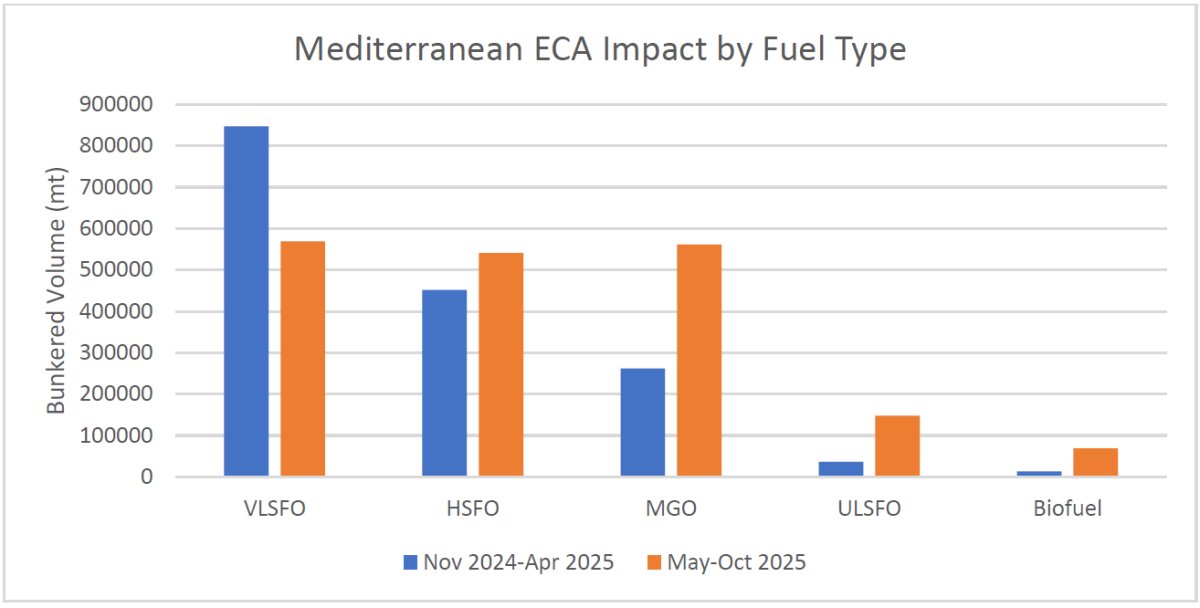
The relative percentage volume of VLSFO bunkered in the ECA has decreased significantly since its implementation, whilst HSFO has increased slightly, with MGO, ULSFO and biofuel volumes all dramatically increasing in volumes.
However, looking at the actual volumes post-ECA versus pre-ECA, VLSFO has decreased by -278k mt, whilst HSFO (+89k mt), MGO (+300k mt), ULSFO (+112k mt) and biofuels (+56k mt), have all increased, indicating an increased mix in the use of compliant fuels (<0.1% sulphur) and scrubber usage across the Mediterranean ECA.
The combined off-specification rate for the Top 10 Mediterranean ports, across all fuels since the implementation of the ECA, is 5.1%, which is only slightly lower to the pre-ECA off specification rate of 5.5%. However, by fuel type over that time period, the following off specification rates were observed:
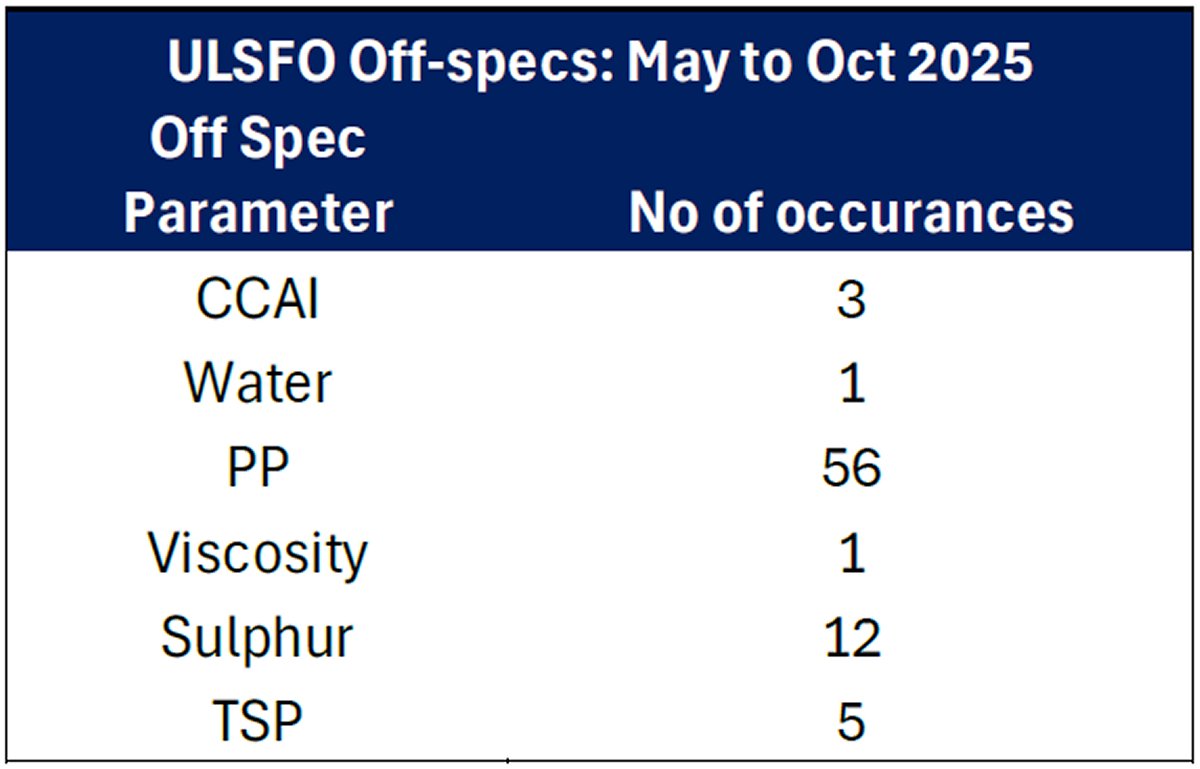
In terms of the off-specification parameters by fuel type post ECA, these were mainly the following:
The high level of ULSFO off-specifications, came from 78 bunker stems (29k mt) out of 341 delivered stems (148k mt):
Summary
As stated, this article compares bunker volumes and quality, six months pre-ECA versus the first six months post-ECA implementation.
Both before and after ECA implementation, the Top 10 Mediterranean ports provide 90% of all fuel within the region.
From these Top 10 Mediterranean ports, VPS tested marine fuels representing 1.9 million mt from the new ECA region compared with 1.6 million mt in the six months leading up to the ECA implementation, showing an almost 20% increase in fuel supply.
Pre-ECA implementation, the fuel mix in the Mediterranean was 53% VLSFO, 28% HSFO, 16% MGO, 2% ULSFO and 1% biofuels. From 1 May 2025, the mix changed to, 30% VLSFO, 29% HSFO, 30% MGO, 8% ULSFO and 4% biofuels.
So, in terms of actual tonnage, VLSFO decreased by 23%, whilst MGO usage increased by 107%. ULSFO supply increased 4-fold and biofuels increased 5-fold.
Overall off-specification rates for all fuels before ECA implementation was 5.5% and over the first six month since the start of the ECA, the rate was 5.1%. Since the ECA implementation, off specification rates for VLSFO and HSFO have reduced to 5% and 3%, respectively. However, MGO off-specification rates have increased to 4%. But the most worrying off specification rates are for ULSFO which have shown a tenfold increase from 2% to 20% since the start of the ECA, with the main off-specification parameters for ULSFO being pour point, sulphur, TSP, CCAI, water and viscosity.
So in conclusion, as anticipated, the implementation of the Mediterranean ECA on 1 May 2025 has seen a significant change in the Mediterranean fuel mix, with a significant reduction in VLSFO supply and demand, but a major increase in the supply and demand of MGO, ULSFO and biofuels. A 20% increase in HSFO supply would indicate an increase in scrubber-fitted vessels and/or existing scrubber-fitted vessels taking more HSFO fuel.
The wide range of off-specifications across the fuel mix continues to highlight the need for proactive fuel testing to protect the vessel, their crew and the environment. The ultimate outcome being a successful reduction in SOx, NOx, PM and GHG emissions across the Mediterranean Sea.
By Steve Bee, VPS Group Marketing & Strategic Projects Director

|
GCMD and Equinor sign five-year partnership on alternative fuels and carbon storage
Singapore-based centre and Norwegian energy company to combine expertise in maritime pilots and low-carbon fuel supply. |
|
|
|
||
|
Petrobras suspends bunker deliveries at Rio Grande after tropical storm
Storm damage and power outage leave resumption timeline unclear. |
|
|
|
||
|
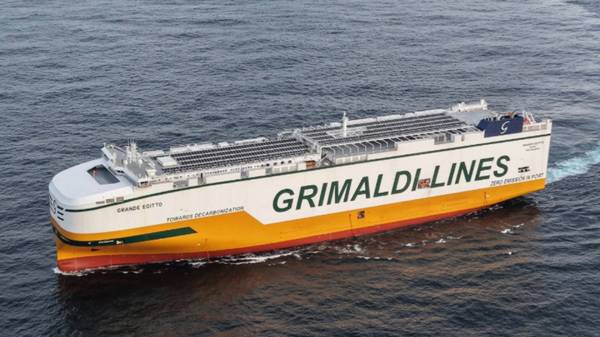
Grimaldi adds fourteenth ammonia-ready car carrier to fleet
Grande Egitto, built by China Merchants Heavy Industries Jiangsu, will operate on the Asia–East Africa trade route. |
|
|
|
||
|
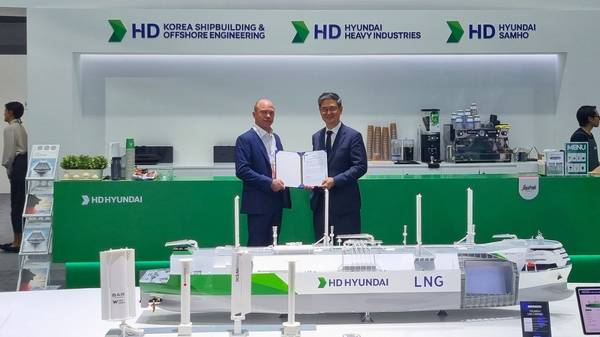
ABS grants design approval for ammonia bunkering vessel from HD HHI and HD KSOE
Approval in principle covers a 22,000-cbm multi-purpose vessel intended to supply ammonia as marine fuel. |
|
|
|
||
|
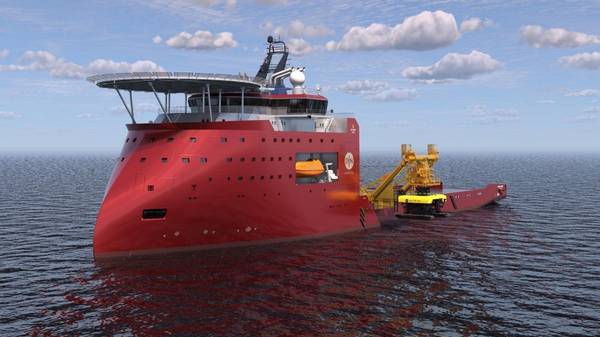
Jan De Nul exercises option for alternative-fuel-capable trenching vessel
Belgian marine contractor confirms option for a second subsea trenching vessel built on Ulstein's customised design platform. |
|
|
|
||
|
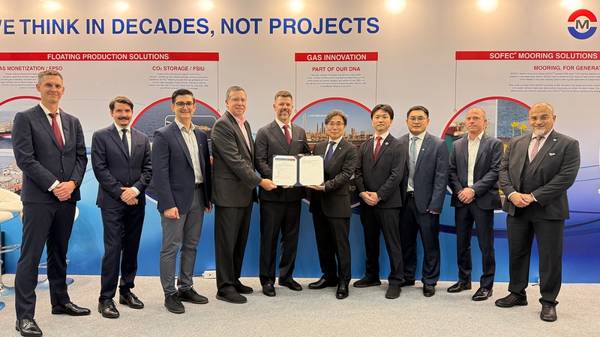
ABS grants technology qualification approval for FPSO fuel cell system
MODEC and Eld Energy’s solid oxide fuel cell system moves towards offshore trials after clearing initial ABS review stages. |
|
|
|
||

|
IMO sub-committee finalises revised methanol fuel safety guidelines
CCC 12 completes revision of interim methanol fuel guidelines while advancing work on carbon capture and low-flashpoint fuel rules. |
|
|
|
||
|
Trafigura spins off VLCC fleet into new listed shipping company
Volare Shipping established, with eight ammonia-ready vessels on order. |
|
|
|
||
|
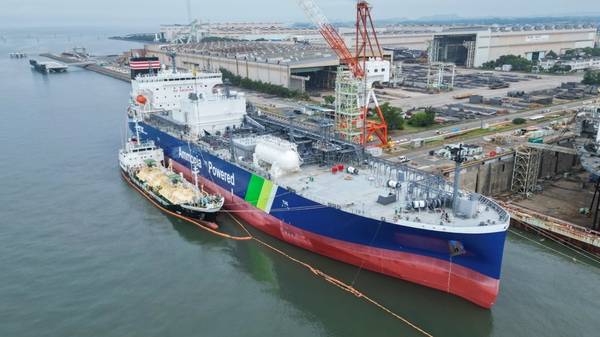
Japan completes world's first ship-to-ship ammonia bunkering to ammonia-fuelled vessel
Ammonia fuel transferred between ships at Ariake Shipyard ahead of gas carrier’s sea trials. |
|
|
|
||
|
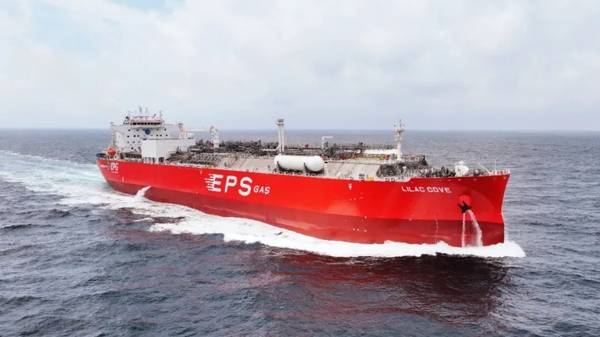
Jiangnan delivers second LPG dual-fuel VLAC in series to Singapore’s EPS
Lilac Cove, the world’s largest liquid ammonia carrier, joins Ivy Cove as Jiangnan advances its six-ship VLAC programme. |
|
|
|
||
| Global spike in cat fines contamination hits marine fuel supplies across major ports [News & Insights] |
| How to engineer and manage green shipping fuels | Stanley George, VPS [News & Insights] |
| VPS to host Dutch seminar on marine fuel quality, lubricants and decarbonisation [News & Insights] |
| VPS to host Dutch seminar on marine fuel quality, lubricants and decarbonisation [News & Insights] |
| Perfect storm at sea: High bunker prices meet declining fuel quality | Steve Bee, VPS [News & Insights] |
| Perfect storm at sea: High bunker prices meet declining fuel quality | Steve Bee, VPS [News & Insights] |
| VPS to host Bergen seminar on marine fuel quality, lubricants and decarbonisation regulation [News & Insights] |