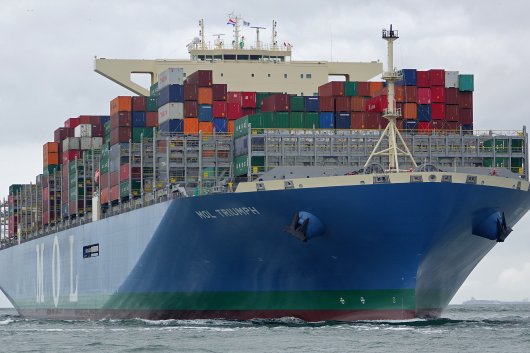
Mitsui O.S.K. Lines (MOL) reports that net income jumped JPY 620.955bn ($4.849bn) to JPY 714.154bn ($5.578bn) during the fiscal year ending March 31. This was despite a 64.8 percent year-on-year (YoY) increase in the average bunker price.
The mean price of all major fuel grades purchased increased by $230 to $585 per tonne between April 2021 and March 2022.
MOL noted that its ferry and coastal ro-ro business saw a YoY deterioration in profit, reflecting rising bunker prices.
In its outlook for the current financial year, MOL predicts an average price of $650 per tonne for high-sulphur fuel oil (HSFO) and $810 per tonne for very-low-sulphur fuel oil (VLSFO).
| Period | 2021-22 | 2020-21 |
| Apr-Jun | 497 | 255 |
| Apr-Sep | 514 | 296 |
| Apr-Dec | 539 | 315 |
| Apr-Mar | 585 | 355 |
Key financial results and developments
In its key financials for 2021-22, MOL's revenue climbed JPY 277.884bn ($2.17bn), or 28.0 percent, to JPY 1,269.310bn ($9.913bn) as net income reached JPY 714.154bn ($5.578bn); and the Japanese shipper swung into the black with an operating profit of JPY 55.005bn ($429.6m), compared with the previous year's loss of JPY 5.303bn ($41.4m).
As regards the balance sheet, assets as at March 31 were JPY 2,686.701bn ($20.983bn), liabilities stood at JPY 1,351.835bn ($10.558bn) and equity at JPY 1,334.866bn ($10.425bn).
MOL said its LNG carrier division generated stable profit mainly through existing long-term charter contracts in addition to profit from the delivery of a new LNG carrier and an LNG bunkering vessel posting a year-on-year rise in profit.
Forecast for 2022-23
For the fiscal year ending March 31, 2023, MOL forecasts shareholder profit will fall by JPY 208.819bn ($1.63bn), or 29.5 percent, to JPY 500bn ($3.91bn), whilst operating profit is estimated at JPY 46bn ($359.3m) — a YoY decline of JPY 9.005bn ($70.3m), or 16.4 percent.
Revenue, meanwhile, is predicted to climb JPY 83.69bn ($653.6m), or 6.6 percent, to JPY 1,353bn ($10.567bn).
Commenting on the year ahead, MOL said: "In the fiscal year ending March 2023, there is a risk that our company's businesses will be affected by factors such as the risk of an economic downturn caused by increasing global inflation and fluctuations in transportation demand resulting from the Russia-Ukraine situation. In the dry bulk carrier and energy transportation business, our company is mainly engaged in medium- to long-term contracts. Therefore, fluctuations in the business cycle and transportation demand are expected to have a relatively small impact on business performance.
"However, fluctuations in market conditions and cargo movements are expected to have a certain impact on our business performance for some short-term contracts. In the product transportation business including containerships, although the direct impact on cargo movement from the situation in Russia and Ukraine is limited, we anticipate that there will be a phase in which transportation demand will weaken due to the slowdown of the world economy or the impact on parts procurement and logistics."
|
Eleven Energy recruiting trader for new Singapore office
Saudi bunkering firm looking to hire in Asian city-state ahead of planned January 2027 start date. |
|
|
|
||

|
VPS advertises for bunker surveyor role in Singapore
Testing and inspection firm seeks candidate to conduct bunker fuel surveys under Singapore Standards SS 648 and SS 600. |
|
|
|
||
|
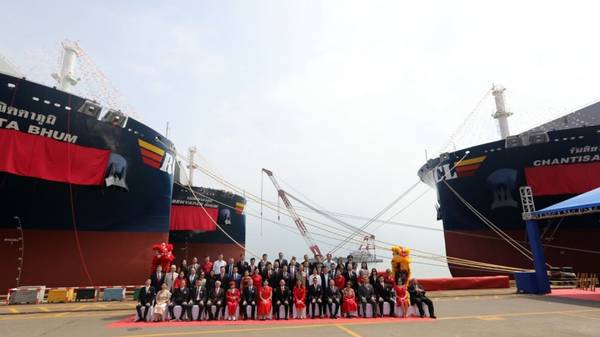
RCL names first three of eight dual-fuel-ready 4,488-TEU vessels in China
Regional Container Lines takes delivery of Anitta Bhum on day of naming ceremony. |
|
|
|
||
|
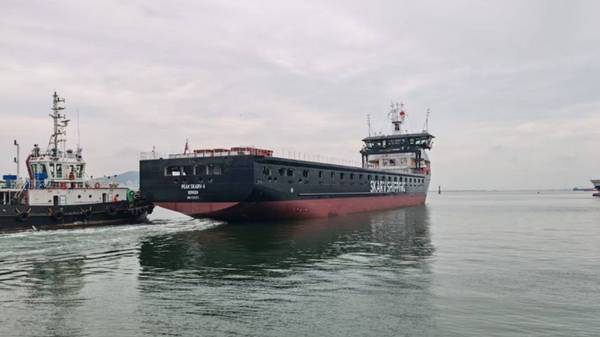
Skarv Shipping completes newbuilding programme with delivery of ammonia-ready Peak Skarv 4
Short-sea operator takes delivery of fourth vessel from Huanghai Shipyard, with ammonia-fuelled vessel next. |
|
|
|
||
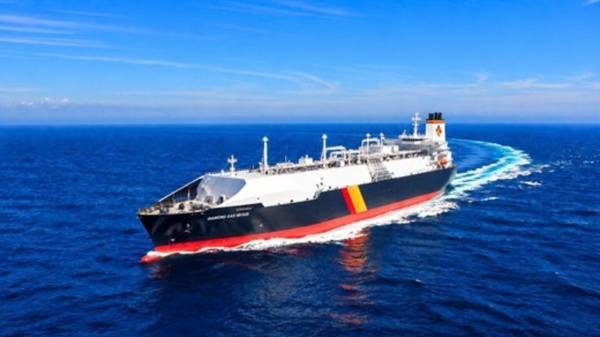
|
NYK names dual-fuel LNG carrier for Cameron LNG project
New vessel to support LNG transportation for US project in which Mitsubishi Corporation and NYK participate. |
|
|
|
||
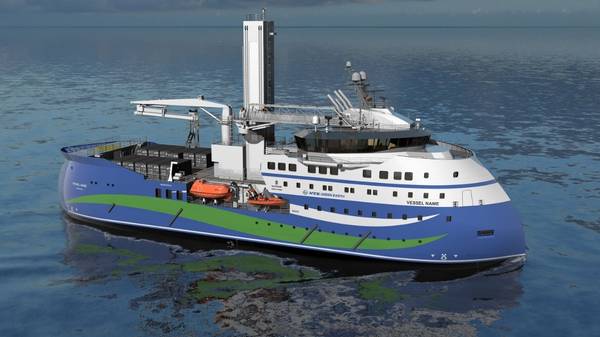
|
PaxOcean signs design contract with Ulstein for methanol-ready offshore wind vessel
PaxOcean and Ulstein agree design contract for an SX222 service operation vessel, prepared for methanol and electric operations. |
|
|
|
||
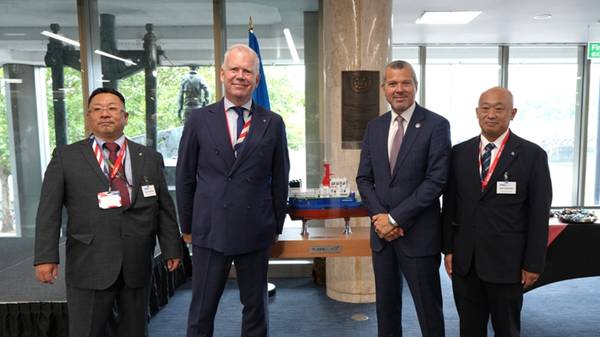
|
NYK shares two years of ammonia-fuelled tugboat data with IMO
Shipping company presents operational insights from Sakigake and updates on its ammonia-fuelled gas carrier at IMO session. |
|
|
|
||
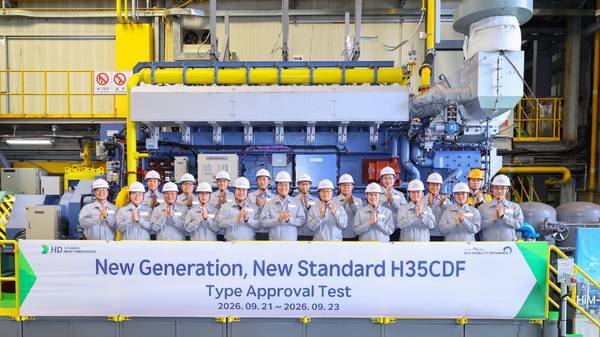
|
HD Hyundai completes type approval test for new LNG dual-fuel engine
Latest HiMSEN engine is claimed to offer reduced methane slip compared with previous models. |
|
|
|
||

|
Petrobras resumes bunkering operations at Rio Grande Terminal after power restoration
Brazilian supplier restarts marine fuel supply after completing an inspection following an electricity outage. |
|
|
|
||
|
Stena RoRo orders battery-ready E-Flexer 2.0 ferries from Chinese yard
Vessels include diesel engines capable of running on biodiesel and are methanol-ready. |
|
|
|
||
| Total launches huge-capacity LNG bunker vessel [News & Insights] |
| Hapag sees $270m rise in bunker costs [News & Insights] |
| Norden's bunker costs up $101m in 2021 [News & Insights] |
| Maersk spent $1.5bn more on bunkers in 2021 [News & Insights] |
| RCL names first three of eight dual-fuel-ready 4,488-TEU vessels in China [News & Insights] |
| NYK names dual-fuel LNG carrier for Cameron LNG project [News & Insights] |
| Stena RoRo orders battery-ready E-Flexer 2.0 ferries from Chinese yard [News & Insights] |
| TFG Marine fits mass flow meter to Jamaica-bound bunker barge [News & Insights] |
| Monjasa announces full-chain marine fuel operations in Cartagena [News & Insights] |