A joint development project (JDP) has been launched to advance the understanding of the use of
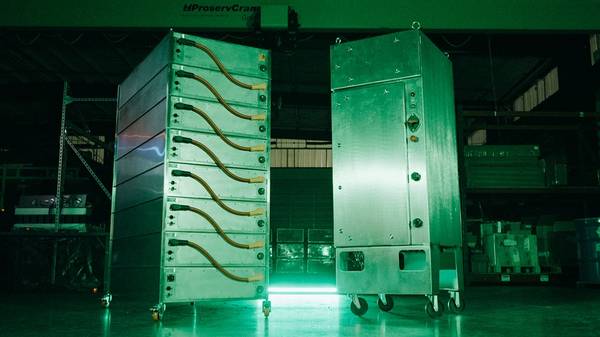
lithium-ion batteries in the shipping industry.
More than a dozen partners have joined the initiative, including flag states, research institutions, battery and propulsion suppliers, fire detection and extinguishing system providers, and ship owners, operators and yards.
The purpose of the JDP is to create a deep pool of expertise, knowledge and experience from various perspectives in order to develop a greater understanding of the challenges and requirements of expanding the use of batteries in the maritime sector.
At the end of the JDP, the project partners aim to have enhanced their own understanding so as to optimize their own products and services while also creating a set of inputs that can be taken up by the industry to not only push the development of the batteries themselves, but the associated systems, procedures, and approval processes.
The JDP officially kicked off at the end of 2017 and is due to be wrapped up with dissemination activities in 2019.
The major tasks of the project have been defined as:
- Safety Model Development and Assessment Based on Prior Knowledge
- Concerted Lithium-Ion Battery Risk Assessment
- Battery Safety Testing Program
- Battery Safety Simulation and Analysis Tool Development and Refinement
- Project Management, Dissemination, Input to Requirements and Rules
The project partners are: Norwegian Maritime Authority, Danish Maritime Authority, Norwegian Defense Research Establishment (Forsvarets Forskningsinstitutt, FFI), Corvus Energy, Plan B (PBES)
FIFI4MARINE, Nexceris, Rolls Royce Marine AS, ABB, Stena Line, Scandlines, Damen and DNV GL.
Commenting on the initiative,
Geir Dugstad, Director of Ship Classification and Technical Director in DNV GL - Maritime, said: "Including batteries in ships, whether as a hybrid or fully electric system, offers the industry the opportunity to improve fuel economy, reliability and operational costs.
"For this technology to fully take hold, however, knowledge and requirements must be in place to ensure that we have products and a safety regime that address the concerns of all stakeholders while also creating the conditions for this technology to take off in the market."
Olav Akselsen, Director General of the Norwegian Maritime Authority, said:
"With the new advances in alternative fuels it's our ambition to actively partner with the maritime industry and contribute to solutions that satisfy vessel safety and environmental impact while also taking the industry's commercial needs into consideration."
Denis Cederholm-Larsen, Senior Ship Surveyor at the Danish Maritime Authority, added: "There is a great opportunity to further enhance the approval process for these types of systems with reliable technical input. This type of collaborative, industry focused research program is the perfect platform for those developments."
Rasmus Nielsen, Naval Architect and Officer at Scandlines, remarked: "We put a great deal of effort into ensuring the safety of these new alternative systems, but the cost of the present safety and approval methodology is cumbersome. This collaborative effort gives a chance for an even greater level of safety while also ensuring that these new and advanced technologies can be implemented to a greater extent."
Jostein Bogen, VP Global Product Manager, Energy Storage and Fuel Cells at technology solution provider ABB, stated: "We believe this type of project arrangement will be extremely beneficial, to raise the level of understanding of all parties involved to a very high degree, while also providing guidance that the entire industry can benefit from."