The
International Maritime Organization (IMO) has agreed to move forward with a ban on the carriage of fuel oil for use on board ships, when that fuel oil is not compliant with a new
0.5 percent maximum sulphur limit which comes into force from
2020.
The new limit on sulphur in fuel oil on board ships (outside designated emission control areas or ECAs, where the limit is 0.10%) is due to come into effect on January 1, 2020.
To help ensure consistent implementation of this regulation, IMO's
Sub-Committee on Pollution Prevention and Response (PPR), which held its fifth meeting (February 5-9) at IMO headquarters in London, agreed draft amendments to the MARPOL Convention on the prevention of pollution from ships (MARPOL Annex VI) to prohibit the carriage of non-compliant fuel oil, such that the sulphur content of any fuel oil used or carried for use on board ships shall not exceed 0.50%.
The exception would be for ships fitted with exhaust gas cleaning systems (EGCS), or scrubbers, which are already permitted under regulation 4.1 of MARPOL Annex VI.
Under regulation 3.2 of MARPOL Annex VI a ship undertaking trials for ship emission reduction and control technology research can be exempted by the Administration of a Party to Annex VI.
The Sub-Committee has forwarded the proposed draft amendments to the Marine Environment Protection Committee (MEPC 72) meeting in April 2018, for urgent consideration. Once approved by MEPC 72, the draft amendments could be adopted at MEPC 73 (October 2018) and then enter into force on
March 1, 2020 - two months after the 0.50% limit comes into effect.
To assist with consistent implementation, the Sub-Committee agreed to develop a single set of Guidelines covering all relevant aspects and also agreed the outline of draft Guidelines for consistent implementation of regulation 14.1.3 of MARPOL Annex VI (the regulation on the 0.50% limit). The guidelines would cover:
- Preparatory and transitional issues, relating to how ships can prepare for implementation, including relevant time schedules;
- Impact on fuel and machinery systems resulting from new fuel blends or fuel types;
- Verification issues and control mechanism and actions, including port State control and in-use fuel oil samples;
- Fuel oil non-availability: guidance, information sharing and standard reporting format;
- Safety implications relating to the option of blending fuels;
- Other useful guidance/information that assist Member States and stakeholders, including guidance addressing quality assurance and integrity of the supply chain.
The Sub-Committee agreed the terms of reference for its Intersessional Meeting on consistent implementation of regulation 14.1.3 of MARPOL Annex VI, to be held on July 9-13, 2018.
A work plan for the Sub-Committee was agreed, to include:
- development of the draft Guidelines for consistent implementation of regulation 14.1.3 of MARPOL Annex VI at the intersessional meeting, with a recommendation that these could be presented directly from the working group to MEPC 73 (October 2018);
- development of draft amendments to MARPOL Annex VI at the intersessional meeting, for finalization at PPR 6 for approval at MEPC 74, with a view to adoption at MEPC 75 (Spring 2020) with an expected entry into force in summer 2021, relating to definition of "Sulphur content" (regulation 2); and testing and verification procedure of in-use fuel oil samples (amendments to regulation 14 and associated consequential amendments to regulation 18 and appendix VI);
- development of draft amendments, as appropriate, to existing guidelines at the intersessional meeting and finalization at PPR 6 for adoption by MEPC 74, namely to the 2009 Guidelines for port State control under the revised MARPOL Annex VI (resolution MEPC.181(59)); 2010 Guidelines for monitoring the worldwide average sulphur content of fuel oils supplied for use on board ships (resolution MEPC.192(61), as amended by resolution MEPC.273(69)); and Guidelines for onboard sampling for the verification of the sulphur content of the fuel oil used on board ships (MEPC.1/Circ.864).
The urgency of the matter was recognised to the extent that MEPC 72 (April 2018) will be requested to consider whether the output on ship implementation planning for 2020 from the PPR intersessional meeting in July 2018 should be forwarded to MEPC 73 (October 2018).
Early reactions
Commenting on the decision to move forward with the fuel oil ban,
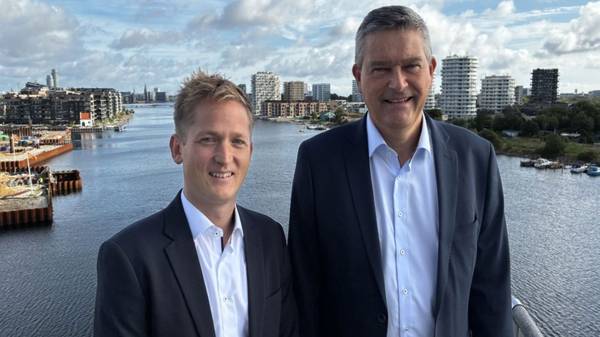
Andreas Nordseth, Director General of the Danish Maritime Authority, said: "The proposal to ban the on-board presence of high sulphur content fuel globally is a step in the right direction. We are striving to reduce distortional practices among the various flag States, and this ban will make it easier to enforce the regulations and, thus, help ensure a level playing field."
Soren Toft, Executive Vice President, Chief Operating Officer at A. P. Moller - Maersk, tweeted: "Truly historical [sic] @IMOHQ decision to support a ban on High Sulphur fuels. Unprecedented IMO commitment to strong enforcement. We @Maersk fully support a speedy adoption at MEPC."
Simon Bergulf, Director Regulatory Affairs at AP Moller - Maersk, said in a tweet: "There is no reason to have non-compliant fuel on-board post 2020! The ban makes sense!"
Black carbon: reporting protocol and most appropriate measurement methods agreed
Black carbon is the product of incomplete combustion of carbon-based fuels. Black carbon emissions from ships contribute to climate change as a 'Short-Lived Climate Pollutant'. IMO has been looking at how to measure and report on Black Carbon emission, as part of its work to consider the impact on the Arctic of Black Carbon emissions from international shipping.
The Sub-Committee agreed the Reporting protocol for voluntary measurement studies to collect Black Carbon data as well as most appropriate Black Carbon measurement methods for data collection.
The Sub-Committee encouraged Member States and international organizations to continue to collect Black Carbon data, using the agreed reporting protocol and the agreed measurement methods, and submit relevant data to the next session of the Sub-Committee.
Draft Guidelines for discharge of exhaust gas recirculation bleed-off water agreed
The Sub-Committee agreed draft 2018 Guidelines for the discharge of exhaust gas recirculation (EGR) bleed-off water, for submission to MEPC 73, with a view to adoption.
One method for reducing NOX emissions to meet Tier III NOX emission levels when operating in a NOX Tier III emission control area is to use Exhaust Gas Recirculation (EGR), which is an internal engine process resulting in a NOX reduction which will meet the requirements of the regulation. By means of this process, condensate of exhaust gas will be generated and discharged as bleed-off water, which should be handled differently depending on the fuel oil sulphur content. EGR may also be used as a Tier II compliance option.
The guidelines cover the discharge of EGR bleed-off water.
The Sub-Committee also agreed draft amendments to the NOX Technical Code 2008 relating to certification requirements for selective catalytic reduction (SCR) systems.