Fri 12 Aug 2016, 09:12 GMT

Aegean Marine Petroleum earnings call summary


Management team discusses key issues, including price trends, bad debt, Algericas and the next-quarter sales forecast.


Aegean Marine Petroleum Network Inc. held an earnings call on 10th August, which followed the announcement of the company's second-quarter results on the same day. Please find below some of the key comments made by president Nick Tavlarios and chief financial officer Spyros Gianniotis.

Bunker and crude price trends

Nick Tavlarios: "Oil and refined product prices have been extremely volatile through the first half of 2016. In the second quarter, crude oil prices increased 25%, while marine fuel prices rose 35% to 40%. We believe these price moves reflect deeply that bunker market prices were depressed in the first quarter and now recovered, as crude oil stabilized around $50 per barrel at the end of Q2."

"The relative strength of the bunker value seems to have held, bunker fuel prices remain 50% to 60% higher than when we started the year as compared to Brent crude oil prices have increased 20% to 25% during the same period."

"Crude oil markets continue to be contango. This structure indicates continued oversupply. Fuel oil prices in many world markets have flattened out when the contango structure is getting weaker in the near term. We believe, this indicates that some of the fuel oversupplies worked off, contributing to rising relative bunker prices. While prices are still low for our customers based on historic values, bunker fuel has strengthened."

Bad debt

Spyros Gianniotis: "Our high-quality receivables are built on strong credit controls and favourable sales trends that have yielded only $5,000 in bad debt write-offs on nearly $40 billion in sales over the past years - the past 10 years."

Decision to pull out of Algeciras

Nick Tavlarios: "When we see something that's not working well, we're going to fix it. And that's been our plan for the past 10 years, and we're going to continue doing that; if it's something that again is underperforming, we'll continue to make those changes. So the Algeciras decision was one where we sold the ship - we were getting what we wanted out of it. We still have the licence there."

"So, in fact, we suspended operations, but there's going to be substantial savings by not having an underperforming business, and that was one of them. So, yes, there's definitely a benefit coming out of that."

Third-quarter sales volumes

Randy Giveans (Jefferies): "So first, thanks for the update on the July volumes. I think, you said 1.35 million tonnes. Is it fair to assume a run rate in that range for a month, for the rest of the quarter?"

Spyros Gianniotis: "Yes, I think it's fair to assume. Yes."

Rise in inventories

Ben Nolan (Stifel Nicolaus): "My next question relates to the working capital and obviously saw the receivables and inventories go up a little bit, which absorbed a lot of the cash flow. Is that a function of higher oil prices and higher bunker prices and simply more receivables and inventory, or are you sort of continuing to add to the platform so to speak?"

Nikolas Tavlarios: "It means a couple of things. It's more - it's higher oil prices and also we increased our inventories as we're moving oil around to new ports that we're servicing."

Fujairah storage

Randy Giveans (Jefferies): "So, Fujairah storage, is that still running at the 100% utilization? And then, if so, how has the leasing rate been trending on that facility?"

Nikolas Tavlarios: "Again pretty steady. The quality of our tenants has improved. We're at a 100% occupancy in the terminal and it's moving as planned."


Christiania Energy headquarters. Christiania Energy relocates headquarters within Odense Harbour  

Bunker firm moves to larger waterfront office to accommodate growing team and collaboration needs.

AiP award ceremony for 20K LNGBV design. HD Hyundai Heavy Industries receives design approval for 20,000-cbm LNG bunkering vessel  

Bureau Veritas grants approval in principle following joint development project with South Korean shipbuilder.

Lloyd’s Register technical committee meeting in Spain. Peninsula outlines dual role in FuelEU Maritime compliance at Lloyd’s Register panel  

Marine fuel supplier discusses challenges for shipowners and opportunities for suppliers under new regulation.

Current status of fleet fuel types chart. LNG-fuelled container ships dominate January alternative-fuel vessel orders  

Container ships accounted for 16 of 20 alternative-fuelled vessels ordered in January, DNV reports.

Rick Boom, CIMAC and Professor Lynn Loo, GCMD. GCMD and CIMAC sign partnership to advance alternative marine fuel readiness  

Two-year agreement aims to bridge operational experience with technical standards for decarbonisation solutions.

Renewable and low-carbon methanol project pipeline chart as of January 2026. Renewable methanol project pipeline reaches 58.2m tonnes by 2031, GENA reports  

Project Navigator Methanol tracks 275 projects, including e-methanol, biomethanol and low-carbon methanol facilities globally.

Petrobras logo. Petrobras adjusts bunker pricing and minimum order volumes at Santos  

Brazilian supplier discontinues volume discount tier and lowers minimum order quantity from 1 March.

Viking Grace vessel. Viking Line secures biogas supply for 2026 after tenfold increase in biofuel use  

Åland-based ferry operator aims to maintain 50% biogas blend throughout the year on two vessels.

GNV Aurora vessel. GNV takes delivery of second LNG-powered vessel Aurora from Chinese shipyard  

Vessel to enter service on Genoa–Palermo route in April, completing first fleet renewal phase.

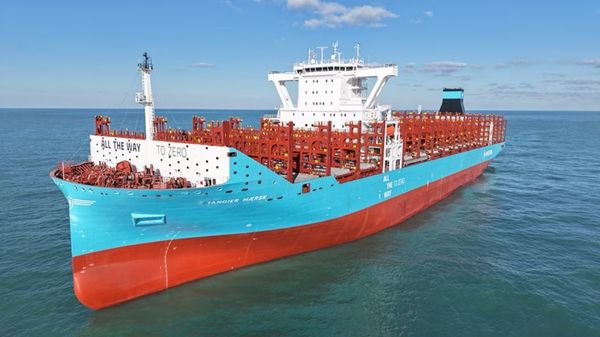
Tangier Maersk vessel. Maersk takes delivery of first methanol-capable vessel in 9,000-teu series  

Tangier Maersk is the first of six mid-size container ships with methanol-capable dual-fuel engines.