Mon 1 Aug 2016, 08:23 GMT

Petrobras starts selling RMK 500 in Santos


Supplier says ISO 8217:2010 specification is 'guaranteed'.


Petroleo Brasileiro S.A. (Petrobras) has confirmed that it is to begin selling RMK-specification 500 centistoke (cSt) intermediate fuel oil (IFO) at the port of Santos from 1st August.

In an email announcement, the company stressed that "ISO 8217:2010 specification for residual marine fuels is guaranteed".

In addition to 500 cSt, Petrobras also sells 380 cSt, 180 cSt and marine gas oil (MGO) at the port of Santos.

Please find below a summary of the characteristics of ISO 8217:2010-specification RMK 500 product.

- Kinematic viscosity, maximum: at 50C: 500 cSt
- Density at 15C, kg/m3, maximum: 1010.0
- CCAI, maximum: 870
- Sulphur, % (m/m), maximum: Statutory requirements: 3.5%
- Flash point, minimum: 60.0C
- Hydrogen sulphide, mg/kg, maximum: 2.00
- Acid number, mg KOH/g, maximum: 2.5
- Total sediment aged, % (m/m), maximum: 0.10
- Carbon residue, % (m/m), maximum: 20.00
- Pour point (upper), winter quality, maximum: 30C
- Pour point (upper), summer quality, maximum: 30C
- Water, % (V/V), maximum: 0.50
- Ash, % (m/m), maximum: 0.150
- Vanadium, mg/kg, maximum: 450
- Sodium, mg/kg, maximum: 100
- Aluminium plus silicon, mg/kg, maximum: 60
- Used lubricating oil (ULO), mg/kg: Fuel shall be free of ULO. Fuel is considered to contain ULO when either:
Calcium and zinc: Calcium > 30 and zinc >15; or
Calcium and phosphorus: Calcium > 30 and phosphprus > 15

Contact details for Petrobras's head office in Rio de Janeiro have been provided below.

Telephone: +55 21 2166 8377
Telephone: +55 21 9 7210 6272
Email: bunker@petrobras.com.br
Website: www.petrobras.com.br

Address:
Av. Henrique Valadares, 28 28 Torre A 10 andar
Rio de Janeiro CEP 20.231-030
Brazil


Christos Doulaveris, Flex Commodities. Flex Commodities appoints Christos Doulaveris as general manager for Greece  

Bunker trader strengthens its Greek operations with a new leadership appointment.

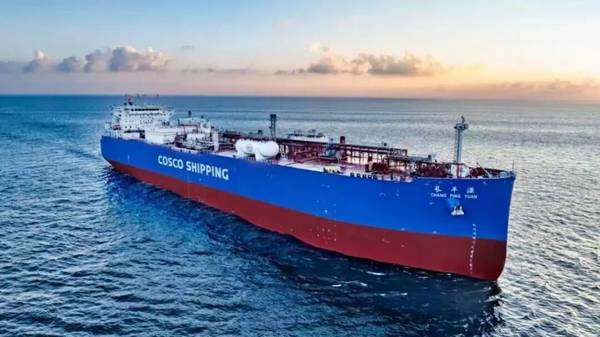
Chang Ping Yuan vessel. China delivers first domestically built VLGC under Chinese flag  

Cosco Shipping’s new 88,000-cbm gas carrier features an LPG dual-fuel main engine.

IMO, GreenVoyage2050 and Republic of Türkiye MoTI logos. Electric and hybrid ferries could cut Sea of Marmara emissions by 63%, IMO study finds  

A GreenVoyage2050 study finds that electrification could slash emissions, avoid €492 million in damage costs and support jobs.

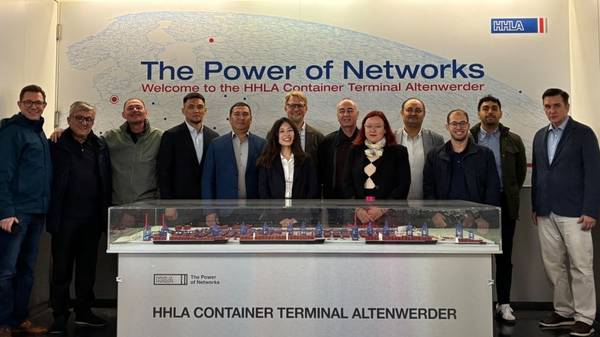
Study visit to Hamburg, Germany, on sustainable port development. Batumi Sea Port officials study decarbonisation practices in Hamburg  

Georgian port representatives visited Hamburg to study emissions accounting, hydrogen technology and automation ahead of their 2026 recertification audit.

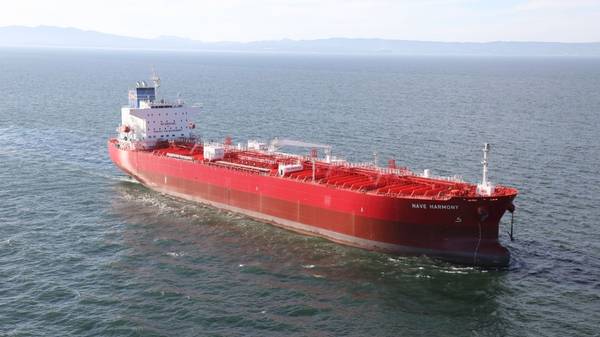
Nave Harmony vessel. Navios Partners takes delivery of methanol-ready MR2 tanker Nave Harmony  

Shipowner adds 49,998-DWT newbuild product tanker equipped with methanol-ready technology.

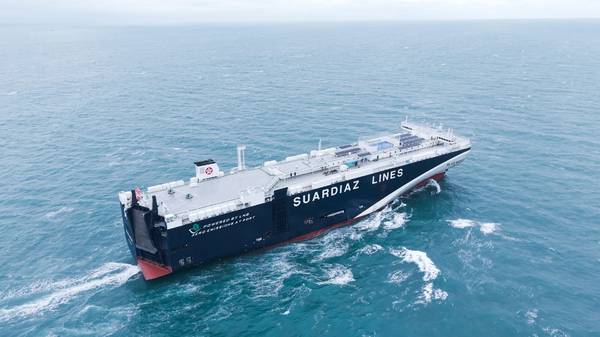
RS Atlantico vessel. Eastern Pacific Shipping delivers LNG dual-fuel PCTC to Suardiaz  

RS Atlantico is the first mid-sized 5,500-CEU car carrier built through the EPS–Suardiaz partnership.

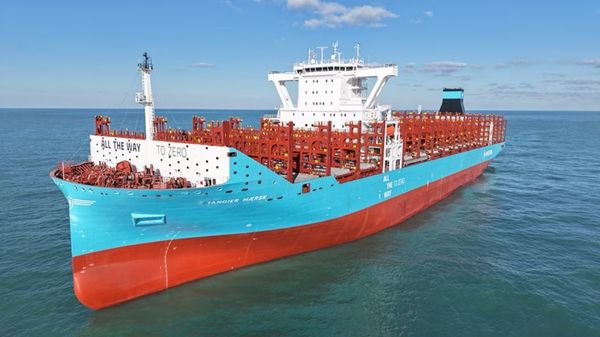
Tangier Maersk vessel. Maersk completes first US ethanol bunkering of a deep-sea container ship  

Shipper tests US-produced corn ethanol as a marine fuel aboard the Tangier Maersk.

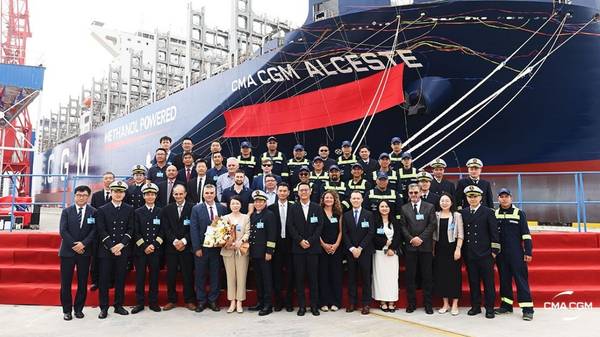
CMA CGM Alceste naming ceremony. CMA CGM names methanol-powered vessel after Molière’s Alceste  

Ship features a MAN B&W 8G85ME two-stroke engine configured to run on conventional marine fuel and methanol.

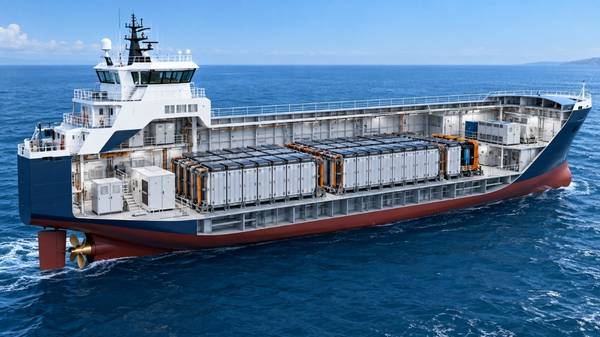
Cutaway illustration of a battery-electric ship. Why batteries still cannot power ships across oceans  

Battery-electric ships dominate short-sea routes, but energy-density and infrastructure constraints keep deep-sea propulsion out of reach.

VPS logo. VPS to run marine fuel management course in Singapore  

Two-day programme in November covers fuel handling, testing and decarbonisation rules, including a laboratory tour.