Mon 1 Sep 2008, 08:07 GMT

Fuel cell-powered ship launched in Hamburg


Ceremony to inaugurate the world's first passenger ship powered by fuel cells.


The world's first passenger ship powered by fuel cells has been launched in a ceremony at the port of Hamburg.

Wolfgang Tiefensee, Federal Minister of Transport, Building and Urban Affairs and Hamburg’s senator Anja Hajduk were present at the event to name the FCS Alsterwasser.

The innovative hybrid fuel cell drive which lies at the heart of the new Alster steamship was produced by German firm Proton Motor Fuel Cell GmbH, a specialist in fuel cell and hybrid systems. The ZemShip (Zero Emission Ship), based in the port of Hamburg, will transport up to 100 passengers at a time and will do so without producing any emissions, according to the Puchheim-based company.

Commenting on the launch of the Zemship, Proton Motor said "The ZemShip project is taking Proton Motor into totally new waters in fuel cell ship drive technology. To date, fuel cell systems for marine applications of this performance level have only been developed for submarines used by the military. This makes the ZemShip the world’s first project resulting in a fuel cell-driven passenger ship."

Proton Motor developed the 48-kW PM Basic A 50 maritime fuel cell system for the zero-emission drive and integrated two such systems, along with a lead gel battery, into the ship as a hybrid system. The systems were certified for maritime operations by Germanischer Lloyd.

An intelligent energy management system coordinates the division of work between fuel cells and battery. Up to 50 kg of gaseous hydrogen is stored onboard in 350-bar pressurised tanks in order to provide sufficient fuel for around three days of use.

The European Union is funding the ship’s line operations on the Alster until 2010. It is expected to invest a total of €2.4 million in the project.

Now that the ship has gone into actual use, development staff at Proton Motor aim to test the zero-emission drive in real operations and to analyse the technology for possible areas of improvement.

“The FCS Alsterwasser is a prime example of innovation and we are very proud of it,” said Felix Heidelberg, CTO of Proton Motor. “It proves that even today we can make use of future technology in everyday applications.

"Thanks to our further development of fuel cell technology, a non-polluting and virtually silent drive can now be used on a passenger ship. We are delighted that Alster Touristik GmbH, the operator of the ship, once again has a genuine Alster steamboat up and running and that it’s an environmentally friendly one where passengers can enjoy a quiet journey with zero emissions.”

Proton Motor says the project has received the support of eight other partners including Linde AG, which has built a hydrogen fuelling station in a side channel of the Alster where the ship can refuel. The project is being coordinated by the city of Hamburg and was launched in November 2006.


Vessel at sea with Graphyte and NYK Line logos. NYK to offset ship emissions with CDR credits from Loblolly project  

Japanese shipping group turns to biomass-based carbon sequestration to address residual maritime emissions.

Close-up view of a KESS vessel. K Line orders four LNG dual-fuel car carriers for European short-sea operations  

Kawasaki Kisen Kaisha contracts quartet of 1,380-vehicle vessels at China Merchants Jinling Shipyard.

Bunge logo. Bunge seeks bunker purchaser for Rotterdam operation  

Agribusiness is looking for candidates with experience in marine fuel procurement.

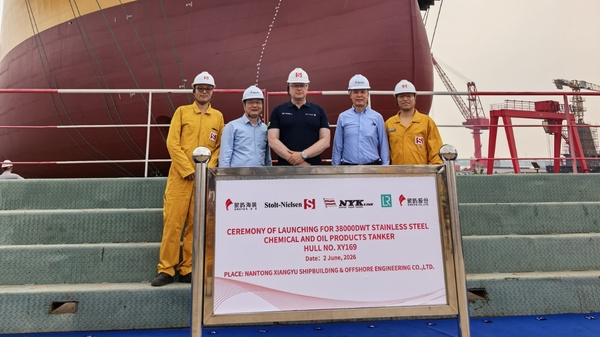
Launching ceremony of a 38,000-dwt chemical tanker with hull no. XY169. First vessel in NYK Stolt Tankers’ newbuild series launched in China  

FKAB-designed 38,000 DWT chemical tanker launched at Nantong Xiangyu Shipyard, China.

Damen Combi Freighter (CF) series vessel render. Damen expands biofuel-compatible Combi Freighter series with CF 6000 and CF 7000 designs  

Damen Shipyards Group adds two larger variants to its Combi Freighter series, offering up to 40% more cargo capacity.

JDP signing ceremony for WAPS-equipped LR1 tanker. K Shipbuilding, bound4blue and Bureau Veritas launch joint project for wind-assisted LR1 tanker  

The three partners are collaborating on a 74,000-dwt LR1 tanker design incorporating wind-assisted propulsion.

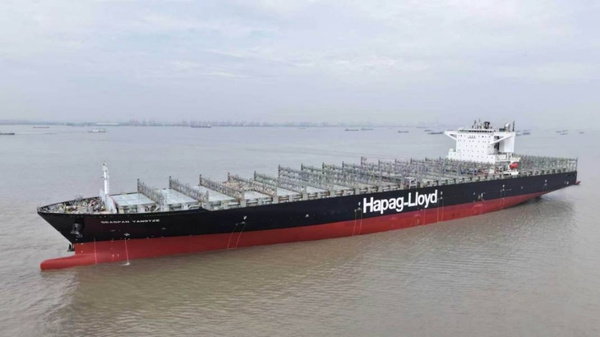
Seaspan Yangtze vessel. Hapag-Lloyd and Seaspan complete first methanol retrofit under five-ship programme  

The Seaspan Yangtze has been converted to dual-fuel methanol operation as part of a $120m programme.

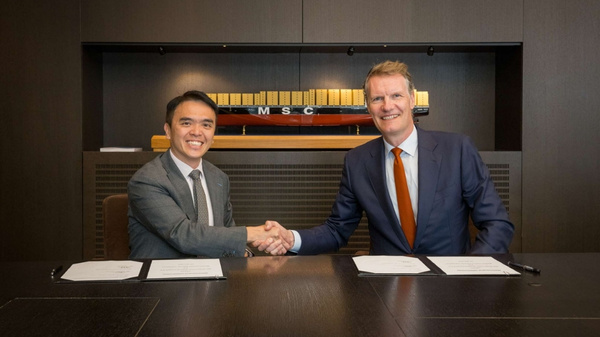
MPA and MSC sign MoU. MPA and MSC sign MoU covering decarbonisation, digitalisation and talent development in Singapore  

The agreement marks 30 years of MSC’s presence in Singapore and covers alternative fuels adoption.

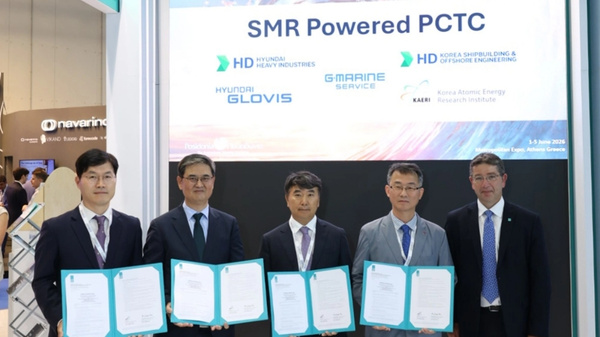
AiP award ceremony for SMR Powered PCTC. Lloyd’s Register backs nuclear car carrier concept with Korean partners at Posidonia 2026  

LR and Korean partners receive approval in principle for SMR-powered pure car and truck carrier concept.

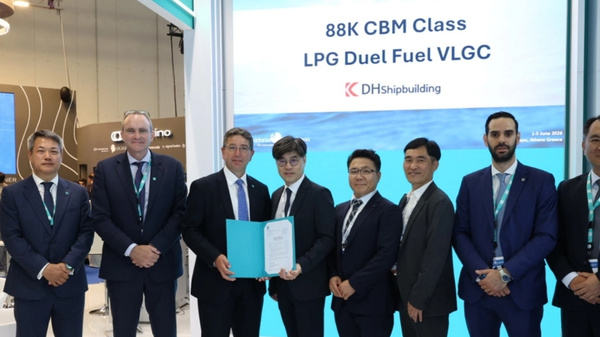
AiP award ceremony for an 88,000 cubic metre dual-fuel VLGC. Lloyd’s Register expands Korean shipyard partnerships at Posidonia 2026  

A series of agreements covering alternative fuels and emerging technologies was announced at the Athens exhibition.