Gibdock says it has secured a 'breakthrough' exhaust gas scrubber (EGS) retrofit project covering five vessels operated by ship management firm
Norbulk Shipping and owned by Netherlands-headquartered shipping company
Vroon.
With all five ships also undergoing special survey drydocking, the job is the Gibraltar yard's largest single assignment in 2015. According to Gibdock, the project is also the first ship-series sulphur oxide (SOx) abatement technology retrofit contract for a yard in southern Europe.
Using EGSs, shipowners can continue operating on fuel oil instead of more expensive marine gas oil (MGO) to meet IMO rules on SOx emissions that came into force in Sulphur Emissions Control Areas (SECAs) on January 1, 2015.
Richard Beards, Gibdock Managing Director, commented: "We are the first yard in the region to win a major exhaust scrubber project. Our ideal location means that we are always attractive for owners considering this area. Gibdock's competitiveness, high quality workmanship and on-schedule redelivery has led to this breakthrough deal, which opens a new chapter in the industry's EGS installation work options."
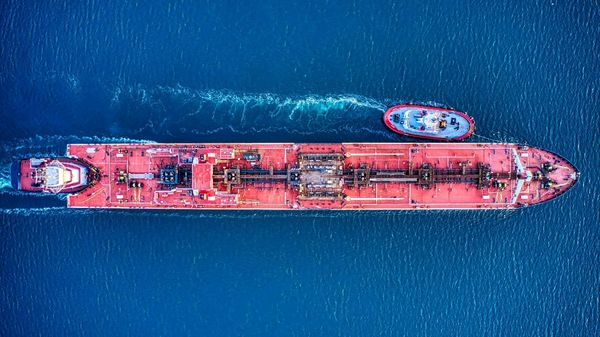
Gibdock's workload included the 37,500-deadweight-tonne (dwt) product tanker
Great Eastern - the third of the five Norbulk vessels being fitted with '
PureSOx' main engine, auxiliary engine and boiler EGS units from Alfa Laval.
The hybrid PureSOx system is said to remove over 98 percent of SOx emissions from exhaust gases and up to 80 percent of particulates. EGS installation work onboard Great Eastern included 90 tonnes of newly fabricated steel, the laying of 12,386 metres of electrical cabling and 1,134 metres of glass-reinforced epoxy (GRE) pipes involving 800v flanges and elbows.
Special survey work required a hull washing, spot grit-blasting and coating job, overhauling of sea valves, propeller withdrawal, bonding of stern seals, rudder clearances, bow thruster overhauling, windlass winch bearing renewal, overhauling of boiler safety valves, pipeworks, insulation works and various other routine dry-dock works. These tasks took place at the same time as the EGS installation, with the ship redelivered on schedule and on budget in 20 days. Mr Beards said the time taken for redelivery to Norbulk has been shortened as projects have progressed.
To optimise EGS retrofit processes, Gibdock undertakes prefabrication for smaller blocks in its workshops, with transfer to the 'Pad1' area, completed in 2014, allowing further structural and assembly work to be completed alongside Drydock 1 in a timely fashion for drydocking.
John Taylor, Gibdock Operations Director, said: "Pad 1 was pivotal in optimising workflow. No other regional yard has a comparable purpose-built zone for EGS foundation and structural work before vessels arrive.
"This has been an intense collaboration, involving different Gibdock departments, naval architects, the Norbulk project team, Alfa Laval, and our electrical and piping systems subcontractors. Optimised planning, materials purchasing, equipment deployment and job sequencing for EGS work are now part of Gibdock's competitive advantage."
Beards added: "This is a significant project for Gibdock in 2015. We have added dedicated EGS facilities and expertise to our natural competitive advantages of location and weather, and our hard-earned reputation for quality work delivered on time and on budget."