DNV GL has confirmed the launch of a
Green Coastal Shipping programme - a joint effort by industry and authorities that is designed to ensure that in the future Norway will have one of the world's most environmentally friendly and efficient coastal shipping industries.
"We can achieve this if we want to. There are many examples of incentives driving forward a green shift. The technology is there, but we have to scale up its use considerably in order to maintain our international position", said DNV GL's Deputy Group CEO Remi Eriksen.
Both the Ministry of Trade, Industry and Fisheries and the Ministry of Climate and Environment are supporting these efforts.
Norway's Minister of Trade and Industry, Monica Mæland and State Secretary for Climate and Environment, Lars Andreas Lunde, today signed a declaration of cooperation to support the initiative.
"The shipping industry is very well equipped to lead the way in the green shift. This can contribute to exports of good, future-oriented and environmentally friendly solutions. I'm sure DNV GL's expertise and experience in shipping will help to maintain Norway's position as a world leader in the maritime industry," remarked Mæland.
"This year, the UN Climate Change Conference in Paris is to negotiate a new climate agreement that will entail new obligations and the implementation of new climate measures. For this reason, more ships must use environmentally friendly fuels, such as gas and battery power, and we must see more ships with new energy-efficient designs. The green shift in the maritime industry will both resolve environmental challenges and create value," said Tine Sundtoft, the Minister of Climate and Environment. The declaration was signed on her behalf by State Secretary Lunde.
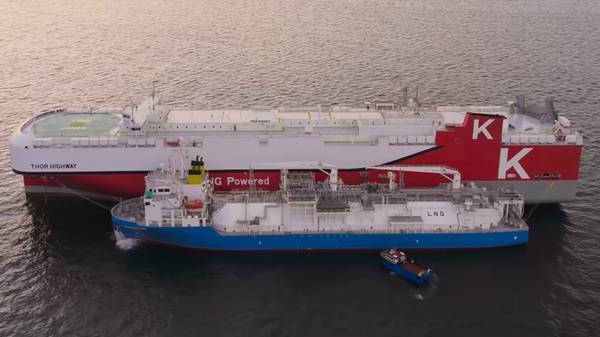
"We envisage a fleet of offshore vessels, tankers, cargo, container, bulk and passenger ships, ferries, fishing and aquaculture vessels, tugs and other coastal vessels, run entirely or partly using batteries, LNG or other green fuels," commented DNV GL's Narve Mjøs, who is the programme director for the Green Coastal Shipping programme.
Joint effort
The Green Coastal Shipping programme has been developed to help implement the Norwegian government's new maritime strategy and is a joint effort by several industries, ministries and state departments.
"The programme will provide an important contribution to the achievement of both national and global climate goals and will also help to reduce air pollution. At the same time, it will be a driver for innovation and green workplaces. In time, it is also expected to provide major export opportunities for the maritime, energy and supplier industries," DNV GL said in a statement.
"We want to make Norway a world leader in, and a showcase for, green coastal shipping and to attract international attention," added Mjøs.
A programme plan is to be established, describing the programme's activities in detail.
The declaration of cooperation has been signed by a total of 18 organizations together with the Ministry of Trade, Industry and Seafood policy and Ministry of Climate and Environment.
Mjøs added that other interested parties were "highly welcome" to also join the initiative.